

Why AI Is Critical for Today’s SEM Strategies
Search engine marketing has evolved into a data-intensive discipline where speed, relevance, and intent decide success. As platforms become more competitive, understanding the role of AI in SEM is no longer optional for marketers who want consistent results. Artificial intelligence now sits at the center of paid search, shaping how ads are served, optimized, and scaled.
At a fundamental level, the role of AI in SEM is about decision-making at scale. Search engines process millions of auctions every second, and AI enables advertisers to compete intelligently within that environment. Instead of relying on static rules or assumptions, AI-powered systems learn from user behavior and adapt continuously.
Why AI Became Central to Search Engine Marketing
Traditional SEM relied heavily on manual controls fixed bids, limited targeting, and keyword-level adjustments. While effective in earlier years, these methods cannot keep up with modern user behavior. This is where the role of AI in SEM becomes critical.
AI allows campaigns to respond instantly to changing intent signals. It evaluates context such as device type, location, timing, and historical behavior to decide how an ad should compete in a specific auction. Without AI, advertisers would struggle to react with the speed required in today’s search landscape.
More importantly, the role of AI in SEM is not just automation. It is optimization driven by learning, prediction, and pattern recognition.
How AI Shapes Modern Search Ad Auctions
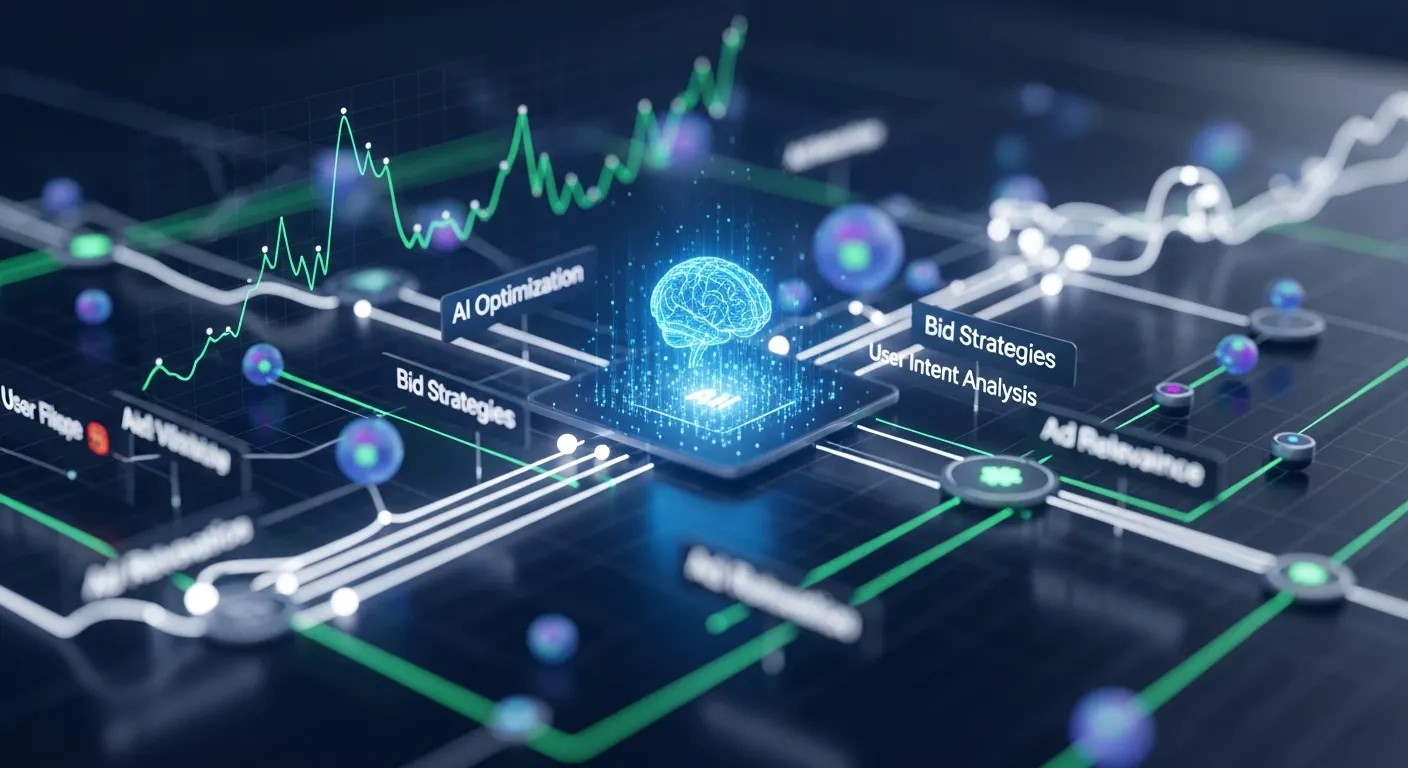
Every search query triggers an auction, but that auction is no longer simple. AI-driven systems analyze multiple variables simultaneously to determine which ad appears and at what cost.
The role of AI in SEM auctions includes:
- Predicting the likelihood of a click or conversion
- Evaluating ad relevance in real time
- Adjusting bids dynamically per user
- Balancing cost efficiency with performance
Instead of rewarding the highest bidder, AI prioritizes value and relevance. This ensures users see ads that match their intent, while advertisers achieve better outcomes.
From Static Rules to Learning Algorithms
Manual optimization depends on hindsight. AI relies on continuous learning. Over time, systems refine their decisions based on outcomes, making each future auction smarter than the last. This learning loop defines the modern role of AI in SEM.
Automated Bidding and Performance Optimization
One of the clearest examples of the role of AI in SEM is automated bidding. Smart bidding strategies use machine learning to adjust bids at the auction level rather than the keyword level.
AI evaluates signals such as:
- User search behavior
- Conversion probability
- Device and browser patterns
- Time-based performance trends
This allows campaigns to focus on meaningful actions instead of surface-level metrics. The role of AI in SEM bidding is to maximize value, not volume.
Why Human-Led Bidding Is No Longer Enough
Human decision-making cannot process thousands of signals in real time. AI fills that gap by executing decisions instantly while aligning them with predefined goals. This partnership between human strategy and machine execution defines effective SEM today.
Rethinking Keywords in an AI-Driven SEM Model
Keywords still matter, but their function has changed. Instead of exact-match precision, AI emphasizes intent recognition. The role of AI in SEM keyword management is to understand what users mean, not just what they type.
Broad and phrase match keywords perform better when paired with strong conversion data and relevant landing pages. AI learns which queries indicate readiness and which signal research intent.
This shift allows advertisers to scale while maintaining relevance.
Ad Creative Optimization Through AI

AI also plays a growing role in how ads are written and tested. Responsive ad formats allow machine learning systems to test multiple variations automatically.
The role of AI in SEM creative optimization is to identify which combinations resonate with specific audiences. Over time, AI prioritizes messages that drive engagement and conversions, reducing guesswork.
Context-Aware Messaging
AI adapts messaging based on user context. Someone searching for information may see educational copy, while a high-intent user may see urgency-driven messaging. This personalization improves performance across the funnel.
Integrating Search With Broader Digital Strategies
SEM does not operate in isolation. AI enables better alignment across channels by sharing insights between platforms. Performance signals from SEM with Social Media Ads can inform targeting and creative decisions, creating a more cohesive customer journey.
The role of AI in SEM extends beyond search results, influencing how audiences are reached across the digital ecosystem.
Strategic Control in an Automated Environment
Automation does not remove the need for expertise. A knowledgeable Search Engine Marketing Consultant understands how to guide AI systems through proper goal-setting, audience signals, and performance evaluation.
Without strategic oversight, AI may optimize for short-term metrics at the expense of long-term growth. The role of AI in SEM works best when guided by clear business objectives and human judgment.
Learning From SEM’s Evolution
Understanding how paid search evolved helps explain why AI is now essential. Early SEM models were basic and manual. When marketers explore who Invented Search Engine Marketing, they see how far the discipline has progressed toward intelligent automation.
This evolution highlights why AI is not a trend, but a foundational element of modern SEM.
Measuring Success in an AI-Optimized SEM Landscape
Metrics still matter, but their interpretation has changed. While CPM and CPC in SEM remain useful, AI shifts focus toward conversion quality, lifetime value, and incremental impact.
The role of AI in SEM measurement is to connect performance data with business outcomes, not just advertising costs.
AI-Driven Audience Segmentation in SEM
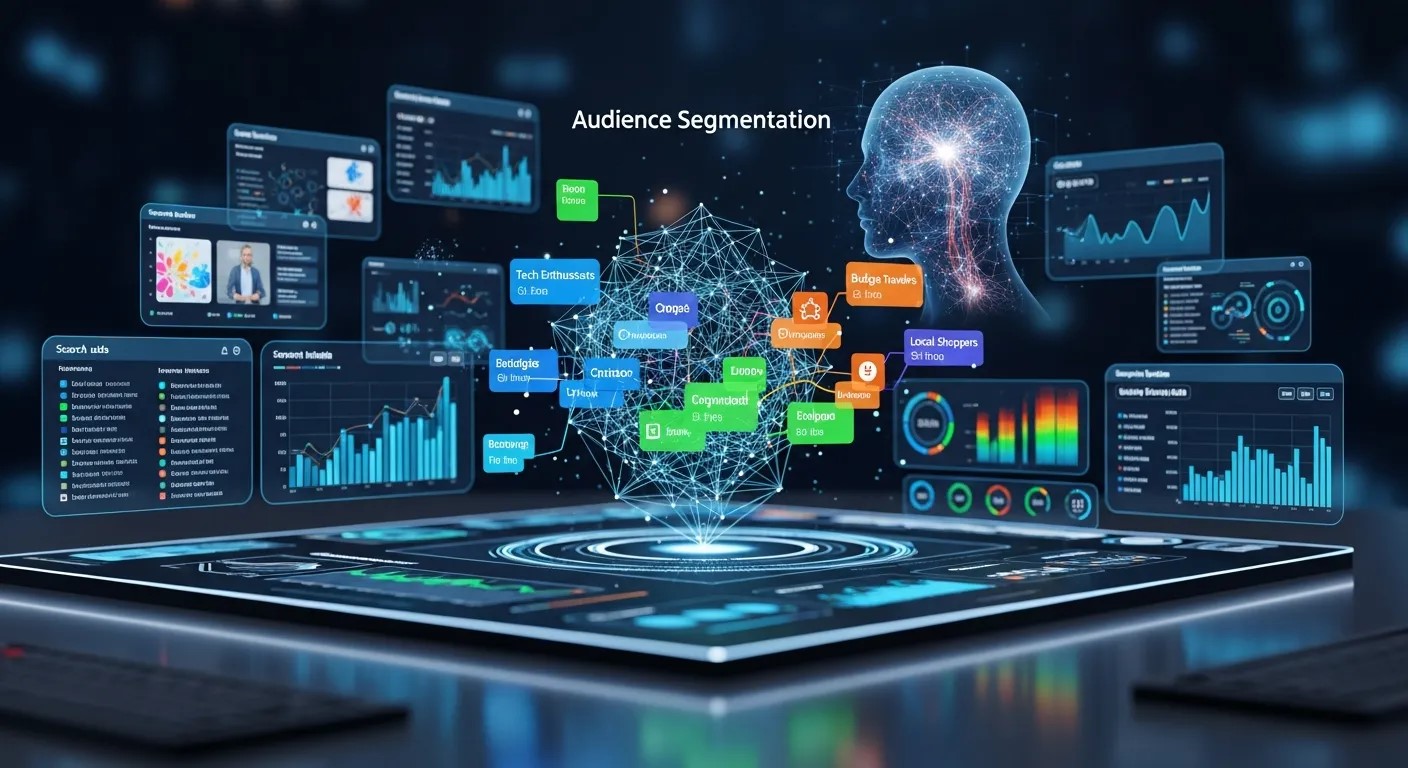
Audience targeting has always been a cornerstone of paid search performance. However, traditional segmentation methods based on basic demographics or static remarketing lists are no longer sufficient. This is where the role of AI in SEM becomes especially powerful.
AI analyzes vast datasets to identify patterns in user behavior that humans cannot easily detect. Instead of grouping users by age or location alone, AI segments audiences based on intent signals, browsing patterns, purchase likelihood, and engagement history. The role of AI in SEM audience segmentation is to move beyond who users are and focus on what they are likely to do next.
This behavioral approach allows advertisers to deliver ads that feel timely and relevant rather than generic.
From Static Lists to Predictive Audiences
AI continuously updates audience definitions as users interact with ads, websites, and platforms. Someone researching today may become a high-intent buyer tomorrow, and AI adapts targeting accordingly. The role of AI in SEM is to recognize these shifts in real time and adjust campaign delivery without manual intervention.
Personalization at Scale Through AI
Personalization used to be limited by resources. Today, AI enables personalization at scale without sacrificing efficiency. The role of AI in SEM personalization is to tailor ad experiences for individual users while maintaining campaign-wide performance goals.
AI determines:
- Which ad message to show
- When to show it
- On which device
- At what bid level
All of this happens within milliseconds. Instead of one-size-fits-all messaging, AI aligns ads with user intent across different stages of the journey.
Intent-Based Messaging Across the Funnel
A user at the awareness stage needs information, while a user at the decision stage needs reassurance or urgency. The role of AI in SEM is to identify these stages automatically and serve messaging that aligns with user mindset.
This improves engagement and reduces wasted spend.
Predictive Analytics and Conversion Modeling
One of the most advanced aspects of the role of AI in SEM is predictive analytics. Rather than reacting to past performance, AI forecasts future outcomes based on patterns and probabilities.
Predictive models estimate:
- Conversion likelihood
- Expected value of a click
- Long-term customer impact
- Seasonal or trend-based shifts
These predictions allow campaigns to prioritize users who are more likely to generate meaningful value, not just immediate conversions.
Moving From Reactive to Proactive SEM
Traditional optimization reacts to what already happened. AI-driven SEM anticipates what is likely to happen next. This proactive approach gives advertisers a competitive edge, especially in crowded markets.
The role of AI in SEM forecasting is to help marketers allocate budgets more intelligently and avoid short-term decision traps.
Scaling SEM Campaigns Safely With AI
Scaling paid search has always been risky. Increasing budgets without proper controls often leads to diminishing returns. AI reduces this risk by identifying performance thresholds and efficiency limits.
The role of AI in SEM scaling is to expand reach while preserving profitability. AI monitors marginal performance and adjusts bids, targeting, and delivery to maintain balance.
Instead of aggressive manual expansion, AI-driven scaling is gradual and data-backed.
Budget Allocation and Efficiency Control
AI redistributes budgets toward higher-performing segments automatically. When performance drops, the system pulls back. This continuous adjustment allows campaigns to grow sustainably rather than explosively.
AI’s Influence on Landing Page Performance
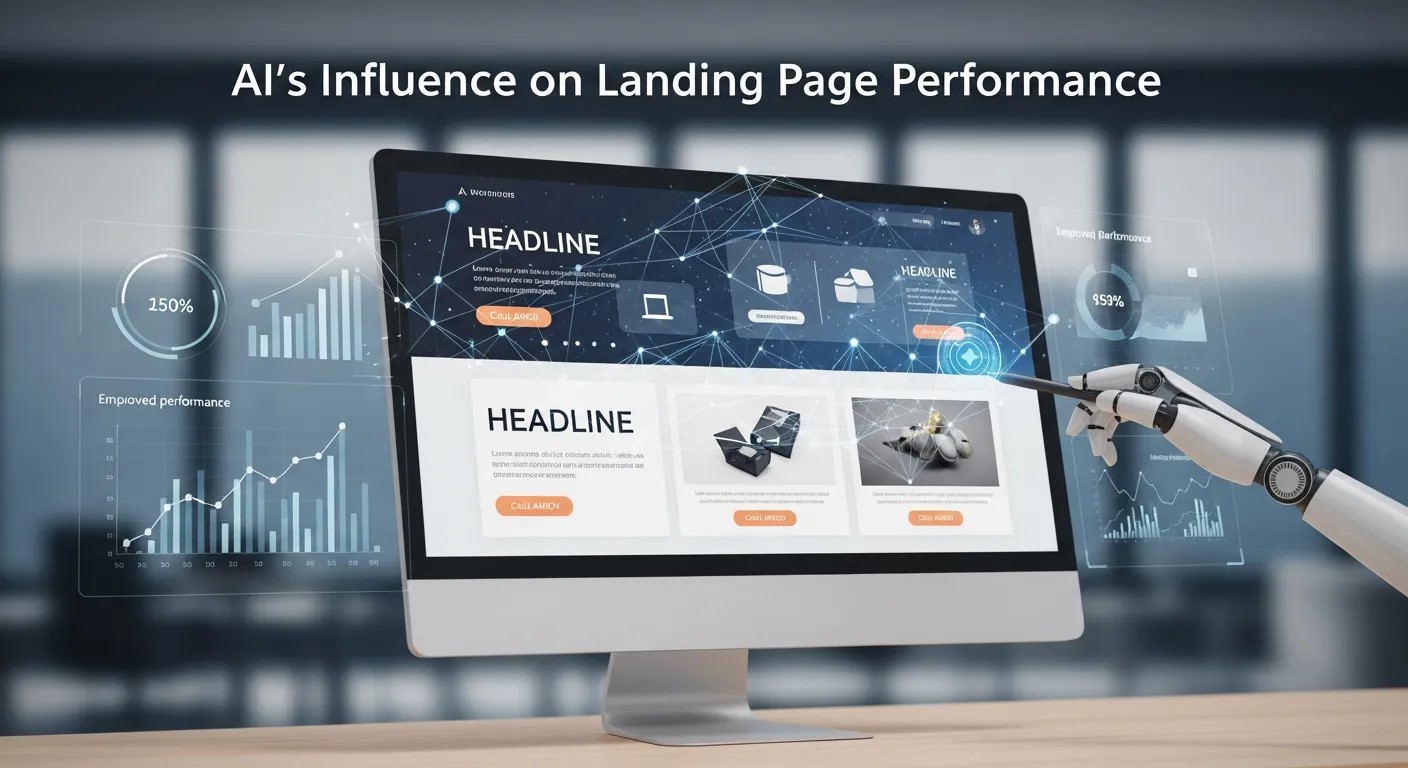
SEM performance does not stop at the click. AI increasingly evaluates landing page experience as part of optimization decisions. The role of AI in SEM includes understanding how users behave after clicking an ad.
Signals such as bounce rate, time on page, and conversion actions inform future bidding and targeting decisions. AI learns which landing pages satisfy intent and which create friction.
Aligning Ads With Post-Click Experience
When ads promise one thing and landing pages deliver another, performance suffers. AI detects this mismatch over time. The role of AI in SEM optimization is to favor combinations that create consistent, intent-aligned user journeys.
Attribution Modeling in an AI-Driven SEM World
Attribution has always been complex. AI improves attribution by analyzing multi-touch journeys instead of crediting only the final click. The role of AI in SEM attribution is to distribute value more accurately across touchpoints.
AI-driven attribution helps marketers understand:
- Which keywords assist conversions
- Which ads influence consideration
- How search interacts with other channels
This deeper insight leads to better strategic decisions.
Common Mistakes Marketers Make With AI in SEM
Despite its power, AI is often misunderstood or misused. One common mistake is giving AI too little data. Another is giving it too much freedom without strategic boundaries.
The role of AI in SEM is not to replace human judgment. Campaigns still need clear goals, clean data, and thoughtful structure. Without these, AI optimizes blindly.
Over-Automation Without Strategy
Automation without intent leads to inefficient growth. Successful marketers treat AI as a collaborator, not a replacement. They guide systems with clear priorities and evaluate results critically.
Ethical and Brand Considerations
AI optimizes for performance, not brand values. The role of AI in SEM must be balanced with ethical considerations such as transparency, fairness, and brand voice consistency.
Marketers remain responsible for ensuring ads align with brand standards and customer trust. AI supports decisions, but accountability stays human.
Advanced Testing Frameworks Powered by AI
Testing has always been essential to paid search success, but traditional A/B testing is slow and limited. AI changes this completely. The role of AI in SEM testing is to evaluate thousands of variations simultaneously and learn from micro-patterns that manual testing cannot detect.
AI-driven systems test combinations of:
- Headlines and descriptions
- Keyword intent signals
- Audience segments
- Bidding thresholds
- Time-based performance shifts
Instead of waiting weeks for results, AI identifies winning patterns continuously. The role of AI in SEM experimentation is not just speed, but depth—understanding why something works, not just that it works.
Continuous Optimization Instead of Fixed Tests
Traditional testing has a start and end date. AI-powered optimization never stops. Models evolve as user behavior changes, ensuring campaigns stay relevant even as search intent shifts.
Long-Term Strategy in an AI-First SEM World
Short-term optimization is easy. Long-term growth is harder. The role of AI in SEM strategy is to balance immediate performance with sustainable results.
AI helps marketers:
- Identify scalable opportunities
- Avoid over-investment in declining segments
- Maintain efficiency as competition increases
However, AI does not define strategy—it executes it. Humans still decide direction, positioning, and priorities.
Building Durable Campaign Structures
Strong campaign structure allows AI to learn efficiently. Clean data, clear conversion goals, and logical segmentation improve learning speed. The role of AI in SEM becomes more powerful when foundations are strong.
AI and Search Intent Evolution
Search intent is not static. Users shift from research to purchase across multiple sessions and devices. AI tracks these transitions.
The role of AI in SEM intent analysis is to recognize patterns over time rather than isolated actions. This allows campaigns to adjust messaging and bids as intent matures.
Micro-Moments and Real-Time Signals
AI detects micro-moments small but meaningful signals indicating readiness. These moments often determine conversion success. By responding instantly, AI improves timing and relevance.
Managing Algorithm Changes Proactively
Search platforms update algorithms frequently. Manual strategies struggle to keep pace. The role of AI in SEM adaptability is to absorb changes faster than humans can react.
AI systems recalibrate automatically when:
- Auction dynamics shift
- New ad formats are introduced
- User behavior patterns change
This adaptability reduces volatility and protects performance during platform updates.
Data Quality: The Hidden Driver of AI Success
AI is only as good as the data it learns from. Poor data leads to poor optimization. The role of AI in SEM data usage is to amplify both strengths and weaknesses in data quality.
Key data considerations include:
- Accurate conversion tracking
- Clear attribution logic
- Consistent naming conventions
- Clean audience signals
Marketers who invest in data hygiene unlock the full potential of AI.
Balancing Automation With Control

Full automation without oversight can create blind spots. The role of AI in SEM control is to operate within defined boundaries set by humans.
Constraints such as budget limits, target returns, and brand guidelines ensure AI optimizes responsibly. This balance protects long-term performance and brand integrity.
Knowing When to Intervene
AI does not understand context the way humans do. Market disruptions, seasonality shifts, or brand initiatives may require manual adjustments. Strategic intervention keeps automation aligned with reality.
Competitive Advantage Through AI Insights
Beyond optimization, AI provides insights that influence broader marketing strategy. The role of AI in SEM intelligence is to surface trends, opportunities, and threats earlier.
These insights help marketers:
- Anticipate competitor moves
- Identify emerging keywords
- Discover new audience segments
AI turns SEM from a reactive channel into a proactive growth engine.
Preparing for the Future of AI in SEM
AI in SEM will continue to evolve. Voice search, conversational queries, and generative ad formats will introduce new complexity. The role of AI in SEM will expand from optimization to orchestration across platforms.
Marketers who focus on adaptability, learning, and strategic thinking will stay ahead not by fighting the algorithm, but by understanding it.
Conclusion
The role of AI in SEM has revolutionized search marketing, transforming it from manual guesswork into a precise, data-driven strategy. By leveraging AI for bidding, audience targeting, and predictive optimization, marketers can outsmart algorithms, deliver highly relevant campaigns, and achieve sustainable growth with greater efficiency and measurable results.
Frequently Asked Questions (FAQs)
What is the role of AI in SEM?
AI in SEM automates bidding, optimizes ad delivery, analyzes user intent, and predicts performance. It helps marketers make data-driven decisions, improve ROI, and create personalized campaigns at scale.
How does AI improve ad targeting in SEM?
AI analyzes user behavior, search intent, and contextual signals to segment audiences dynamically. This allows ads to reach the right users at the right moment, enhancing engagement and conversions.
Can AI replace a Search Engine Marketing Consultant?
No. AI assists with optimization and decision-making, but human expertise is needed to define strategy, ensure brand alignment, and interpret insights effectively. Consultants guide AI systems for maximum impact.
How does AI affect CPM and CPC in SEM?
AI optimizes bids based on predicted performance, ensuring cost efficiency. By prioritizing high-value clicks and conversions, it improves ROI while keeping CPM and CPC metrics under control.
Does AI integrate SEM with Social Media Ads?
Yes. AI can analyze cross-channel data to align targeting, messaging, and budgets, allowing SEM campaigns to complement social media efforts for a cohesive marketing strategy.
What future trends should marketers expect with AI in SEM?
Marketers can expect more predictive optimization, voice and conversational search integration, dynamic ad personalization, and AI-driven creative testing further improving relevance, efficiency, and campaign performance.



Leave a Reply