

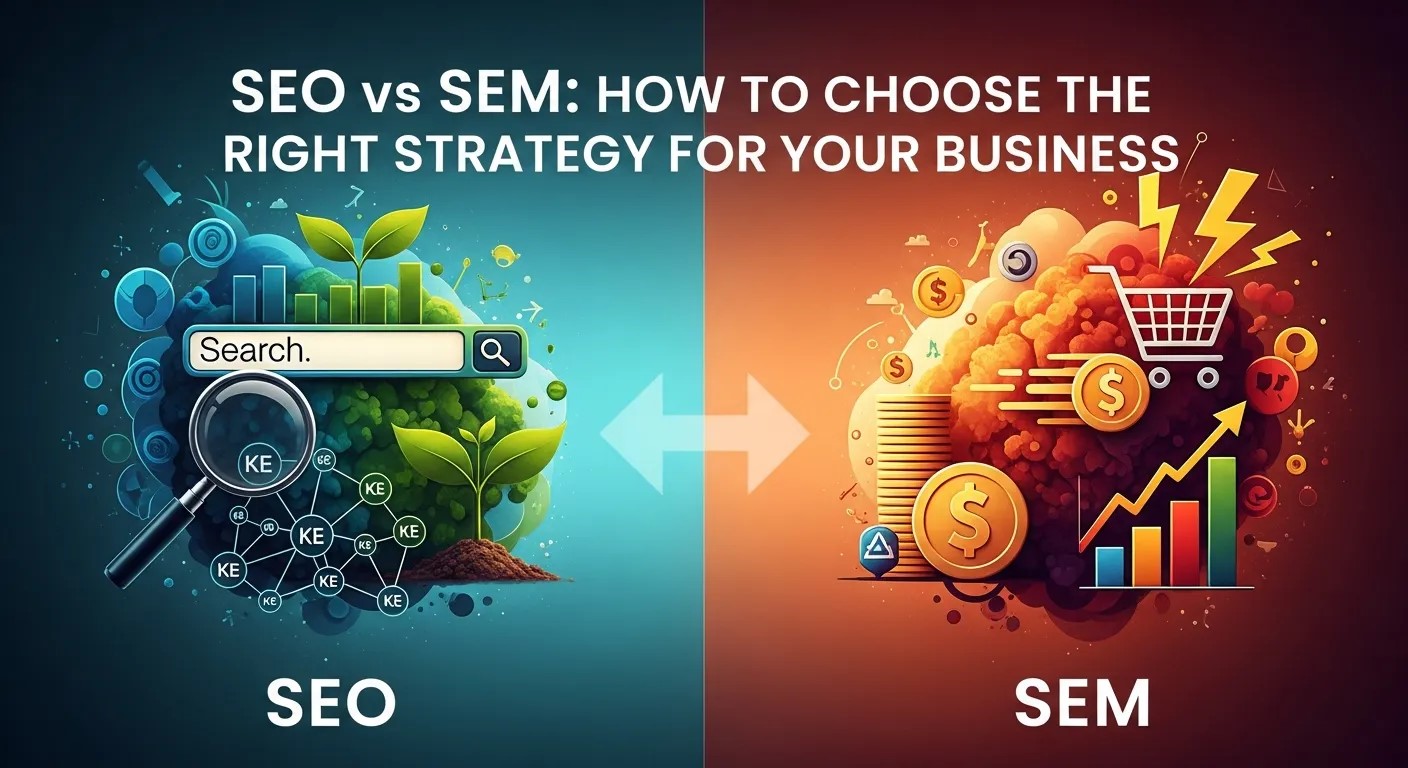
In the debate of SEO vs SEM, businesses benefit most from a combined approach. SEO drives sustainable organic growth, while SEM delivers immediate visibility. Integrating strategies, monitoring performance, and leveraging multi-channel campaigns ensures optimal traffic, engagement, and long-term ROI.
Understanding the Difference Between SEO and SEM
In today’s highly competitive online environment, choosing between SEO vs SEM is one of the most important decisions a business can make. Both strategies aim to drive traffic, increase visibility, and generate leads, but they do so in very different ways. Understanding the nuances of SEO vs SEM is essential for businesses that want to maximize ROI while meeting user needs.
When comparing SEO vs SEM, it’s crucial to consider timelines, costs, and audience intent. SEO focuses on long-term growth through organic optimization, while SEM offers immediate visibility through paid search campaigns. The choice between SEO vs SEM is not necessarily exclusive—many businesses achieve the best results by combining both strategies thoughtfully.
What is SEO?
SEO, or Search Engine Optimization, is the process of optimizing your website to appear higher in organic search results. Unlike paid strategies, SEO relies on content quality, technical optimization, and authoritative backlinks. Businesses considering SEO vs SEM often turn to SEO for long-term credibility and cost-effective traffic.
The key pillars of SEO include:
- On-Page Optimization: Aligning page titles, headers, and content with user search intent to improve visibility.
- Off-Page Optimization: Building domain authority through backlinks, social signals, and online mentions.
- Technical SEO: Ensuring site speed, mobile-friendliness, and proper indexing to enhance search performance.
- Content Strategy: Publishing high-value content that addresses user questions and establishes authority.
When evaluating SEO vs SEM, remember that SEO requires patience. It may take months to see substantial traffic, but the results tend to be sustainable and often outperform paid campaigns over time.
What is SEM?
Search Engine Marketing (SEM) is a paid advertising strategy designed to increase visibility quickly. Unlike organic SEO, SEM allows businesses to bid on keywords and display ads to users who are actively searching for relevant products or services. Comparing SEO vs SEM, SEM offers immediacy and precision targeting.
Key advantages of SEM include:
- Precise Targeting: Reach users based on location, device, demographics, and search intent.
- Budget Control: Set exact amounts for cost-per-click or impression campaigns.
- Immediate Results: Launch campaigns that generate traffic within hours or days.
- Measurable ROI: Track clicks, conversions, and other key metrics to refine strategies.
Businesses can amplify SEM results by integrating SEM with Social Media Ads, creating multi-channel campaigns that reinforce messaging and improve engagement.
Key Differences Between SEO and SEM
Understanding the differences between SEO vs SEM is crucial before making any strategic decisions.
| Feature | SEO | SEM |
|---|---|---|
| Cost | Time and content creation | Paid campaigns, CPC or CPM costs |
| Speed | Long-term results (months to years) | Immediate results (days to weeks) |
| Traffic Type | Organic, trust-driven | Paid, intent-driven |
| Flexibility | Limited control over ranking | High control over targeting and messaging |
| Measurement | Organic traffic, engagement, rankings | CTR, conversions, ROI |
Evaluating SEO vs SEM in this way helps marketers align strategies with business goals, whether the focus is brand authority, immediate conversions, or a combination of both.
User Intent and the Psychology of Search

The effectiveness of SEO vs SEM depends heavily on understanding user psychology. Users have different types of intent:
- Informational Intent: Searching for knowledge or guidance. SEO content targeting these queries builds authority.
- Navigational Intent: Looking for a specific brand or website. Proper SEO ensures your business is easily found.
- Transactional Intent: Ready to make a purchase or take action. SEM is often better suited to capture these high-intent users.
By analyzing search intent, businesses can make informed decisions when choosing between SEO vs SEM, ensuring resources are allocated where they deliver the highest return.
Combining SEM with Social Media Ads
Integrating SEM with Social Media Ads enhances the overall effectiveness of paid campaigns. While SEM targets users actively searching, social media campaigns capture users who match your audience profile but may not be actively searching yet.
Combining these strategies helps businesses:
- Reinforce messaging across multiple channels
- Retarget users who previously engaged with your site or ads
- Improve both brand awareness and lead generation
A smart approach to SEO vs SEM often involves using SEM for immediate conversions while building organic SEO content to sustain traffic over time.
Dynamic Search Ads in SEM
One of the latest innovations in paid search is Dynamic Search Ads in SEM. These ads automatically generate ad headlines and landing pages based on your website content, providing highly relevant matches to user queries.
Benefits include:
- Capturing additional search traffic that may be missed with static campaigns
- Reducing the manual effort of keyword research
- Ensuring ads are always aligned with user searches
For businesses managing large websites or inventories, Dynamic Search Ads in SEM offer scalability and efficiency, enhancing the value of paid campaigns.
CPM and CPC in SEM
When planning SEM campaigns, understanding pricing models is critical. Two commonly used models are CPM and CPC in SEM:
- CPC (Cost-Per-Click): Pay only when a user clicks your ad. Ideal for campaigns focused on conversions and traffic.
- CPM (Cost-Per-Thousand Impressions): Pay based on ad visibility. Best for awareness campaigns aiming to reach a wide audience.
Selecting the correct model is key when comparing SEO vs SEM, as budget allocation and campaign goals differ for organic versus paid strategies.
Continuous SEM Monitoring
Effective SEM campaigns require ongoing SEM Monitoring. Without tracking and optimization, even well-funded campaigns can underperform. Monitoring includes:
- Reviewing keyword performance and adjusting bids
- Analyzing CTR, conversion rates, and overall ROI
- Identifying underperforming ads or landing pages
- Conducting A/B tests to refine messaging and design
Proper SEM Monitoring ensures that paid campaigns remain efficient, and when compared with SEO, demonstrates how quickly paid strategies can adapt to market needs.
Advanced Strategies for SEO vs SEM
When businesses decide between SEO vs SEM, understanding advanced strategies can mean the difference between average results and exceptional ROI. Both SEO and SEM offer unique advantages, but leveraging their strengths strategically ensures maximum performance.
While SEO vs SEM often starts with basic optimization and paid campaigns, advanced approaches involve audience segmentation, content personalization, and data-driven adjustments. Businesses that adopt these practices can scale efficiently while keeping user intent at the forefront.
Advanced SEO Techniques for Competitive Industries

For highly competitive markets, simple SEO tactics are often not enough. When comparing SEO vs SEM, advanced SEO can deliver sustainable traffic growth that outperforms paid campaigns over time.
Some key advanced SEO strategies include:
- Semantic Search Optimization: Focusing on intent and topic clusters rather than just keywords. Semantic SEO helps search engines understand content context, improving relevance for queries related to SEO vs SEM.
- Content Gap Analysis: Identifying topics your competitors cover but your site doesn’t, then creating high-value content to capture that traffic.
- Technical Audits: Ensuring schema markup, structured data, and site architecture are optimized for crawling and indexing.
- Voice Search Optimization: Adapting content to natural language queries, which are becoming increasingly important in mobile and smart device searches.
Incorporating these advanced SEO techniques helps businesses establish authority, reduce dependency on paid campaigns, and complement their SEM strategies effectively.
Structuring Effective SEM Campaigns
When evaluating SEO vs SEM, SEM offers immediate visibility that can drive conversions faster than organic methods. To maximize results, businesses need structured, targeted campaigns.
Best practices for SEM include:
- Keyword Segmentation: Group keywords by intent (informational, navigational, transactional) to create tailored ad copies.
- Ad Extensions: Use site links, callouts, and structured snippets to enhance ad visibility and CTR.
- Landing Page Optimization: Ensure the landing page aligns with ad copy and addresses user intent.
- A/B Testing: Continuously test ad copies, headlines, and call-to-actions to find the most effective messaging.
Integrating Dynamic Search Ads in SEM into structured campaigns further reduces manual workload while automatically matching user searches to relevant content, ensuring better targeting and increased ROI.
Combining SEO and SEM for Maximum Impact
Businesses often overlook the synergy between SEO vs SEM. While SEO provides long-term growth and authority, SEM offers rapid results and precise targeting. A combined approach can produce compounding effects:
- Keyword Data Sharing: Use SEM keyword performance to inform SEO content strategies, targeting high-intent queries with organic content.
- Remarketing: Retarget users who clicked SEM ads using organic content strategies or social media campaigns.
- Content Amplification: Promote top-performing SEO content via SEM campaigns to boost reach and engagement.
By coordinating SEO and SEM efforts, businesses can capture both immediate traffic and sustainable long-term growth, creating a holistic digital marketing ecosystem.
Measuring ROI: SEO vs SEM
When deciding between SEO vs SEM, tracking and measuring ROI is essential. Both strategies offer measurable outcomes, but the metrics differ:
- SEO Metrics: Organic traffic, rankings, dwell time, engagement rate, and conversion attribution.
- SEM Metrics: Click-through rates, cost per click, conversion rates, and return on ad spend (ROAS).
Regular analysis ensures that investments in SEO vs SEM are yielding results aligned with business objectives. Additionally, tools like Google Analytics and Search Console can bridge the gap between paid and organic insights, helping marketers optimize campaigns holistically.
Leveraging Social Media and Paid Search Together
Integrating SEM with Social Media Ads amplifies marketing reach and efficiency. While SEM targets users actively searching, social media campaigns capture audiences who may not be searching but fit the target profile.
Benefits include:
- Reinforcing brand messaging across multiple platforms
- Retargeting users who clicked SEM ads or visited the website
- Driving conversions through coordinated, multi-channel campaigns
For businesses comparing SEO vs SEM, this integration ensures that both organic and paid strategies support each other, increasing overall visibility and ROI.
Optimizing Campaigns with SEM Monitoring

Continuous SEM Monitoring is vital for maintaining performance and budget efficiency. Regular tracking allows marketers to adjust bids, identify high-performing keywords, and optimize underperforming ads.
Key SEM monitoring practices include:
- Daily or weekly performance reviews of ad groups and keywords
- Adjusting CPC and CPM bids based on ROI
- Testing new ad copy variations to increase engagement
- Using analytics to measure the effectiveness of Dynamic Search Ads in SEM
Monitoring ensures that SEM campaigns stay aligned with business objectives and complement ongoing SEO efforts.
Case Studies: Real-World Applications of SEO vs SEM
Understanding SEO vs SEM in theory is useful, but seeing it in action provides actionable insights. Consider these examples:
E-Commerce Retailer
Used SEM campaigns with CPC bidding to drive sales for a seasonal promotion, while simultaneously publishing long-tail SEO content targeting product guides. The combination increased conversions and organic traffic simultaneously.
B2B SaaS Company
Leveraged Dynamic Search Ads in SEM to target niche solutions, while SEO focused on educational blog content. Coordinated tracking and SEM monitoring helped optimize paid campaigns based on organic content performance.
Local Service Business
Focused on location-specific SEM campaigns alongside SEO optimization for Google My Business and local keywords. The integrated approach improved both immediate leads and long-term local search visibility.
These case studies demonstrate that businesses benefit from aligning SEO vs SEM strategies rather than treating them in isolation.
SEO vs SEM: Practical Strategies for Maximum ROI
When businesses weigh SEO vs SEM, practical implementation often determines success more than theory. While understanding concepts is important, the real advantage comes from strategic execution, ongoing optimization, and consistent monitoring.
Choosing between SEO vs SEM is not an either-or decision. Many successful businesses use both approaches in a coordinated way, leveraging SEO for long-term organic authority and SEM for immediate traffic and conversions.
Keyword Research: The Foundation of SEO vs SEM
Effective campaigns start with thorough keyword research. In the context of SEO vs SEM, understanding which terms to target is critical.
- For SEO, focus on long-tail keywords, semantic variations, and intent-based phrases to capture organic traffic over time.
- For SEM, prioritize high-intent transactional keywords that convert quickly.
Tools like Google Keyword Planner, Ahrefs, and SEMrush provide insights into search volume, competition, and CPC, helping marketers decide which keywords will perform best. Proper keyword selection bridges the gap between SEO vs SEM, ensuring content and ads reach the right audience.
Optimizing On-Page and Off-Page SEO
On-page optimization remains crucial when evaluating SEO vs SEM. Key elements include:
- Headers and Meta Tags: Ensure H1/H2/H3 tags are structured logically and meta descriptions reflect target keywords.
- Content Quality: Focus on depth, readability, and relevance to user intent.
- Internal Linking: Guide visitors to related content and distribute authority across pages.
Off-page SEO involves:
- Building high-quality backlinks from authoritative sites
- Encouraging social sharing to signal value to search engines
- Engaging in partnerships and online mentions to improve domain authority
Advanced SEO practices amplify the value of SEO vs SEM by creating a sustainable traffic pipeline that complements paid campaigns.
Advanced SEM Strategies for Campaign Efficiency
When implementing SEM, efficiency is key. Structured campaigns, coupled with data-driven adjustments, ensure that budgets are well spent.
- Dynamic Search Ads in SEM: Automatically match ads to relevant user queries, saving time and increasing reach.
- Bid Adjustments: Adjust bids based on location, device, or time-of-day performance to maximize ROI.
- Landing Page Optimization: Create pages that align with ad copy and provide clear calls-to-action.
Advanced SEM tactics also include remarketing and audience segmentation. By analyzing performance, businesses can refine campaigns and improve results over time, demonstrating the complementary power of SEO vs SEM.
Leveraging Multi-Channel Strategies

Combining SEO vs SEM with other marketing channels creates a holistic approach. Multi-channel strategies can include:
- SEM with Social Media Ads: Reinforce messaging across search and social platforms, capturing both high-intent and awareness-driven audiences.
- Email Marketing Integration: Use SEM data to segment and target email campaigns effectively.
- Content Syndication: Promote top-performing SEO content through paid channels to maximize reach.
Integrating campaigns ensures that traffic from both organic and paid sources feeds into a unified conversion funnel.
Competitor Analysis: Staying Ahead in SEO vs SEM
Competitive research is essential when comparing SEO vs SEM. By analyzing competitors, businesses can identify gaps, capitalize on missed opportunities, and refine strategies.
- SEO Competitor Analysis: Examine their backlinks, top-performing content, and keyword rankings to inform your own content strategy.
- SEM Competitor Analysis: Monitor competitors’ ad copy, bidding strategies, and keyword targeting to adjust campaigns accordingly.
A combined approach helps businesses stay ahead, ensuring SEO vs SEM strategies complement rather than compete with each other.
Measuring Performance: Analytics for SEO vs SEM
Accurate measurement is critical to ensure marketing efforts are effective. When evaluating SEO vs SEM, focus on both organic and paid performance metrics:
- SEO Metrics: Organic traffic, keyword rankings, bounce rate, dwell time, and conversions.
- SEM Metrics: Click-through rates, CPC, CPM, conversion rate, and ROI.
- Integrated Insights: Use analytics to track the overlap between paid and organic campaigns, refining both strategies simultaneously.
Tools like Google Analytics, Google Search Console, and paid ad dashboards help businesses track progress and make data-driven decisions.
Scaling Campaigns Without Losing ROI
For businesses looking to expand, scaling SEO vs SEM requires strategic planning:
- For SEO: Increase content output while maintaining quality, expand keyword targeting, and strengthen backlink profiles.
- For SEM: Expand ad groups, test new audience segments, and adjust bids and budgets dynamically.
Scaling requires careful monitoring to maintain efficiency. Regular SEM Monitoring ensures campaigns remain optimized, while ongoing SEO audits keep organic efforts effective.
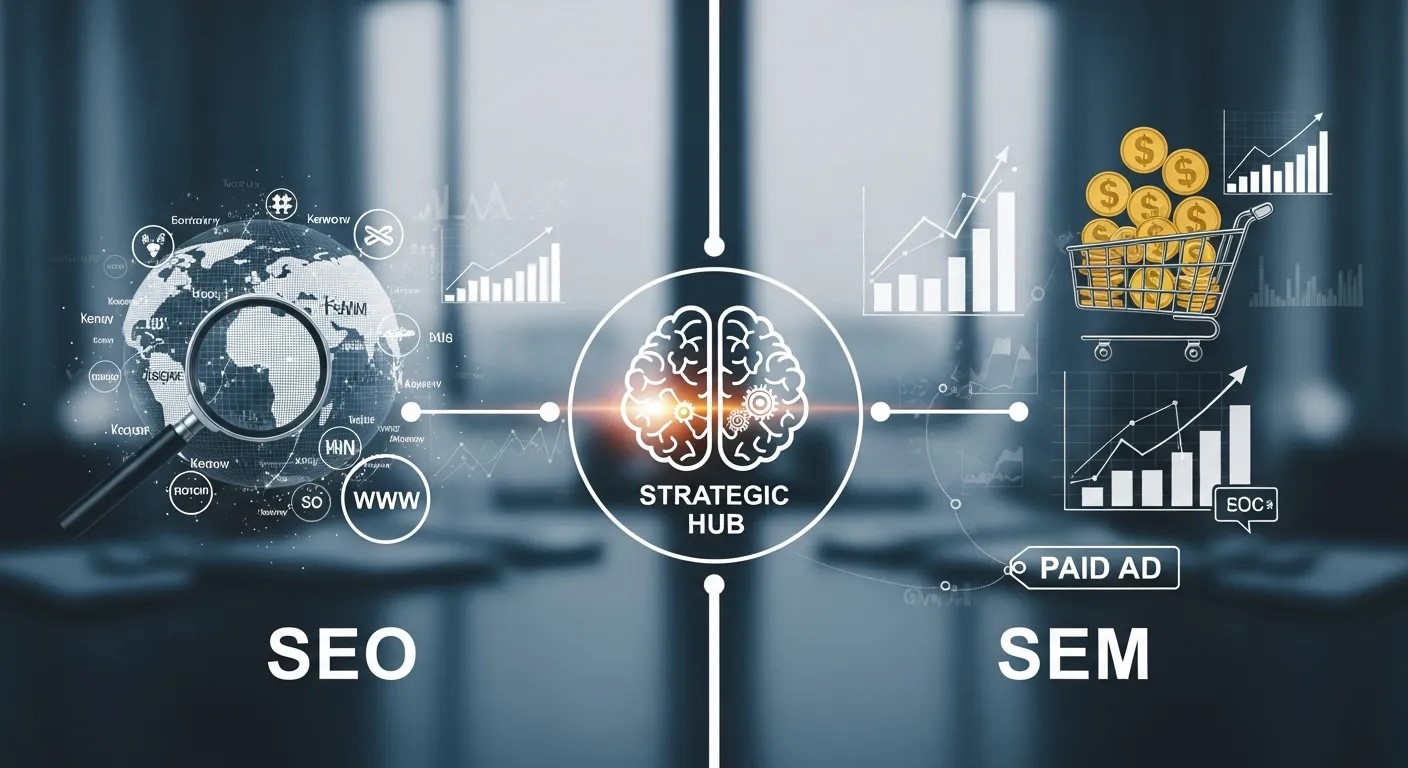
Real-World Example: Coordinated SEO and SEM Efforts
Consider a SaaS company:
- They used SEM campaigns to promote new product features immediately, targeting high-intent keywords with CPC bidding.
- Simultaneously, they published SEO-optimized blog posts addressing user questions about the product category.
- Data from SEM campaigns informed SEO content, ensuring the most valuable topics were prioritized.
- Multi-channel retargeting combined SEM with social media ads to guide users back to conversion pages.
This coordinated approach demonstrates how SEO vs SEM can work together to maximize traffic, engagement, and conversions.
Conclusion
Choosing between SEO vs SEM is a critical decision that can shape the success of your digital marketing strategy. SEO focuses on long-term growth by improving organic search rankings, building authority, and attracting consistent, sustainable traffic over time. SEM, on the other hand, provides immediate visibility by targeting high-intent audiences through paid campaigns, enabling faster conversions and precise budget control. The most effective approach for businesses often combines both strategies using SEM for quick results and SEO to maintain long-term credibility and traffic. By continuously analyzing performance metrics, monitoring campaigns, understanding user intent, and adjusting strategies accordingly, businesses can maximize ROI, strengthen brand presence, and create a balanced, multi-channel marketing plan that drives both immediate and sustained growth.
Frequently Asked Questions (FAQ)
What is the difference between SEO and SEM?
SEO focuses on organic search results by optimizing website content, structure, and authority over time. SEM involves paid search campaigns that provide immediate visibility. Understanding SEO vs SEM helps businesses decide which strategy or combination best suits their goals.
Which is better for my business: SEO or SEM?
The choice depends on your objectives. SEO is ideal for long-term growth and credibility, while SEM is better for immediate traffic and conversions. Most businesses benefit from a combination of both to balance short-term and long-term results.
How long does it take to see results from SEO vs SEM?
SEO typically requires months to show significant results due to the time needed to build authority. SEM, however, can generate traffic and conversions almost immediately once campaigns are live.
Can SEO and SEM work together?
Yes, combining SEO and SEM provides the best outcomes. SEM data can inform SEO content strategy, while organic SEO efforts can reduce paid campaign costs. Coordinated campaigns maximize visibility, engagement, and ROI.
What are some key metrics to track for SEO vs SEM?
For SEO: organic traffic, keyword rankings, bounce rate, dwell time, and conversions. For SEM: CTR, CPC, CPM, conversion rate, and ROAS. Monitoring these metrics ensures campaigns remain effective and aligned with business goals.
What role does user intent play in SEO vs SEM?
User intent is crucial. SEO often targets informational and navigational intent, building authority and trust. SEM targets transactional intent, capturing users ready to convert. Understanding intent ensures your campaigns reach the right audience at the right time.
How can businesses optimize their SEM campaigns effectively?
Use techniques like Dynamic Search Ads in SEM, targeted bidding strategies, landing page optimization, and continuous SEM Monitoring. These approaches enhance efficiency and ROI while complementing ongoing SEO efforts.



Leave a Reply