


The future of SEM will be shaped by AI automation, voice and visual search, privacy-driven targeting, multi-platform strategies, AR integration, conversational AI, and ethical marketing. Early adoption of these trends ensures optimized campaigns, higher engagement, and sustainable competitive advantage.
Search engine marketing stands at a crossroads. The familiar landscape of keyword bidding and ad copy optimization is rapidly evolving, driven by artificial intelligence, changing user behaviors, and new search platforms. For marketers who want to stay competitive, understanding these shifts isn’t optional—it’s essential.
The next five years will bring transformative changes to how we approach search marketing. From AI-powered automation that handles complex bidding strategies to voice search queries that sound more like conversations than keywords, the discipline is becoming more sophisticated and nuanced.
This evolution presents both opportunities and challenges. Marketers who adapt early will gain significant advantages, while those who cling to outdated strategies risk falling behind. Let’s explore the five trends that will reshape search engine marketing through 2030.
AI and Machine Learning Will Automate Complex Campaign Management
Artificial intelligence is moving beyond simple bid adjustments to handle entire campaign strategies. Google’s Smart Bidding already uses machine learning to optimize for conversions, but future developments will be far more comprehensive.
Predictive Campaign Optimization
Machine learning algorithms are becoming sophisticated enough to predict market changes and adjust campaigns proactively. Instead of reacting to performance data, AI systems will anticipate seasonal trends, competitor moves, and consumer behavior shifts.
These systems will analyze hundreds of variables simultaneously—from weather patterns affecting retail sales to economic indicators influencing B2B purchase decisions. The result? Campaigns that adapt in real-time without human intervention.
Creative Generation and Testing
AI-powered tools will generate ad copy, headlines, and even visual elements tailored to specific audience segments. These systems will continuously test variations and optimize creative elements based on performance data.
The technology will understand context better than ever before. An AI system might create different ad variations for users searching during lunch breaks versus those browsing late at night, adjusting both messaging and tone accordingly.
Voice Search Will Reshape Keyword Strategy
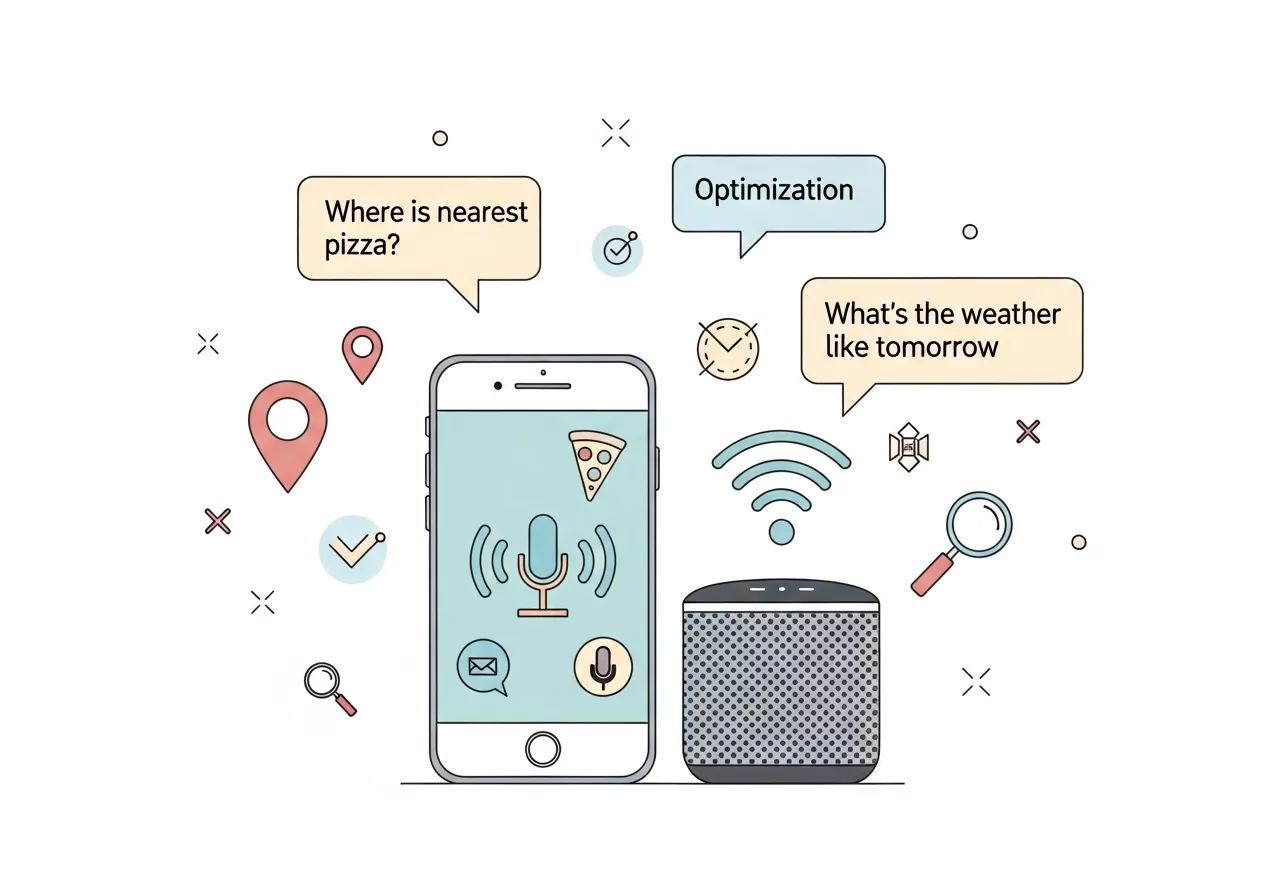
Voice search adoption continues accelerating, fundamentally changing how people interact with search engines. By 2030, conversational queries will dominate mobile search, requiring marketers to rethink their entire keyword approach. Learn how to optimize specifically for voice search in our guide: Voice Search and SEM: Optimize for Mobile and Smart Speakers.
Long-Tail Conversational Queries
Traditional keywords like “best pizza NYC” are giving way to natural language queries like “Where can I find authentic Neapolitan pizza near me that’s open late?” This shift demands new keyword research methodologies and content strategies.
Marketers must optimize for question-based searches and natural speech patterns. This means creating content that answers specific questions rather than targeting isolated keywords.
Local Search Dominance
Voice searches are three times more likely to be local-focused than text searches. Users asking their smart speakers for recommendations expect immediate, location-specific results.
This trend will intensify the importance of local SEO and Google My Business optimization. Businesses that master local voice search optimization will capture more foot traffic and phone calls.
Privacy Changes Will Transform Audience Targeting
The deprecation of third-party cookies and increased privacy regulations are forcing marketers to develop new targeting strategies. The changes extend beyond web browsers to affect how search platforms collect and use customer data.
First-Party Data Becomes Critical
Companies must build robust first-party data collection systems to maintain targeting effectiveness. This includes email lists, customer databases, and on-site behavioral data that users willingly share.
Search marketers will need to work more closely with email marketing and CRM teams to create cohesive data strategies. The most successful campaigns will combine search data with customer lifetime value information and purchase history.
Contextual Targeting Returns
Without detailed user tracking, contextual advertising—showing ads based on webpage content rather than user behavior—will regain importance. Search marketers must become experts at understanding content context and matching ads to relevant topics.
This shift requires better keyword research and content analysis tools. Marketers will need to understand not just what users search for, but the context surrounding those searches.
Video and Visual Search Will Expand Beyond Traditional Platforms

Search behavior is becoming increasingly visual. Users upload images to find similar products, and video content dominates search results for many queries. This trend will accelerate as camera technology improves and visual search algorithms become more accurate.
Shopping Through Images
Visual search will transform e-commerce marketing. Users will photograph items they like and immediately find where to purchase them. Retailers must optimize product images for visual search algorithms and ensure their inventory appears in image-based search results.
This requires new optimization strategies focused on image quality, alt text, and visual similarity rather than traditional keyword matching.
Video-First Search Results
Search engines increasingly prioritize video content for informational queries. By 2030, video results will dominate the first page for most how-to and educational searches.
Marketers must develop video content strategies that complement their text-based SEO efforts. This includes creating short-form videos optimized for featured snippets and longer content for detailed tutorials.
Multi-Platform Search Ecosystems Will Fragment User Attention
Search is no longer confined to Google. Users search within TikTok, Amazon, Instagram, and dozens of other platforms. Each platform has unique algorithms, user behaviors, and advertising opportunities.
Platform-Specific Optimization
Marketers must develop expertise across multiple search environments. A successful SEM strategy will require different approaches for Google Search, Amazon product search, TikTok discovery, and LinkedIn professional search.
Each platform rewards different content types and user engagement patterns. What works on Google may fail completely on TikTok, requiring marketers to develop platform-specific skills and strategies.
Unified Cross-Platform Analytics
Tracking user journeys across multiple search platforms will become increasingly complex but essential. Users might discover a brand on TikTok, research it on Google, and purchase through Amazon—all within a single buying journey.
Successful marketers will need sophisticated attribution models that account for multi-platform touchpoints and provide accurate ROI measurements across diverse search environments.
Preparing Your SEM Strategy for Tomorrow
The search marketing landscape will look dramatically different in 2030. AI will handle routine optimizations, voice search will dominate mobile interactions, privacy regulations will limit targeting options, visual search will change e-commerce, and users will search across dozens of platforms.
Start preparing now by experimenting with AI-powered campaign tools, optimizing content for conversational queries, building first-party data collection systems, creating visual and video content, and developing expertise on emerging search platforms. Focusing on optimizing SEM campaigns for voice search ensures your strategy captures these fast-growing, highly engaged search audiences and stays ahead of competitors.
The marketers who embrace these changes early will build sustainable competitive advantages. Those who wait will find themselves scrambling to catch up in an increasingly complex and automated search ecosystem.
The future of SEM isn’t just about better ads or smarter bidding—it’s about understanding how technology and human behavior intersect to create entirely new ways of connecting with customers.
AI-Powered Personalization Will Transform User Experiences
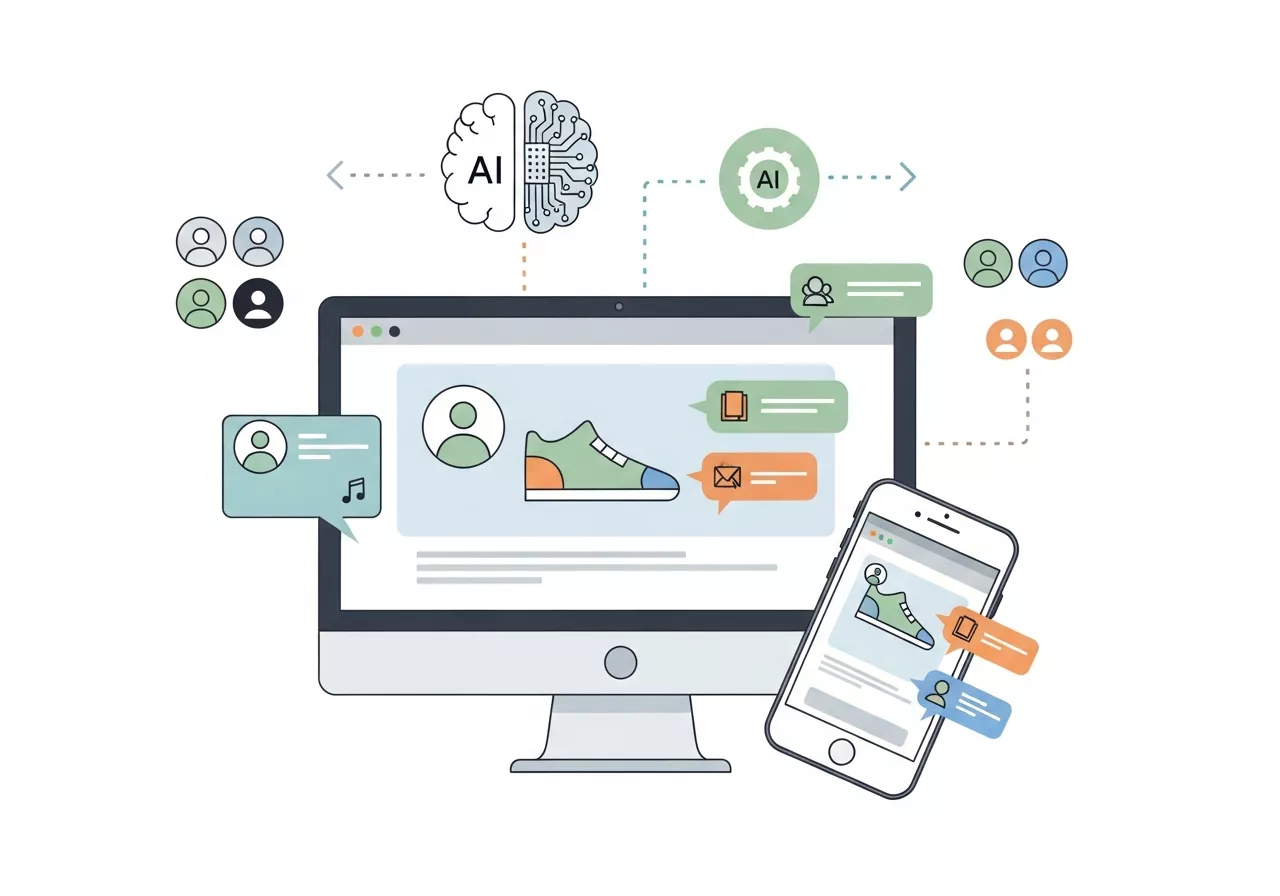
Personalization is moving beyond simple demographic targeting. Advanced AI and machine learning will allow marketers to deliver highly relevant ad experiences tailored to individual behavior, intent, and context. This goes far beyond showing ads to specific age groups or locations—it’s about predicting needs before the user even searches.
Key AI Personalization Tactics
- Behavioral Segmentation: Analyze past searches, clicks, and purchase patterns to target precise audience segments.
- Dynamic Ad Content: Automatically adapt headlines, visuals, and offers based on user preferences and predicted intent.
- Predictive Timing: Serve ads at the exact moment a user is most likely to engage, using AI-driven time-of-day or behavioral predictions.
- Cross-Device Personalization: Track users across devices to create seamless ad experiences from mobile to desktop.
Pro Tip: Marketers should ensure AI personalization respects privacy regulations, balancing relevance with user trust.
Integrating Augmented Reality (AR) in SEM Campaigns
AR is set to change the way users interact with search ads, especially in e-commerce and experiential marketing. By 2030, consumers will expect immersive experiences that allow them to visualize products in real-world contexts before buying.
AR Applications in SEM
- Virtual Try-Ons: Shoppers can see how apparel, eyewear, or makeup looks on them via AR-enabled search ads.
- Product Placement in Environment: Furniture or home décor brands allow users to place items in their actual living spaces.
- Interactive Tutorials: Step-by-step AR guides can be embedded in search ads to enhance engagement.
Table: AR Benefits for SEM
| AR Feature | Benefit | Impact on SEM |
|---|---|---|
| Virtual Try-Ons | Reduces purchase hesitation | Higher CTR and conversion rates |
| Product Placement | Helps users visualize fit and style | Lower returns, improved customer satisfaction |
| Interactive Tutorials | Increases engagement and time-on-page | Boosts ad relevance and quality score |
Pro Tip: AR campaigns require high-quality 3D assets and integration with search ad platforms that support immersive experiences.
Automation of SEM Reporting and Attribution
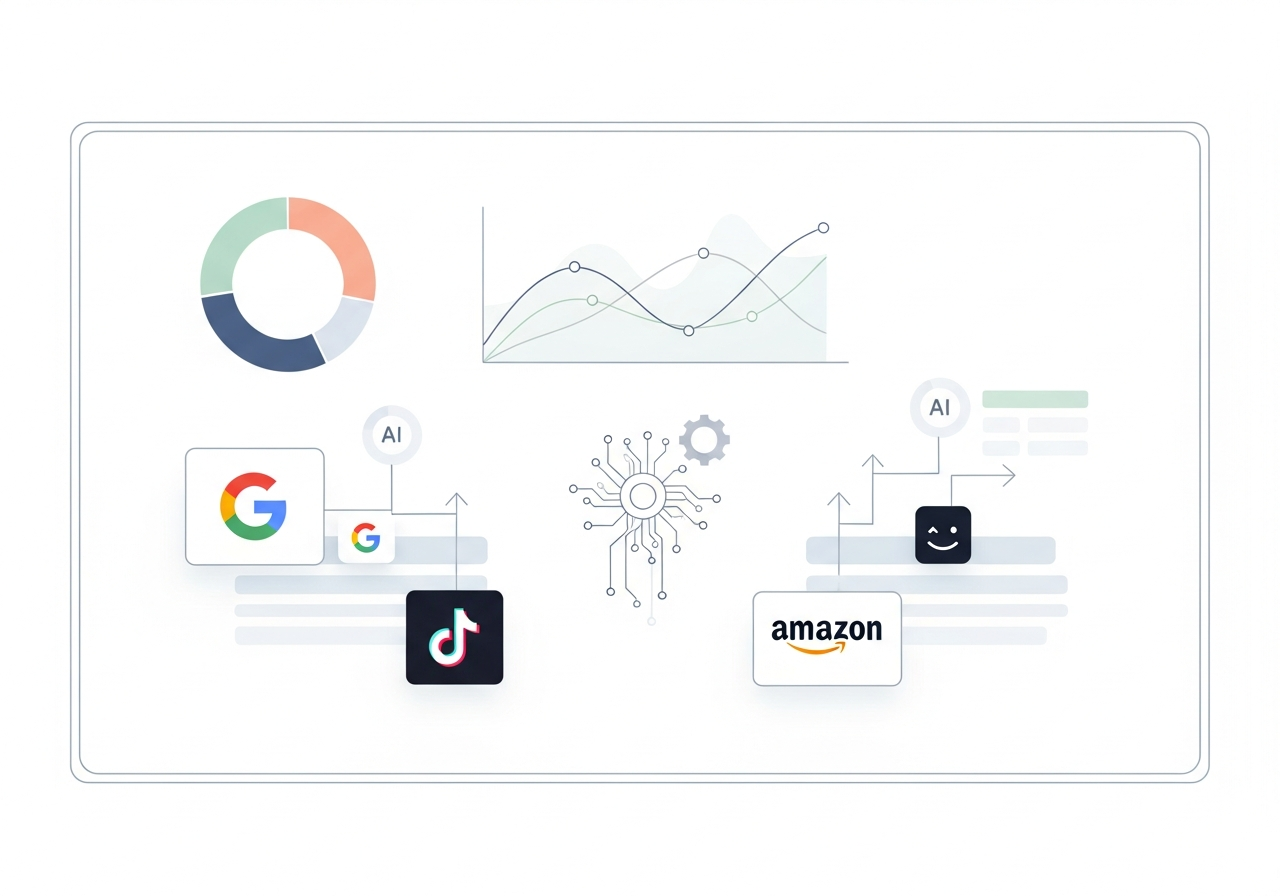
As SEM becomes more complex, with multiple platforms, AI tools, and diverse search behaviors, traditional reporting methods will become insufficient. Automation in reporting and attribution will be critical to understand ROI and optimize campaigns efficiently.
Benefits of Automated SEM Reporting
- Real-Time Insights: Dashboards update continuously, showing which campaigns and keywords drive performance.
- Cross-Platform Attribution: Automatically track user journeys across Google, Amazon, TikTok, and other search ecosystems.
- Actionable Recommendations: AI identifies optimization opportunities, like budget reallocation or bid adjustments.
- Error Reduction: Automation reduces manual reporting errors and ensures consistent data accuracy.
Table: Automated SEM Reporting Features vs. Benefits
| Feature | Description | Benefit |
|---|---|---|
| Multi-Platform Tracking | Consolidates data from Google, TikTok, Amazon, etc. | Comprehensive view of user journeys |
| Predictive Insights | AI forecasts campaign performance | Enables proactive adjustments |
| Custom Dashboards | Tailored KPIs and visualizations | Easier decision-making and stakeholder reporting |
| Automated Alerts | Notifies marketers of anomalies | Faster response to underperforming campaigns |
Pro Tip: Integrate automated SEM reporting with CRM and first-party data systems to fully understand the impact of search campaigns on sales and customer lifetime value.
Conversational AI and Chatbot Integration in Search Marketing
The rise of conversational AI and advanced chatbots is changing how users interact with search results. Instead of clicking through multiple pages, users will increasingly engage with AI-driven assistants to get instant answers, product recommendations, or even make purchases directly.
Opportunities for SEM
- Direct Engagement in Search Results: Chatbots embedded in search results can answer questions, book appointments, or guide product selection.
- Lead Qualification and Nurturing: AI assistants can interact with prospects in real-time, qualifying leads and capturing first-party data for retargeting campaigns.
- Enhanced Personalization: Conversational AI can adapt responses based on previous interactions, search history, or preferences.
Pro Tip: Ensure your chatbot scripts align with your SEM messaging and include natural conversational phrases that match long-tail and voice search queries.
Sustainability and Ethical Marketing as a SEM Differentiator
Consumers increasingly prioritize brands that demonstrate ethical practices and sustainability. By incorporating these values into search marketing campaigns, companies can differentiate themselves and attract purpose-driven users.
SEM Strategies for Ethical Marketing
- Highlight ESG Credentials in Ad Copy: Include certifications, green practices, or community initiatives in headlines and descriptions.
- Promote Sustainable Products via Paid Search: Target keywords related to eco-friendly, ethical, or socially responsible products.
- Support Transparency with Landing Pages: Link search ads to detailed pages showcasing your sustainability metrics, supply chain ethics, or corporate responsibility programs.
Table: Ethical SEM Tactics vs. Expected Outcomes
| Tactic | Description | Benefit |
|---|---|---|
| ESG-Focused Ad Copy | Include green or ethical messaging in ads | Increases click-through from conscious consumers |
| Target Sustainable Keywords | Focus on “eco-friendly,” “ethical,” or “sustainable” searches | Captures a purpose-driven audience |
| Transparent Landing Pages | Detailed ESG initiatives and metrics | Builds trust and reduces bounce rates |
| Highlight Certifications | B Corp, Fair Trade, Carbon Neutral badges | Enhances credibility and brand reputation |
Pro Tip: Track performance of ESG-focused campaigns separately to measure engagement and ROI among sustainability-conscious audiences.
Frequently Asked Questions (FAQ)
1. What is SEM, and why is it evolving?
Search Engine Marketing (SEM) involves promoting websites through paid search ads. It’s evolving due to AI, voice search, visual search, privacy changes, and multi-platform search behaviors, requiring marketers to adopt new strategies.
2. How will AI impact SEM campaigns?
AI will automate bidding, predictive optimization, and creative testing. It can anticipate market trends, adapt campaigns in real time, and personalize ads for individual users, reducing manual workload and improving ROI.
3. Why is voice search important for future SEM?
Voice search changes keyword strategies from short-tail phrases to conversational, long-tail queries. Optimizing for natural language and local searches ensures your brand appears in smart speaker and mobile search results.
4. What role does visual and video search play?
Visual search allows users to find products through images, while video content increasingly dominates search results for informational queries. Optimizing images, videos, and alt text is critical for visibility.
5. How will privacy regulations affect SEM targeting?
With third-party cookies being phased out, first-party data and contextual targeting become essential. Marketers must collect user-consented data and focus on content-based ad placements instead of relying on behavior tracking.
6. What platforms will marketers need to focus on beyond Google?
Users search on TikTok, Amazon, Instagram, LinkedIn, and other platforms. SEM strategies must be platform-specific, adapting ad formats, content, and engagement methods for each ecosystem.
7. How can AR, chatbots, and conversational AI enhance SEM?
AR enables immersive product experiences, chatbots facilitate real-time engagement, and conversational AI delivers personalized, instant responses, improving conversions and customer satisfaction.
8. How can sustainability and ethical marketing improve SEM campaigns?
Highlighting ESG initiatives and ethical practices in ad copy and landing pages attracts purpose-driven consumers, builds trust, and differentiates your brand in competitive search environments.
9. What metrics should I track for future SEM success?
Track cross-platform ROI, conversion rates, engagement on visual/video content, keyword performance for voice search, and campaign impact on brand perception. Automated reporting and AI analytics will simplify this process.
10. How can businesses prepare for SEM trends 2025–2030?
Experiment with AI-driven campaign tools, optimize for voice and visual search, build first-party data systems, create video/AR content, and develop expertise across emerging search platforms. Early adoption creates competitive advantages.
Learn more about: Cross-Channel SEM: Synergizing Search, Display & Video Ads for Maximum ROI



Leave a Reply