


Native Advertising blends seamlessly with content to engage audiences. Understanding its types, strategies, and detection methods helps marketers boost results while guiding consumers to spot sponsored content effectively.
Introduction to Native Advertising: What You Need to Know
In the digital marketing world, Native Advertising has emerged as one of the most effective yet subtle strategies for reaching audiences. Unlike traditional ads that interrupt user experiences, native ads blend seamlessly with the content, making them less intrusive and more likely to engage readers. However, the very nature of native advertising also creates challenges for marketers and consumers alike. Spotting these ads, understanding their strategies, and leveraging their potential requires a comprehensive understanding of the ecosystem.
What is Native Advertising?
Native Advertising is a form of online advertising where promotional content matches the form, style, and function of the platform where it appears. Instead of appearing as a distinct ad banner, native ads integrate with editorial content, social media feeds, or search results. This integration increases engagement rates because the content feels more organic to the viewer.
Platforms like social media networks, search engines, and content discovery platforms have adopted native ads extensively. Examples include sponsored posts on Instagram, promoted tweets on Twitter, or recommended content widgets on news websites. The key characteristic is that the ad does not disrupt the user experience, making it harder to distinguish from non-paid content.
Types of Native Advertising
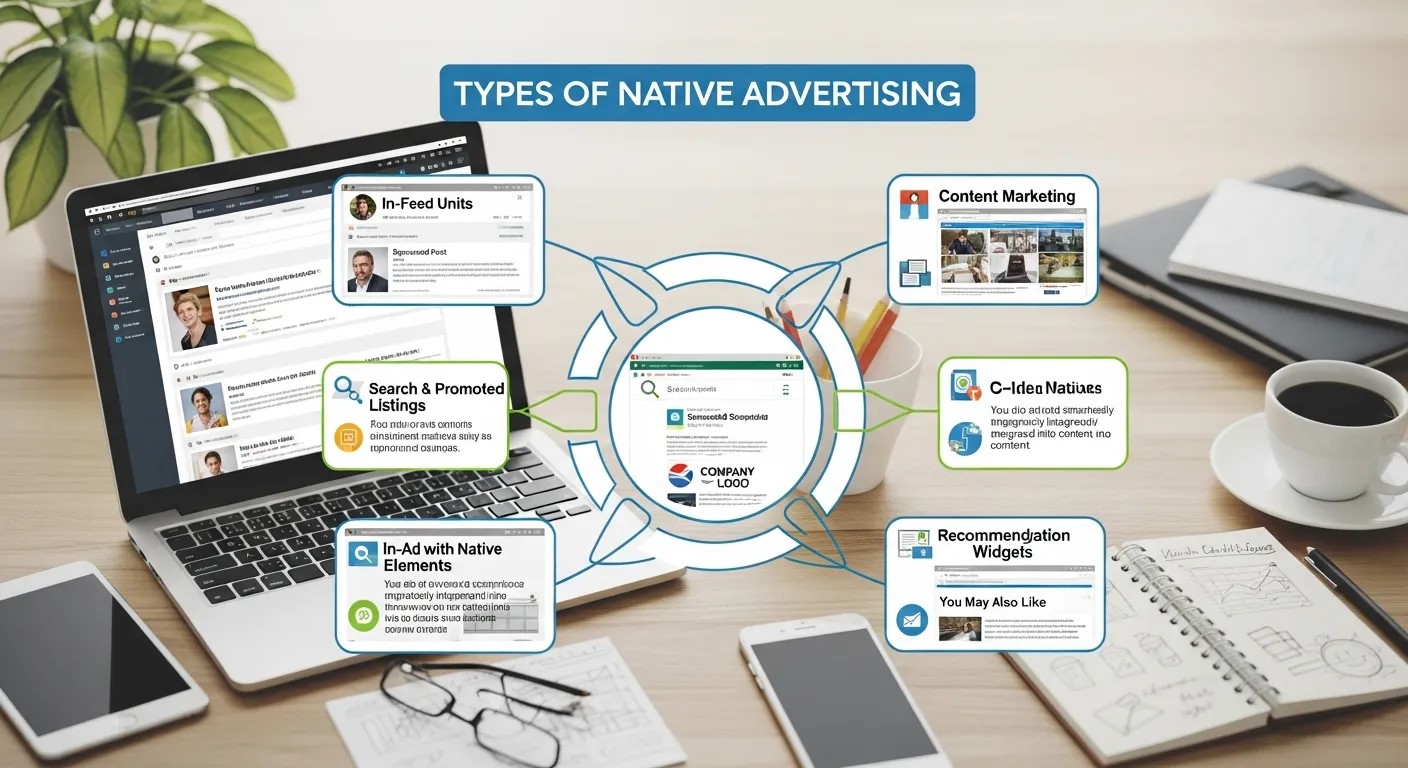
Native advertising can take many forms depending on the platform, audience, and marketing objective. Understanding these types helps marketers choose the most effective approach.
In-Feed Ads
In-feed ads appear directly within the content feed of a platform. Social media channels like Facebook, Instagram, and LinkedIn rely heavily on in-feed native advertising. These ads mimic the format of user-generated content, making them feel natural.
Content Recommendation Widgets
Content recommendation platforms, such as Outbrain or Taboola, use widgets that suggest articles or videos. These suggestions often appear as “recommended for you” or “related articles” at the end of a webpage. Businesses leverage this to promote content subtly, leading readers to high-value landing pages.
Paid Search Ads with Native Format
Even search engines have embraced native formats. Paid search ads that mimic organic search results are technically native in their design, allowing brands to appear as natural recommendations rather than overt advertisements.
Sponsored Content
Sponsored content, often published in collaboration with media outlets or influencers, is another form of native advertising. It provides valuable content while subtly promoting a brand, product, or service.
Custom/Other Forms
Beyond these, native ads can appear as video content, podcasts, or even interactive experiences. Brands continually innovate to maintain seamless integration with user experiences, ensuring high engagement while respecting the platform’s context.
Benefits of Native Advertising
The effectiveness of native advertising comes from its strategic design to match user expectations. Some benefits include:
-
Higher Engagement Rates – Users are more likely to interact with content that feels organic.
-
Better Brand Recall – When executed properly, native ads leave a lasting impression.
-
Reduced Ad Fatigue – Unlike traditional display ads, native ads do not interrupt experiences.
-
Targeted Audience Reach – Platforms often provide advanced targeting options, improving ROI.
How to Identify Native Advertising
While native advertising is effective for marketers, users often find it difficult to distinguish between genuine content and sponsored promotions. Spotting native ads requires attention to subtle cues:
Check the Labeling
Most platforms are legally required to label paid content. Look for terms like “Sponsored,” “Promoted,” “Recommended,” or “Paid Partnership.” These indicators signal that the content has commercial intent.
Analyze the Content Format
If an article or post aligns unusually closely with a brand’s product or service, it may be native advertising. Observing the style, tone, and subject matter often reveals promotional intent.
Review Links and CTAs
Native ads often include links to brand websites, landing pages, or product pages. Calls-to-action (CTAs) such as “Learn More” or “Shop Now” within editorial-style content are strong indicators of native promotion.
Evaluate the Publisher or Platform
Content on reputable media platforms can be both editorial and sponsored. Understanding the source, cross-checking other articles, and noting recurring branded content can help identify native ads.
Examine Engagement Patterns
User comments, social shares, and the flow of content engagement can reveal subtle differences between native ads and organic content. Content with unusually high or low engagement relative to context might indicate sponsorship.
The Psychology Behind Native Advertising
Native advertising works because it aligns with human psychology. People respond better to content that feels informative, entertaining, or authentic rather than interruptive.
-
Cognitive Fluency: Readers are more receptive to content that is easy to process and matches expectations.
-
Trust Association: When native ads are integrated naturally with trusted platforms, users associate the credibility of the platform with the promoted content.
-
Reduced Resistance: Unlike pop-ups or banners, native ads bypass ad-blocking biases, creating a higher likelihood of engagement.
Understanding these psychological triggers is critical for marketers to design campaigns that resonate with audiences while maintaining ethical transparency.
Native Advertising Strategies for Marketers

Marketers must craft strategies that balance engagement, transparency, and conversion. Below are some best practices:
Content Relevance
The key to effective native advertising is relevance. The promoted content must align with audience interests and match the platform’s context. Irrelevant content decreases trust and engagement.
Seamless Integration
Native ads should blend naturally into the content feed or editorial environment. This integration enhances engagement and reduces bounce rates.
Clear yet Subtle Labeling
Transparency is crucial. Use labels like “Sponsored” or “Promoted” in a manner that is compliant but does not disrupt the user experience.
Measurement and Optimization
Continuous monitoring of click-through rates, engagement metrics, and conversion rates ensures campaigns meet business objectives. Marketers can use A/B testing to refine content placement, visuals, and messaging.
Leveraging Data and AI
Modern campaigns increasingly rely on Smart Bidding in SEM, Machine Learning in SEM, and AI-Powered Bidding. These tools allow marketers to optimize ad spend, target the right audience, and increase conversion efficiency. By analyzing historical data and predicting audience behavior, AI helps place native ads in contexts where they are most likely to succeed.
Integrating Native Advertising with Paid Search
Although often associated with content marketing, native advertising can complement paid search strategies. For instance, Dynamic Search Ads can be designed to mimic editorial content in search results, providing a seamless experience for users while driving qualified traffic.
| Strategy | Benefits | Platform Example |
|---|---|---|
| In-feed Native Ads | High engagement | Instagram, Facebook, LinkedIn |
| Content Recommendation Widgets | Drive traffic to landing pages | Taboola, Outbrain |
| Sponsored Content | Build brand authority | Forbes, Medium, Buzzfeed |
| Dynamic Search Ads | Seamless search experience | Google Search |
This integration allows brands to harness both organic-feeling content and targeted paid search simultaneously, maximizing ROI while respecting user experience.
Challenges in Native Advertising
Despite its effectiveness, native advertising is not without challenges:
-
Detection and Trust Issues – Some users feel deceived when they discover content is sponsored.
-
Content Fatigue – Overuse or poor relevance can reduce engagement over time.
-
Compliance and Disclosure – Adhering to legal and platform-specific regulations is crucial.
-
Performance Measurement – Tracking true ROI can be challenging without proper analytics.
Tools for Optimizing Native Advertising
Modern digital marketing provides a variety of tools to enhance native campaigns:
-
Content Management Systems (CMS): Facilitate content creation and scheduling.
-
Programmatic Platforms: Automate ad placement across multiple channels.
-
Analytics Tools: Monitor engagement metrics, traffic, and conversions.
-
AI-Based Tools: Predict performance and optimize targeting using Machine Learning in SEM and AI-Powered Bidding.
Using these tools strategically allows marketers to maintain the delicate balance between visibility, relevance, and user experience.
Future of Native Advertising
The future of native advertising lies in personalization, interactivity, and AI-driven optimization. As audiences demand more relevant and seamless content, marketers must innovate continually. Key trends include:
-
Hyper-Personalization: Leveraging user behavior and AI to deliver content tailored to individual preferences.
-
Interactive Native Ads: Polls, quizzes, and mini-games to enhance engagement.
-
Cross-Platform Campaigns: Integrating native advertising across social, search, and content platforms.
-
Voice-Activated Native Ads: Preparing for the rise of voice search and smart assistants.
By embracing these trends, brands can remain at the forefront of consumer engagement while maintaining ethical and transparent practices.
Case Studies: Native Advertising in Action

Understanding theory is important, but real-world examples show how native advertising delivers results. Examining campaigns across industries helps marketers grasp what works and what doesn’t.
Case Study 1: Media Brand Sponsored Content
A leading news website collaborated with a tech brand to publish an article on the future of digital marketing. By integrating insights and subtle promotion of the brand’s products, the content achieved 25% higher engagement rates than standard display ads.
-
Strategy Used: Informational yet subtly branded content.
-
Result: Increased website traffic and brand awareness.
-
Lesson: Native ads that provide value to readers perform better than blatant advertisements.
Case Study 2: Social Media In-Feed Ads
A fashion retailer leveraged Instagram in-feed native ads to promote its latest clothing line. The posts appeared similar to organic content, featuring lifestyle photography and engaging captions.
-
Outcome: A 40% increase in click-through rates compared to standard sponsored posts.
-
Key Insight: Visual consistency with platform norms enhances user engagement.
Case Study 3: Dynamic Search Ads as Native Promotions
An e-commerce platform used Dynamic Search Ads designed to mimic organic search results. These ads were tailored using AI algorithms that predicted user intent, appearing as suggested searches that felt natural.
-
Impact: Conversion rates improved by 18% while maintaining low cost-per-click (CPC).
-
Takeaway: Combining native ad design with AI-Powered Bidding can boost efficiency and reduce wasted ad spend.
Advanced Strategies to Spot and Leverage Native Ads
While marketers need to create effective native ads, consumers and analysts benefit from knowing how to spot them and understand their mechanics.
Subtle Signal Recognition
-
Look for slight deviations in tone or style compared to editorial content.
-
Check URL structures: sometimes sponsored content redirects to brand-specific landing pages.
-
Watch for CTAs that are unusually persuasive within informational content.
Multi-Platform Observation
Native advertising isn’t limited to one channel. Observing the same brand across multiple platforms often reveals patterns in content promotion strategies.
-
Instagram and Facebook: In-feed ads that mirror user content.
-
Google and Bing: Dynamic Search Ads integrated with search queries.
-
Content discovery platforms: Suggested articles in Taboola or Outbrain.
Leveraging Analytics for Optimization
For marketers, analytics are vital in native advertising. Tools like Google Analytics, heatmaps, and click-tracking provide insights into engagement and conversion.
-
AI-Powered Bidding can predict audience behavior and optimize placements.
-
Smart Bidding in SEM ensures budget allocation toward high-performing native content.
-
Machine Learning in SEM analyzes historical performance to forecast ROI.
These technologies allow campaigns to scale efficiently while maintaining a natural feel, which is the hallmark of successful native advertising.
Ethical Considerations in Native Advertising
While native advertising is effective, ethical practices are critical. Misleading users can harm brand reputation.
-
Transparency: Always label sponsored content clearly.
-
Value-First Content: Prioritize informative or entertaining content before promotion.
-
Audience Respect: Avoid overwhelming users with repetitive native ads.
-
Regulatory Compliance: Follow FTC and platform-specific guidelines for disclosure.
Brands that balance engagement and transparency foster trust and long-term loyalty.
Designing Native Ads for Maximum Impact
Creating a compelling native advertising campaign requires both creativity and strategy.
Content Design Tips
-
Use storytelling: Narrative-driven content performs better than plain product descriptions.
-
Visual consistency: Images and videos should match the platform’s aesthetic.
-
Adaptive formatting: Content should render seamlessly on mobile, desktop, and tablet devices.
Placement Strategies
-
Top-of-feed placements often get higher visibility but can feel intrusive.
-
Mid-feed placements integrate better with content flow.
-
End-of-article recommendations drive click-throughs without disrupting reading.
Integrating Paid Search with Native Campaigns
By combining native ad principles with Dynamic Search Ads, brands can create campaigns that feel organic while targeting intent-based searches. This combination maximizes conversions and maintains user experience quality.
Measuring Success in Native Advertising
Effective measurement ensures ROI and informs optimization. Key metrics include:
-
Engagement Rate: Clicks, likes, shares, and comments indicate user interest.
-
Time on Page: Longer engagement suggests content is valuable and relevant.
-
Conversion Rate: Whether users take desired actions, such as signing up or purchasing.
-
Brand Lift Metrics: Awareness, recall, and sentiment analysis to measure long-term impact.
Advanced marketers integrate AI and machine learning tools to analyze these metrics more precisely. For instance, Machine Learning in SEM predicts which ad variations are likely to outperform based on historical data.
Future-Proofing Native Advertising Campaigns
The digital landscape is evolving, and native advertising must evolve with it.
Emerging Trends
-
Personalized Experiences: Leveraging behavioral data for tailored content delivery.
-
Interactive Content: Quizzes, polls, and mini-games improve engagement.
-
Voice and Visual Search Integration: Preparing for AI-driven search technologies.
-
Cross-Device Strategies: Ensuring campaigns are seamless across desktop, mobile, and apps.
How to Spot Native Advertising Across Platforms
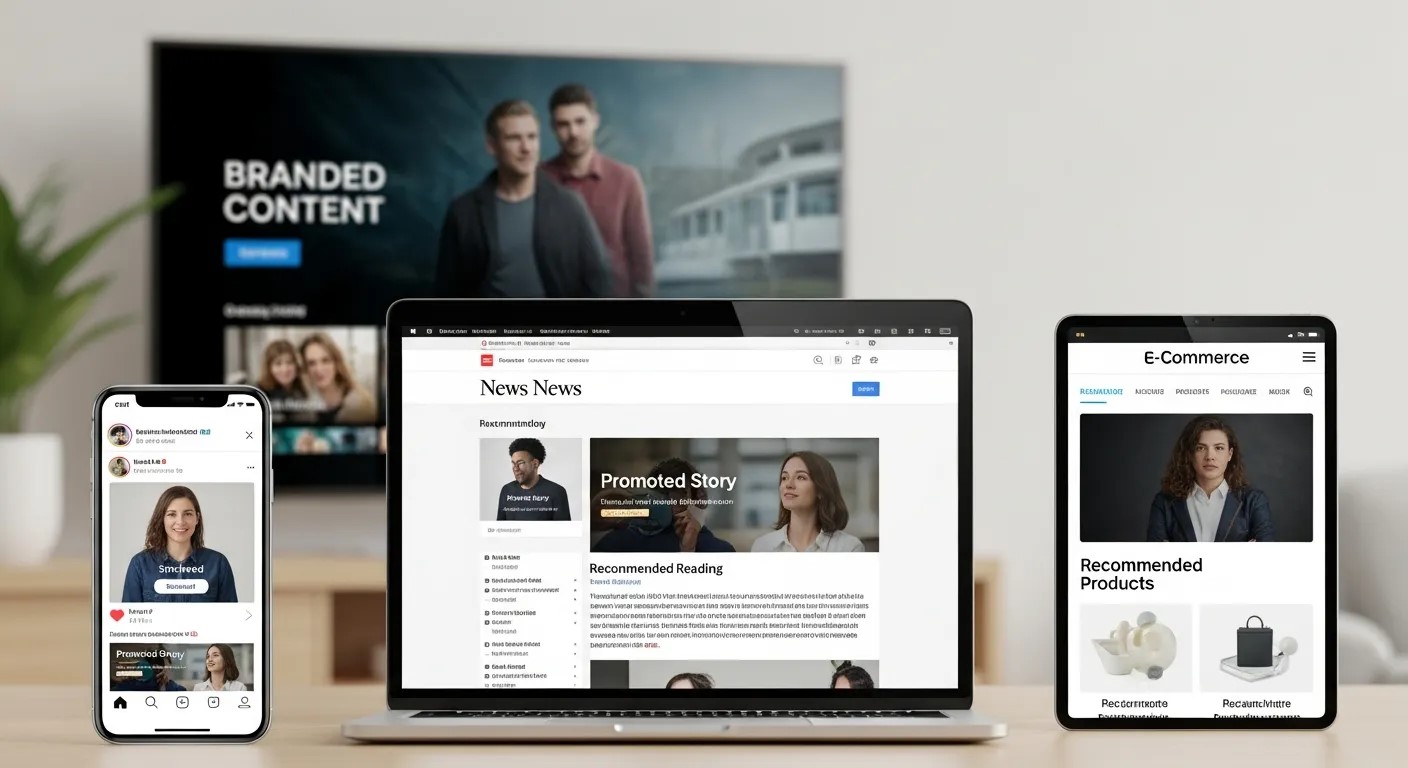
Different platforms present native advertising in unique ways. Recognizing these variations is essential for marketers and consumers alike.
Facebook & Instagram
-
In-Feed Sponsored Posts: These appear similar to organic posts, with subtle labels like “Sponsored” or “Paid Partnership.”
-
Stories Ads: Short-lived content that blends seamlessly with user stories.
-
Tips to Spot: Look for brand handles, subtle product mentions, or CTA buttons that differ slightly from organic stories.
Twitter/X
-
Promoted Tweets: These appear in user feeds, mimicking regular tweets.
-
Trends and Recommendations: Brands sometimes sponsor hashtags or trends, subtly influencing discussions.
-
Tips to Spot: Check for “Promoted” labels and review links included in the tweet.
-
Sponsored Content: Posts from brands that resemble professional articles or updates.
-
InMail Ads: Personalized messages sent directly to users’ inboxes.
-
Tips to Spot: Look for company branding and “Sponsored” indicators within feeds or messages.
Google Search & Display
-
Dynamic Search Ads: Ads automatically generated to match search queries, often appearing as organic results.
-
Display Native Ads: Blended into the website design or content recommendation widgets.
-
Tips to Spot: Check URLs, ad extensions, and CTA buttons; subtle labeling may appear at the bottom.
Content Discovery Platforms
-
Taboola/Outbrain Widgets: “Recommended for you” or “You may also like” sections often contain native ads.
-
Tips to Spot: Hover over links to see if they redirect to a brand site rather than a news article.
Deep Dive: Behavioral Psychology of Native Advertising
Native advertising succeeds because it taps into cognitive and emotional triggers. Understanding these can help marketers design better campaigns and consumers recognize ads.
Cognitive Fluency
Humans prefer content that is easy to process. Native ads mimic the format of the surrounding content, making them naturally more digestible.
-
Impact on Engagement: Ads that feel familiar reduce mental resistance and increase clicks.
-
Example: Sponsored articles in a newsfeed styled like editorial content.
Social Proof
People often rely on cues from others when evaluating content. Native ads integrated with social signals (likes, shares, comments) leverage this principle.
-
Impact on Decision Making: Users are more likely to trust content endorsed by peers.
-
Example: Influencer-sponsored posts with high engagement metrics.
Emotional Connection
Stories and narratives elicit emotional responses. Native ads using storytelling create stronger connections with brands.
-
Impact on Brand Recall: Emotional engagement improves memory retention.
-
Example: Video ads showcasing real-life customer experiences.
Step by Step Guide to Creating Effective Native Advertising Campaigns
Marketers aiming for high-performing native campaigns should follow a structured approach.
Step 1: Audience Research
-
Define target demographics, interests, and behaviors.
-
Analyze engagement patterns from past campaigns.
-
Use Machine Learning in SEM to predict content resonance.
Step 2: Content Creation
-
Ensure the ad aligns visually and tonally with the platform.
-
Craft storytelling elements to provide value.
-
Subtle CTAs guide the user without feeling intrusive.
Step 3: Platform Selection
-
Choose channels where the target audience is most active.
-
For search-driven intent, integrate Dynamic Search Ads.
-
Social platforms benefit from in-feed or story-based placements.
Step 4: Launch & Monitor
-
Deploy campaigns in small batches for testing.
-
Monitor engagement metrics: clicks, shares, dwell time.
-
Adjust content placement using Smart Bidding in SEM to maximize ROI.
Step 5: Optimization
-
Use AI-powered tools for predictive analysis and performance adjustment.
-
Refine messaging, visuals, and targeting based on real-time data.
-
Implement iterative testing to continuously improve campaign effectiveness.
Comparative Table: Native Ad Formats and Engagement
| Platform/Format | Key Feature | Engagement Level | Best Use Case |
|---|---|---|---|
| Facebook In-Feed | Visual storytelling | High | Lifestyle brands |
| Instagram Stories | Ephemeral content | Medium-High | Product launches |
| Twitter Promoted | Trend-driven content | Medium | Awareness campaigns |
| LinkedIn Sponsored | Professional articles | Medium | B2B lead generation |
| Google Dynamic Search Ads | Intent-based search | High | Conversion-focused campaigns |
| Content Discovery Widgets | Recommended content | Medium | Traffic & brand awareness |
Leveraging AI and Smart Bidding in Native Advertising
Modern campaigns increasingly rely on AI-Powered Bidding, Smart Bidding in SEM, and Machine Learning in SEM to enhance targeting and efficiency.
-
AI-Powered Bidding: Uses algorithms to predict the best bid for each impression based on historical and real-time data.
-
Smart Bidding in SEM: Automatically adjusts bids across campaigns to maximize performance and reduce wasted spend.
-
Machine Learning in SEM: Detects patterns and predicts user behavior, improving placement and content relevance.
By integrating AI and automation, marketers can scale campaigns while maintaining a natural feel, which is the core principle of native advertising.
Global Trends in Native Advertising
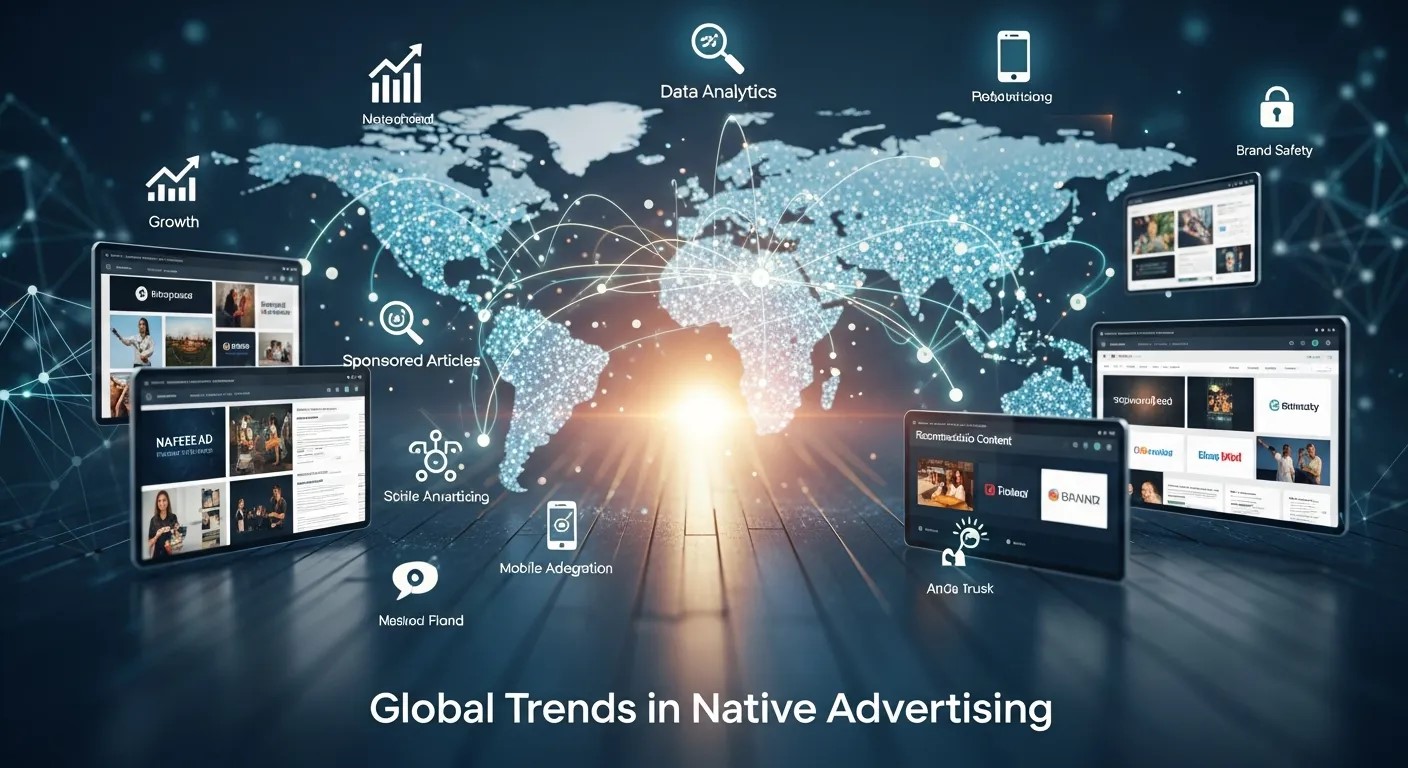
The future of native advertising is driven by personalization, interactivity, and ethical transparency.
-
Hyper-Personalization: AI tools curate content based on individual behavior and preferences.
-
Interactive Experiences: Quizzes, polls, and gamified content increase engagement.
-
Voice and Visual Search: Optimizing for voice assistants and image recognition platforms.
-
Cross-Device Integration: Ensuring seamless campaigns across mobile, tablet, and desktop devices.
Brands that adopt these trends stay ahead in consumer engagement while respecting platform and user expectations.
Native Advertising Across Industries: Extended Insights
Healthcare
-
Promoting health tips, wellness guides, and preventive care through editorial-style content.
-
Drives patient engagement while maintaining trust and transparency.
Travel & Hospitality
-
Native ads highlight destinations, hotel experiences, and travel tips.
-
Interactive storytelling boosts bookings and social shares.
Finance
-
Educational content about investments, loans, or credit tips appears as native articles or videos.
-
Builds authority and trust without overt sales pressure.
Practical Tips for Consumers: Recognizing Native Ads
While marketers focus on campaign success, consumers benefit from knowing how to identify native ads.
-
Check for Subtle Labeling: “Sponsored,” “Promoted,” or “Paid Partnership” are common indicators.
-
Examine the URL: Content leading to brand-specific pages often indicates native advertising.
-
Look for CTA Buttons: Calls-to-action embedded within editorial content usually signal promotion.
-
Compare Content Tone: If the article or post subtly promotes a brand or product, it is likely a native ad.
By understanding these patterns, consumers can make informed choices while engaging with content.
Conclusion
Native Advertising is a powerful digital marketing strategy that engages audiences without disrupting their experience. By understanding its types, leveraging AI and smart bidding strategies, and maintaining ethical transparency, marketers can maximize impact while consumers learn to spot sponsored content effectively.
Frequently Asked Questions (FAQ)
What is Native Advertising?
Native Advertising is a type of online promotion that blends seamlessly with the platform’s content, appearing less intrusive while engaging audiences effectively.
How can I spot Native Ads?
Look for subtle labels like “Sponsored” or “Promoted,” analyze content tone, check links and CTAs, and observe engagement patterns to identify native ads.
What are the main types of Native Advertising?
Common types include in-feed ads, sponsored content, content recommendation widgets, dynamic search ads, and platform-specific promotions like Instagram Stories or LinkedIn posts.
Why is Native Advertising effective?
It leverages human psychology, appearing organic and engaging while reducing ad fatigue, increasing brand recall, and driving better user interactions compared to traditional ads.
Can AI and SEM tools improve Native Advertising?
Yes. Tools like Smart Bidding in SEM, AI-Powered Bidding, and Machine Learning in SEM help optimize placements, predict performance, and increase ROI without compromising user experience.
Is Native Advertising ethical?
When executed transparently with proper labeling and value-first content, native advertising is ethical. Misleading users can harm trust, so clear disclosure is essential.
Which industries benefit most from Native Advertising?
Industries like e-commerce, media, finance, healthcare, travel, and B2B marketing use native advertising effectively to engage audiences and boost conversions.



Leave a Reply