

The Ultimate Guide to Excel at SEM: Proven Strategies for Success
Search Engine Marketing, commonly known as SEM, is an indispensable tool for businesses aiming to excel at SEM and capture the attention of potential customers at the right moment. Unlike organic SEO, SEM allows marketers to bid for ad placements in search engine results, enabling precise targeting and faster visibility. For professionals looking to grow their digital presence, understanding SEM is no longer optional it is essential.
Understanding the SEM Landscape
To excel at SEM, one must first grasp the current digital ecosystem. Google dominates the online search market, with Google’s Search Engine Market Share consistently hovering above 90%. This dominance means that businesses looking to attract relevant traffic must prioritize Google Ads, the primary platform for SEM campaigns. Understanding this landscape helps marketers allocate budgets efficiently and select the most impactful strategies for their campaigns.
Search behavior has evolved rapidly over the past decade. Consumers are now expecting faster, personalized results that address their immediate needs. This shift makes SEM an ideal platform for delivering targeted messages, especially when paired with the right analytics and optimization techniques.
Core Components of a Successful SEM Strategy
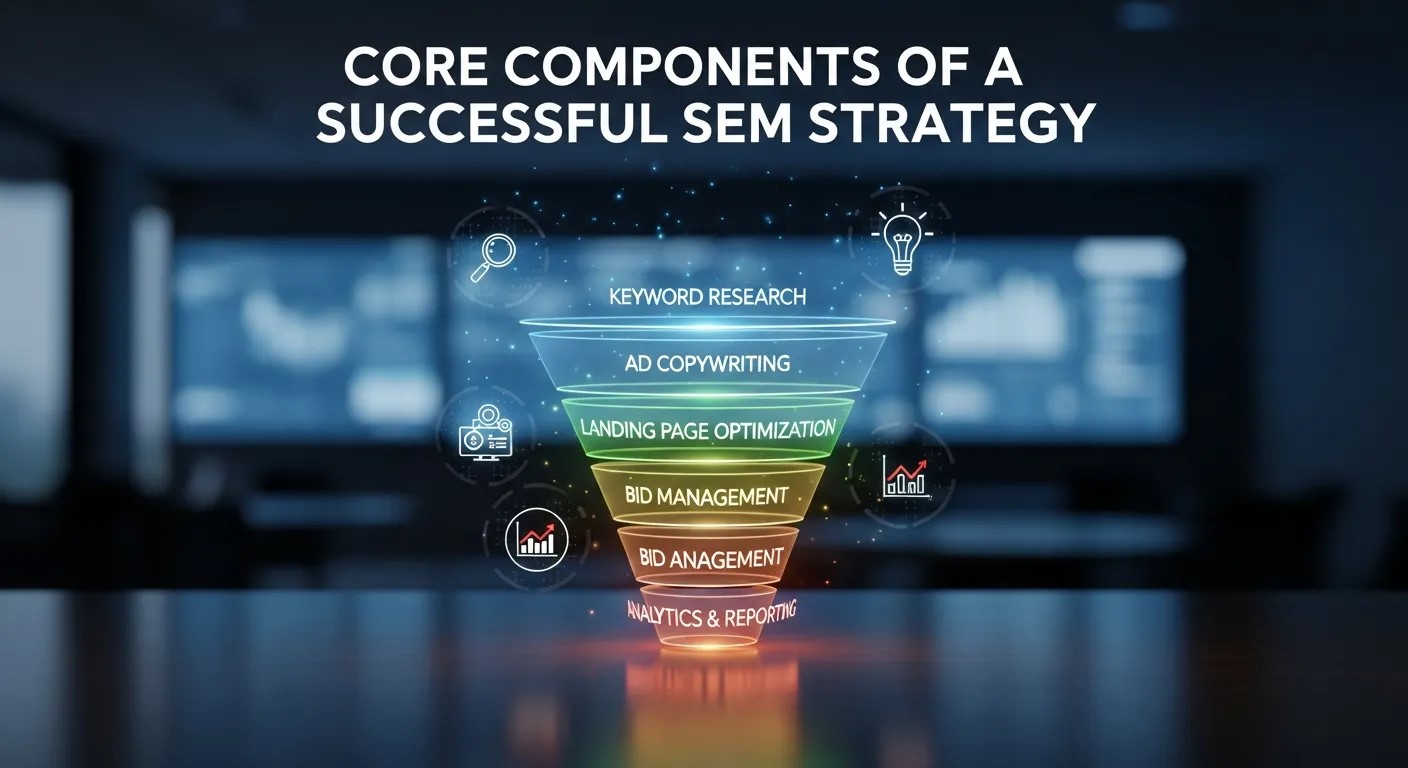
A strong SEM strategy involves several critical components. When aiming to excel at SEM, marketers should consider the following:
Keyword Research and Targeting
Effective SEM campaigns begin with robust keyword research. Choosing the right keywords ensures that your ads appear for search terms with high intent. Tools such as Google Keyword Planner, SEMrush, and Ahrefs can help identify profitable search terms.
Incorporating long-tail keywords can improve relevance and reduce cost-per-click (CPC). For instance, instead of targeting the generic term “digital marketing,” a more specific phrase like “SEM training for beginners” may yield better ROI. This approach ensures that campaigns reach an audience genuinely interested in your product or service.
Crafting Compelling Ad Copy
Even with perfect keyword targeting, your campaign will not succeed without engaging ad copy. Ads must be clear, persuasive, and action-oriented. Highlighting unique selling propositions (USPs) or offering solutions to common pain points increases the likelihood of clicks and conversions. Dynamic messaging that reflects seasonal trends or promotions can further enhance performance.
Leveraging Dynamic Search Ads
To excel at SEM, it’s crucial to explore advanced tools like Dynamic Search Ads. These ads automatically match user queries to your website content, filling gaps that traditional keyword targeting may miss. Dynamic Search Ads can improve coverage, reduce the need for exhaustive keyword lists, and increase efficiency in large-scale campaigns.
Landing Page Optimization
An SEM campaign is only as strong as its landing page. Even high-performing ads cannot convert visitors if the landing page is cluttered, slow, or irrelevant. Focus on user experience, clear calls-to-action, and mobile responsiveness. Implementing A/B testing on headlines, forms, and visuals can significantly improve conversion rates over time.
Advanced Targeting Techniques
Beyond keywords and ad copy, successful marketers employ advanced targeting strategies to excel at SEM. These methods ensure that the right message reaches the right audience at the right time.
Audience Segmentation
Segmentation allows campaigns to be tailored to specific demographics, interests, and behaviors. By dividing audiences into meaningful categories, marketers can deliver more personalized content. For example, segmenting users by location, device, or previous engagement helps increase click-through rates and conversion likelihood.
Hyper-Personalization at Scale
Modern SEM campaigns thrive on hyper-personalization at scale. This involves dynamically adapting ads and messaging based on user intent, behavior, and preferences. Personalization can include showing product recommendations, local offers, or content tailored to past interactions. Implementing hyper-personalization increases engagement, reduces wasted ad spend, and strengthens brand loyalty.
Retargeting and Remarketing
Retargeting allows you to reconnect with visitors who interacted with your website but did not convert. By showing relevant ads to these audiences, you can guide them back into the conversion funnel. Remarketing campaigns are particularly effective when paired with personalized offers or reminders.
Measuring SEM Performance
One of the defining features of SEM is its measurability. To excel at SEM, marketers must continually track performance and make data-driven decisions.
Key Metrics to Monitor
Some of the most critical metrics include:
| Metric | Why It Matters |
|---|---|
| CTR (Click-Through Rate) | Measures engagement with your ads |
| CPC (Cost Per Click) | Determines the efficiency of your spend |
| Quality Score | Google’s assessment of ad relevance |
| Conversion Rate | Shows the effectiveness of your landing page and ad messaging |
| ROI & ROAS | Demonstrates the financial success of campaigns |
By closely monitoring these metrics, marketers can optimize campaigns for higher efficiency and profitability.
Analytics Tools
Using analytics tools is essential for understanding campaign performance. Platforms such as Google Analytics, Google Ads reports, and third-party dashboards provide insight into user behavior, traffic sources, and conversion paths. These tools help marketers make informed adjustments to targeting, bidding strategies, and ad copy.
Measuring ROI and Analytics
Another crucial component for those seeking to excel at SEM is measuring ROI and analytics effectively. Tracking return on investment ensures that every dollar spent contributes to business growth. Combining ROI measurement with continuous A/B testing, segmentation analysis, and conversion tracking provides a complete picture of campaign effectiveness.
SEM Training and Skill Development

To truly excel at SEM, ongoing learning is indispensable. Platforms offering SEM training can help marketers stay updated with evolving best practices, algorithm changes, and platform features. Certifications from Google Ads, HubSpot, or other reputable institutions validate skills and enhance credibility.
Regular training also equips professionals to experiment with new strategies, test innovative ad formats, and incorporate emerging technologies into campaigns.
Why Excel at SEM Matters
Businesses that master SEM enjoy several advantages:
- Immediate visibility for high-intent searches
- Improved targeting and personalization
- Measurable results that guide strategy
- Competitive advantage in crowded digital markets
By committing to best practices and leveraging the right tools, organizations can ensure that their SEM efforts deliver tangible results and sustainable growth.
Bidding Strategies to Excel at SEM
Once you understand the fundamentals, the next step to excel at SEM is mastering bidding strategies. Proper bidding ensures that your ads appear in the optimal position without overspending. SEM platforms like Google Ads offer several bidding options:
Manual vs. Automated Bidding
-
Manual Bidding: Allows marketers to set individual bids for keywords. This gives maximum control but requires continuous monitoring to avoid overspending.
-
Automated Bidding: Leverages machine learning to adjust bids based on likelihood of conversion. Automated strategies, such as Target CPA (Cost Per Acquisition) or Target ROAS (Return on Ad Spend), are ideal for campaigns that aim for efficiency and scalability.
Understanding when to use each method is key for businesses that want to excel at SEM while maintaining profitability.
Keyword Match Types
Another crucial element is keyword match types. Broad match, phrase match, exact match, and negative keywords all impact ad visibility and cost. For instance, using broad match might increase impressions but reduce relevance, while exact match narrows the audience but improves conversion potential. A balanced approach ensures that campaigns are both expansive and efficient.
Structuring Your SEM Campaigns
A well-organized campaign structure is essential to excel at SEM. Effective campaigns are typically divided into:
- Campaigns: High-level grouping based on objective (e.g., lead generation, brand awareness)
- Ad Groups: Collections of related keywords and ads
- Keywords: Targeted terms that trigger ads
- Ads: Compelling messages that entice users to click
Proper structure enables easier optimization, better tracking, and clearer insights from analytics. For example, a campaign promoting seasonal products should have separate ad groups for each category, ensuring relevancy and higher engagement.
Using Negative Keywords
Negative keywords prevent ads from appearing in irrelevant searches, improving quality score and ROI. For instance, a company selling premium software might use negative keywords like “free” or “cheap” to avoid low-intent clicks. This subtle but essential tactic helps marketers truly excel at SEM.
Leveraging Advanced Tools for Maximum Impact
Advanced tools can differentiate an average SEM campaign from a top-performing one. Integrating technology and insights is crucial to excel at SEM in competitive markets.
Dynamic Search Ads for Coverage
Dynamic Search Ads automatically generate ad copy based on your website content, covering queries not explicitly targeted by your keyword list. These ads expand reach and capture niche searches, helping marketers maintain consistent visibility while saving time.
Audience Insights and Segmentation
Understanding your audience is key. Using demographic data, browsing history, and previous engagement allows for refined targeting. Techniques like retargeting visitors who abandoned their carts can increase conversions. Combining segmentation with hyper-personalization at scale ensures that every interaction is relevant and impactful.
Competitor Analysis
Competitor research informs strategic decisions. Tools such as SEMrush, SpyFu, and SimilarWeb reveal competitor keywords, ad copy, and landing page strategies. By learning from competitors, marketers can refine their campaigns and identify opportunities to excel at SEM beyond standard practices.
Optimizing Ad Copy and Creative
The effectiveness of an SEM campaign hinges on compelling creative and persuasive messaging. To excel at SEM, consider the following strategies:
- Use Action-Oriented Language: Verbs like “Get,” “Discover,” or “Unlock” encourage clicks.
- Highlight Unique Value Propositions: Why should the user choose your product over competitors?
- Ad Extensions: Include sitelinks, callouts, and structured snippets to increase ad real estate and click-through rates.
- A/B Testing: Continuously test headlines, descriptions, and CTAs to identify what resonates best.
Effective ad copy not only increases engagement but also improves quality score, which can reduce cost-per-click while maintaining top ad positions.
Automation and Machine Learning in SEM

Modern SEM platforms offer automation powered by machine learning. Utilizing these tools allows marketers to excel at SEM while saving time and reducing errors.
Smart Bidding
Smart bidding automatically adjusts bids based on predicted performance. By analyzing conversion likelihood, location, device, and time of day, smart bidding ensures optimal ad placement without manual intervention. Campaigns leveraging this feature often achieve higher ROI than purely manual approaches.
Automated Rules and Alerts
Setting automated rules allows campaigns to adapt in real-time. For instance, pausing ads that underperform or increasing budgets for high-converting campaigns ensures efficiency. Alerts notify marketers of sudden drops in performance, enabling quick corrective action.
Measuring Success: Advanced Analytics
To consistently excel at SEM, performance measurement is not optional—it’s mandatory. While basic metrics like CTR and CPC are important, advanced analytics provide deeper insights.
Multi-Touch Attribution
Understanding the customer journey requires multi-touch attribution, which assigns value to every touchpoint leading to conversion. This approach helps marketers optimize campaigns for overall impact rather than just last-click performance.
Conversion Tracking
Setting up conversion tracking allows measurement of specific goals, such as form submissions, purchases, or downloads. Accurate tracking informs bidding strategies, audience targeting, and ad copy optimization.
Reporting Dashboards
Custom dashboards consolidate data from multiple sources, offering a holistic view of campaign health. Visualizing KPIs, trends, and anomalies makes it easier to adjust strategies and ensure that campaigns continue to excel at SEM.
Industry Case Studies: Learning from Success
Examining real-world examples helps marketers understand how to excel at SEM in practice. Consider the following:
| Brand | Strategy | Outcome |
|---|---|---|
| E-commerce Retailer | Implemented Dynamic Search Ads and retargeting | 30% increase in conversions |
| SaaS Company | Leveraged Smart Bidding with hyper-personalized ads | 25% reduction in CPC |
| Local Service Provider | Focused on keyword segmentation and negative keywords | 40% improvement in ROI |
These case studies demonstrate the tangible benefits of advanced SEM strategies when applied correctly. Learning from these examples allows marketers to replicate success and refine their campaigns.
Staying Ahead in SEM
The SEM landscape is constantly evolving. To excel at SEM, professionals must stay informed about:
- Algorithm updates
- Emerging ad formats
- Changes in consumer behavior
- Industry trends
Regular participation in SEM training programs ensures that marketers remain competitive. Additionally, subscribing to industry blogs, attending webinars, and networking with peers provides ongoing knowledge and inspiration.
Budget Optimization to Excel at SEM
To truly excel at SEM, managing your budget effectively is just as important as crafting great ads. Allocating spend across campaigns, ad groups, and keywords ensures that high-performing areas receive sufficient investment, while underperforming elements are optimized or paused. Using historical performance data helps marketers predict which campaigns will generate the best return, allowing smarter allocation of resources.
Smart Budget Allocation
A common approach is to divide budgets by priority: campaigns targeting high-intent keywords typically receive more funding, while exploratory or awareness campaigns get smaller shares. Combining this with automated bid adjustments ensures that your ad spend is always directed toward opportunities most likely to convert.
Seasonal Adjustments
Consumer behavior shifts with seasons, holidays, and industry trends. Marketers who aim to excel at SEM plan budgets around peak periods, increasing bids for high-value keywords when demand is highest. Similarly, campaigns may be scaled down during low-traffic periods to maximize ROI.
Integrating SEM with Other Channels
SEM does not exist in isolation. Combining search marketing with other digital channels strengthens overall strategy. For example, retargeting users who visited via SEM on social media platforms can increase conversions, while email campaigns targeting SEM leads nurture long-term engagement. This cross-channel approach allows businesses to excel at SEM beyond the search engine alone.
Dynamic Search Ads Across Channels
While Dynamic Search Ads are primarily a search tool, their principles—automated targeting based on content and intent—can be applied to display and social campaigns. By aligning messaging and audience segmentation, marketers achieve consistent branding and higher engagement rates.
Leveraging Data and Analytics for Continuous Improvement

Analytics is the backbone of successful SEM. Marketers seeking to excel at SEM must track not only clicks and conversions but also user behavior, landing page performance, and attribution metrics. Tools like Google Analytics, combined with platform-specific dashboards, provide deep insights that guide optimization.
Measuring ROI and Analytics
Regularly analyzing campaign ROI helps identify high-performing keywords, ad groups, and strategies. Implementing measuring ROI and analytics ensures that every action taken contributes to growth, minimizing wasted spend and maximizing conversions.
Experimentation and Testing
A culture of experimentation supports SEM excellence. A/B testing ad copy, adjusting bid strategies, and exploring new keyword opportunities all help marketers continuously improve. Experimentation allows teams to learn from real-world data, adapt quickly, and maintain a competitive edge.
Future-Proofing Your SEM Strategy
The digital marketing landscape is dynamic. Marketers aiming to excel at SEM must anticipate changes, such as algorithm updates, privacy regulations, and AI-driven automation. Embracing innovation, attending SEM training, and monitoring industry trends ensures campaigns remain effective and forward-looking.
By combining strategic budget management, cross-channel integration, and data-driven optimization, businesses can maintain sustainable growth and long-term success in SEM campaigns.
Conclusion
To consistently excel at SEM, businesses must combine strategic planning, precise targeting, and continuous optimization. From keyword research and dynamic ad campaigns to advanced analytics and hyper-personalization at scale, every element of SEM contributes to measurable growth. Leveraging tools like Dynamic Search Ads, tracking ROI and analytics, and engaging in ongoing SEM training ensures campaigns remain competitive and effective.
Mastering SEM is not just about driving traffic it’s about delivering relevant, timely, and personalized experiences that convert users into loyal customers. By understanding trends, applying data-driven insights, and adapting strategies proactively, marketers can truly excel at SEM and achieve long-term digital success.
Frequently Asked Questions (FAQ)
What does it mean to excel at SEM?
To excel at SEM, businesses must create well-structured campaigns, target the right keywords, optimize ad copy and landing pages, and continuously analyze performance to maximize ROI and conversions.
How can I improve my SEM campaigns?
Improvement comes from using advanced strategies like Dynamic Search Ads, audience segmentation, A/B testing, and hyper-personalization at scale, while monitoring performance through robust measuring ROI and analytics.
Is SEM training necessary to excel?
Yes. Ongoing SEM training helps marketers stay updated on Google Ads changes, emerging ad formats, bidding strategies, and industry best practices, which are critical to excel at SEM.
How do I track the success of SEM campaigns?
Use analytics tools like Google Analytics, conversion tracking, and custom dashboards. Focusing on metrics like CTR, CPC, conversion rates, and ROI ensures your campaigns continue to excel at SEM.
Can small businesses compete with large companies in SEM?
Absolutely. By carefully targeting high-intent keywords, leveraging Google’s Search Engine Market Share, and optimizing ad spend efficiently, small businesses can excel at SEM and achieve measurable growth.
What role does personalization play in SEM?
Hyper-personalization at scale allows marketers to deliver tailored messages based on user behavior and intent. Personalized campaigns drive engagement, improve conversion rates, and help businesses truly excel at SEM.



Leave a Reply