

Local SEM services help businesses attract nearby customers through targeted paid search ads. They improve visibility, generate high-intent leads, and boost conversions using location targeting, keyword strategy, and optimized landing pages for measurable local growth.
Most local businesses face the same frustrating problem. People nearby are searching for exactly what they offer, yet those customers end up clicking on a competitor instead. The gap usually isn’t the product or the price. It’s visibility at the moment someone is ready to buy.
Local SEM services close that gap. They put your business in front of nearby searchers who are actively looking for your service, then guide those clicks into calls, visits, and sales. This guide breaks down how these services work, why they matter, and how to build campaigns that actually drive local revenue.
Here’s what you’ll learn:
- What local SEM services are and how they fit into your marketing
- A practical framework for building and running local PPC campaigns
- Budgeting, keyword targeting, and landing page tips that convert
- Common mistakes to avoid and how to choose the right provider
Let’s get into it.
What Are Local SEM Services?
Local SEM services help businesses appear in search engine results when nearby customers look for relevant products or services. SEM stands for search engine marketing, which combines paid advertising with strategic targeting to capture demand in a specific geographic area.
Unlike broad national campaigns, local SEM services focus on the customers within your service radius. That might be a single neighborhood, a city, or a cluster of zip codes. The goal is simple. Show up when a local searcher needs you, and make it easy for them to choose your business.
These services typically blend several tactics. Paid search ads, local PPC services, and location-based targeting all work together to drive qualified traffic. When done well, this approach delivers a steady stream of leads from people who are ready to act.
How Local SEM Differs From Traditional SEO
It’s easy to confuse SEM with SEO, but they play different roles. SEO focuses on earning organic rankings over time, often taking months to show results. Local SEM services rely on paid placements that can appear almost instantly once a campaign goes live.
Think of it this way:
- SEO builds long-term organic visibility through content and authority.
- Local SEM buys immediate visibility through targeted paid ads.
Smart businesses use both. SEO builds a durable foundation, while local search marketing through paid channels delivers fast, measurable results. Together they cover both the short game and the long game.
The Core Components of Local SEM
Local SEM services aren’t a single tactic. They’re a coordinated system of moving parts that work together. Understanding each piece helps you see where the value comes from.
The main components include:
- Paid search ads: Text ads triggered by relevant local searches.
- Geographic targeting: Showing ads only to people in your service area.
- Keyword strategy: Bidding on the terms your customers actually use.
- Landing pages: Dedicated pages built to convert local visitors.
- Tracking and optimization: Measuring results and improving over time.
Each component supports the others. Weak landing pages waste good ad clicks. Poor targeting drains budget on the wrong audience. The strength of the whole system depends on every link.
Why Local Businesses Need Local SEM Services
If your customers are nearby, your marketing should be too. Local SEM services let you compete for attention exactly when and where it matters. This focus separates winners from businesses that bleed money on untargeted advertising.
Reaching Customers at the Right Moment
The power of local search marketing lies in timing. When someone searches “emergency plumber near me” or “best coffee shop downtown,” they’re not browsing. They’re ready to act. Local SEM services place your business in front of that intent-rich moment.
This is fundamentally different from interruptive advertising. You’re not trying to convince someone to want your service. You’re connecting with people who already want it and just need to find a provider. That intent makes local digital advertising remarkably efficient.
Measurable Results and Clear ROI
Traditional advertising, like billboards or radio spots, is hard to measure. You spend money and hope it works. Local PPC services flip that model. Every click, call, and conversion is tracked, so you know exactly what’s working.
This transparency lets you make smart decisions. You can see which keywords drive calls, which ads convert best, and which areas deliver the most value. With this data, you stop guessing and start optimizing toward profit.
Leveling the Playing Field
Local SEM services give smaller businesses a real chance against larger competitors. You don’t need a massive national budget to dominate your local market. You need precise targeting and a well-structured campaign focused on your area.
A neighborhood law firm can outrank a national chain for local searches. A single-location restaurant can capture more nearby diners than a big franchise. Smart local digital advertising rewards focus over sheer spending power.
How Local SEM Services Actually Work
Understanding the mechanics helps you set realistic expectations and ask better questions of any provider. Local SEM follows a logical process from setup to ongoing improvement. Here’s how the pieces fit together.
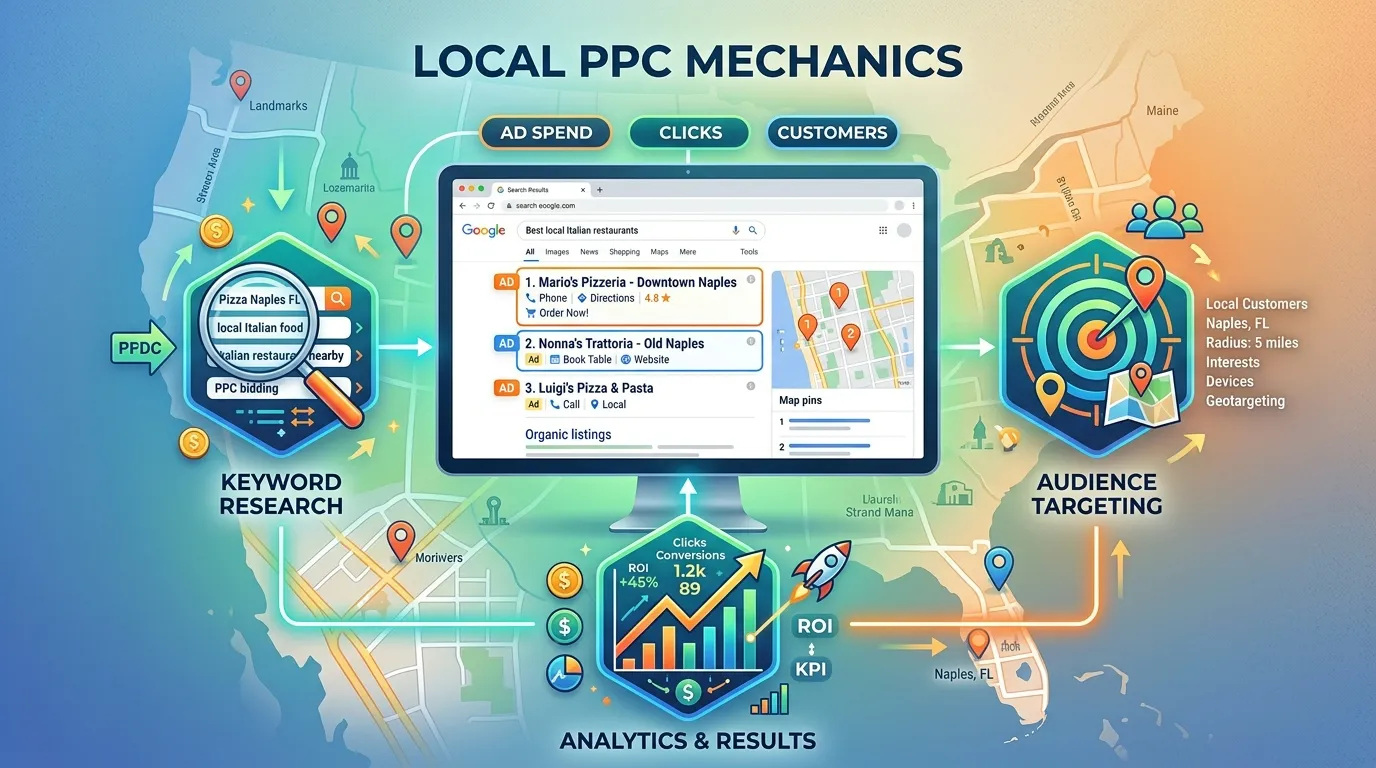
Step 1: Research and Strategy
Every successful campaign starts with research. This means understanding your customers, your competitors, and the search terms people use in your area. Strategy comes before spending, not after.
During this phase, a strong provider will:
- Identify your most valuable services and target areas
- Research keywords your local customers actually search
- Analyze what competitors are bidding on and how they advertise
- Set clear goals tied to calls, leads, or in-store visits
This groundwork shapes everything that follows. Skipping it leads to wasted budget and disappointing results.
Step 2: Campaign Setup and Structure
Once strategy is set, the campaign gets built. Structure matters more than most people realize. A well-organized account makes optimization easier and improves ad relevance, which lowers costs.
Organizing Campaigns and Ad Groups
Campaigns should be organized around your services and locations. Within each campaign, tightly themed ad groups keep related keywords and ads together. This tight grouping improves quality scores and makes your ads more relevant.
For example, a home services company might structure campaigns like this:
- One campaign per major service (plumbing, HVAC, electrical)
- Separate ad groups for specific keywords within each service
- Location targeting set to the precise service radius
This clean structure is the backbone of effective google ads management. It keeps spending focused and performance easy to track.
Step 3: Launch, Track, and Optimize
After launch, the real work begins. Local SEM services aren’t “set it and forget it.” Campaigns need constant attention to perform at their best. Data flows in, and smart adjustments follow.
Optimization activities include adjusting bids, pausing weak keywords, testing new ad copy, and refining targeting. Over time, these tweaks compound into stronger results and lower costs per lead. Continuous improvement is what separates good campaigns from great ones.
Building a Local PPC Strategy That Works
A solid strategy turns ad spend into reliable revenue. Without one, you’re just buying clicks and hoping. Let’s walk through the key elements of a winning local PPC approach.
Keyword Targeting for Local Intent
Keywords are the foundation of local search marketing. The right keywords connect you with ready-to-buy customers. The wrong ones drain budget on browsers and tire-kickers.
Focus on keywords that signal local intent and buying readiness. These often include location terms or urgency signals.
Strong local keyword types include:
- Service plus location: “roof repair Austin”
- Near me searches: “dentist near me”
- Urgency terms: “emergency locksmith now”
- Buyer-intent phrases: “book electrician appointment”
Using Negative Keywords
Negative keywords are just as important as the ones you target. They stop your ads from showing on irrelevant searches. This protects your budget and improves the quality of your traffic.
For instance, if you sell premium services, you might add “free” or “cheap” as negative keywords. If you don’t offer DIY guidance, block terms like “how to fix” yourself. Smart negative keyword lists are a quiet but powerful part of local PPC services.
Crafting Ad Copy That Converts
Your ads have seconds to earn a click. Strong copy speaks directly to local customers and gives them a reason to choose you. Vague, generic ads get ignored.
Effective local ad copy usually does the following:
- Mentions the location to confirm relevance
- Highlights a clear benefit or differentiator
- Includes a strong call to action
- Uses ad extensions like call buttons and location info
Test multiple versions of your ads to see what resonates. Even small wording changes can dramatically affect click-through and conversion rates. Continuous testing is core to good local digital advertising.
Setting and Managing Your Budget
Budgeting for local SEM services requires balance. Spend too little and you miss opportunities. Spend without strategy and you waste money. The goal is sustainable, profitable spending.
Start by estimating the value of a new customer. If a customer is worth $500 and you close one in five leads, you can afford a healthy cost per lead. Work backward from customer value to set realistic budgets that still turn a profit.
Smart Budget Allocation
Allocate more budget to your highest-performing campaigns and best service areas. Don’t spread money evenly across everything. Put dollars where they generate the most return.
Monitor spending closely in the early weeks. As data accumulates, shift budget toward winning keywords and away from underperformers. This disciplined approach is essential for profitable google ads management.
Landing Pages: Where Conversions Happen
Driving clicks is only half the battle. Where those clicks land determines whether you get a customer or lose money. Many businesses pour money into ads, then send traffic to a weak homepage.
Why Dedicated Landing Pages Matter
A dedicated landing page matches the promise of your ad. When someone clicks an ad for “AC repair in Dallas,” they should land on a page about exactly that, not a generic homepage. This alignment boosts conversions significantly.
Dedicated pages also improve quality scores, which lowers your ad costs. Google rewards relevance, and a tightly matched landing page signals exactly that. The result is more conversions at a lower cost per lead.
Elements of a High-Converting Local Landing Page
Strong landing pages share common traits. They make the next step obvious and remove friction. Every element should push the visitor toward contacting you.
Key elements to include:
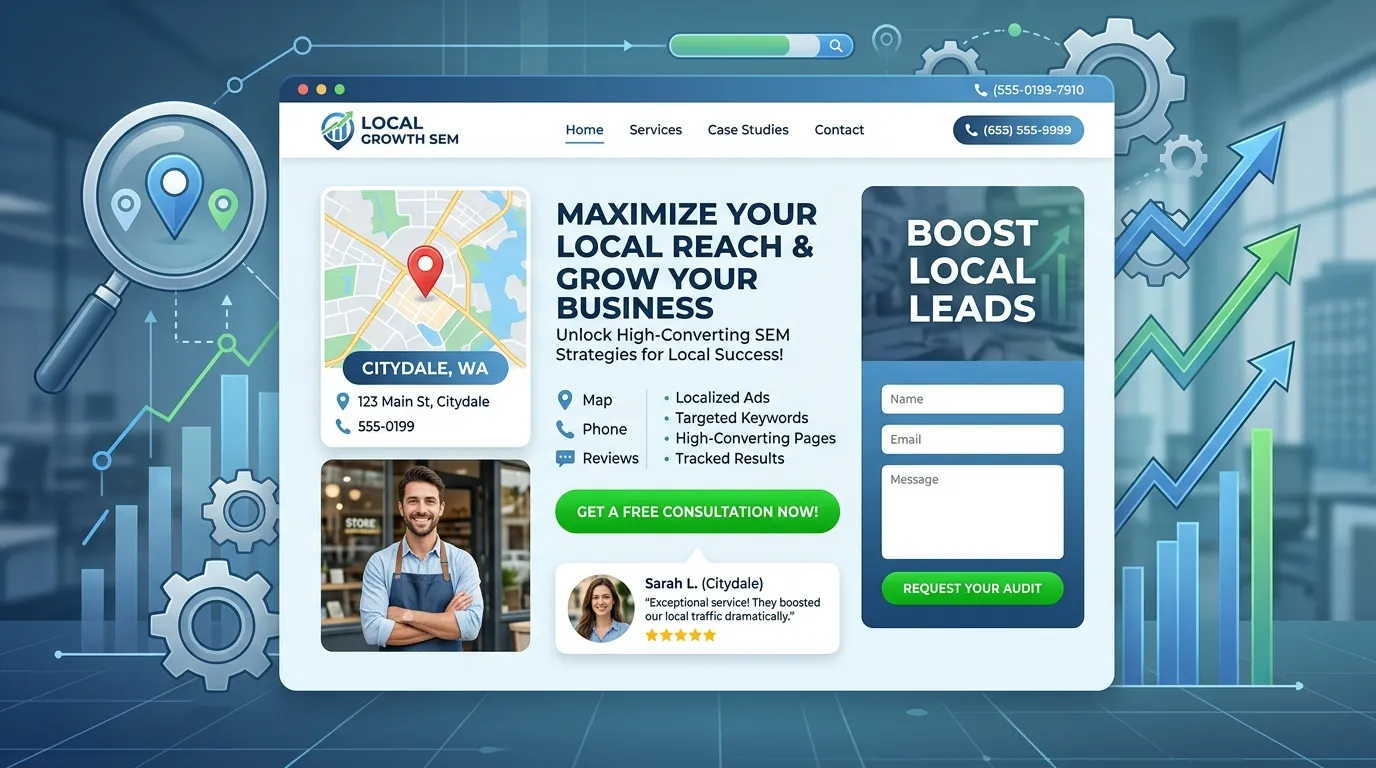
- A clear headline that matches the ad and mentions the location
- Prominent contact options like a phone number and form
- Trust signals such as reviews, ratings, and certifications
- Fast load times, especially on mobile devices
- A single, focused call to action
Mobile Optimization Is Non-Negotiable
Most local searches happen on phones. People search on the go, often with urgent needs. If your landing page loads slowly or looks broken on mobile, you lose customers instantly.
Test your pages on multiple devices. Make phone numbers tap-to-call. Keep forms short and simple. A smooth mobile experience is critical for local PPC services that actually convert.
Comparing Local SEM Approaches
Different businesses need different strategies. The table below compares common local SEM approaches to help you understand where each fits. Use it as a starting point for your own planning.
|
Approach |
Best For |
Typical Speed |
Cost Profile |
Key Strength |
|---|---|---|---|---|
|
Local PPC services |
Immediate lead generation |
Fast (days) |
Pay per click |
Instant visibility and control |
|
Local SEO |
Long-term organic growth |
Slow (months) |
Ongoing investment |
Durable, compounding traffic |
|
Local digital advertising mix |
Balanced growth |
Moderate |
Flexible |
Covers short and long game |
|
Google Ads management |
Scaling paid campaigns |
Fast |
Ad spend plus fees |
Expert optimization and ROI |
Most successful businesses blend several of these. Local SEM services often combine paid and organic tactics to deliver both quick wins and lasting results. The right mix depends on your goals, timeline, and budget.
Working With a Local SEM Provider
Many businesses partner with specialists to run their campaigns. The right provider brings expertise, tools, and time that most owners simply don’t have. Here’s what to look for and how to evaluate options.
When to Hire a Professional
Running effective campaigns takes ongoing time and skill. If you’re stretched thin or seeing poor results from DIY efforts, professional help often pays for itself. Experts spot opportunities and avoid costly mistakes.
Consider hiring help when:
- You lack time to manage campaigns daily
- Your current campaigns underperform
- You want to scale spending profitably
- You need advanced tracking and reporting
A skilled provider turns guesswork into a reliable system. That’s the real value of professional google ads management.
What a Good Provider Offers
Quality providers do more than just run ads. They act as strategic partners focused on your business growth. Transparency and communication matter as much as technical skill.
For a deeper look at what professional campaign management includes, this resource is worth a quick read helpful reference on managed campaigns Use guides like that to understand what’s possible, then evaluate providers against your specific needs and goals.
Questions to Ask Before Hiring
Choosing a provider is a big decision. The right questions reveal whether a company is a strong fit. Don’t be shy about digging into their process and results.
Ask potential providers:
- How do you structure and optimize local campaigns?
- What reporting will I receive, and how often?
- Who owns the ad account and the data?
- How do you measure success and ROI?
- Can you share results from similar local businesses?
Red Flags to Watch For
Some warning signs should make you pause. Be cautious of providers who guarantee specific rankings or refuse to share data. Real local search marketing involves testing and adjustment, not magic promises.
Other red flags include vague reporting, long-term contracts with no flexibility, and a refusal to explain their strategy. Transparency builds trust. If a provider hides their methods, look elsewhere.
Common Local SEM Mistakes to Avoid
Even motivated businesses stumble with local SEM services. Knowing the common pitfalls helps you avoid wasted spend and frustration. Here are the mistakes that trip people up most often.
Targeting Too Broad an Area
Casting a wide net feels productive, but it usually wastes money. If you only serve one city, advertising statewide drains your budget on people you can’t help. Tight geographic targeting keeps your spend focused.
The fix is simple. Define your real service radius and stick to it. Precise targeting is one of the most effective parts of local digital advertising.
Ignoring Mobile Users
Most local searches come from phones, yet many businesses neglect mobile. Slow pages, tiny buttons, and clunky forms send customers running. A poor mobile experience quietly kills conversions.
Prioritize mobile in everything. Test your ads and pages on phones constantly. The mobile experience often matters more than the desktop one for local PPC services.
Sending Traffic to a Generic Homepage
This mistake is incredibly common and costly. Paying for a targeted click, then dumping visitors on a generic homepage, breaks the experience. Visitors get confused and leave.
Always send ad traffic to a dedicated, relevant landing page. The page should match the ad’s promise and make the next step obvious. This alignment alone can double conversion rates.
Setting It and Forgetting It
Local SEM services need ongoing attention. Launching a campaign and walking away leads to wasted spend and stale results. Markets shift, competitors adjust, and your campaigns must keep pace.
Why Continuous Optimization Matters
Regular optimization compounds over time. Small, consistent improvements to bids, keywords, and ads add up to major gains. Neglected campaigns slowly decay, while optimized ones get stronger and cheaper per lead.
Schedule regular reviews, whether you manage campaigns yourself or hire help. Treat optimization as an ongoing habit, not a one-time task. This discipline is the heart of effective google ads management.
Measuring Success in Local SEM
You can’t improve what you don’t measure. Tracking the right metrics tells you whether your local SEM services are working. Focus on numbers tied to real business outcomes, not vanity stats.
Metrics That Actually Matter
Some metrics look impressive but mean little. Clicks and impressions are useful, but they don’t pay the bills. Focus on metrics that connect directly to revenue.
Key performance indicators to track:
- Cost per lead: What you pay to generate one inquiry
- Conversion rate: The percentage of clicks that become leads
- Phone calls: Direct calls driven by your ads
- Return on ad spend: Revenue generated per dollar spent
These numbers reveal the true health of your campaigns. They guide smart decisions about where to invest more and where to cut back.
Using Data to Improve
Data is only valuable when you act on it. Review your metrics regularly and look for patterns. Which keywords drive the most calls? Which ads convert best? Which areas deliver the highest return?
Use these insights to refine your local search marketing continuously. Shift budget toward winners, pause losers, and test new ideas. This data-driven loop is how campaigns get better month after month.
Putting It All Together
Local SEM services give your business a direct line to nearby customers who are ready to buy. The approach combines precise targeting, smart paid advertising, strong landing pages, and ongoing optimization. Done well, it delivers measurable, profitable growth.
Remember the core takeaways:
- Local SEM connects you with high-intent local searchers fast.
- Strong strategy and tight targeting protect your budget.
- Dedicated landing pages turn clicks into customers.
- Continuous optimization compounds results over time.
- The right provider acts as a strategic growth partner.
Your next steps are simple. Define your service area and goals, then research the keywords your customers use. Build focused campaigns, send traffic to dedicated landing pages, and track real results. With each adjustment, you’ll capture more local customers and grow your business with confidence.
Frequently Asked Questions
What exactly are local SEM services?
Local SEM services are paid search marketing strategies focused on reaching customers in a specific geographic area. They combine targeted ads, location settings, and keyword strategy to capture nearby searchers. The goal is to connect you with people who are ready to buy in your service area. This makes your advertising spend far more efficient.
How quickly can local SEM services produce results?
Paid local search marketing can produce results almost immediately once campaigns go live. You may see clicks and leads within days, unlike SEO, which takes months. However, the first few weeks are usually about gathering data and optimizing. Real efficiency and lower costs per lead build over the following months.
How much should a local business budget for local PPC services?
Budgets vary widely based on industry, competition, and goals. Start by calculating the value of a new customer, then work backward to a sustainable cost per lead. Many small businesses begin with a modest monthly budget and scale up as results prove out. Profitability matters more than raw spending.
What is the difference between local SEM and local SEO?
Local SEM uses paid ads to buy immediate visibility, while local SEO earns organic rankings over time. SEM delivers fast, controllable results that you pay for per click. SEO builds durable traffic but takes months to mature. Most successful businesses combine both for short-term wins and long-term growth.
Do I need a separate landing page for my local ads?
Yes, dedicated landing pages dramatically improve your results. A page that matches your ad’s promise converts far better than a generic homepage. It also improves quality scores, which lowers your ad costs. Sending paid traffic to the right page is one of the simplest ways to boost conversions.
How does keyword targeting work in local search marketing?
Keyword targeting focuses your ads on the terms local customers actually search. You bid on phrases that signal local intent, like “near me” searches or service-plus-location terms. Negative keywords block irrelevant searches to protect your budget. The right keyword mix connects you with ready-to-buy customers efficiently.
Can small businesses compete with larger companies using local SEM?
Absolutely, and many do successfully. Local SEM services reward precise targeting over massive budgets. A focused single-location business can outperform national chains for local searches. By concentrating spend on your specific area and high-intent keywords, you compete effectively without enormous spending.
What makes google ads management worth the investment?
Professional management brings expertise, tools, and time that most owners lack. A skilled manager structures campaigns properly, optimizes continuously, and avoids costly mistakes. They turn guesswork into a reliable, profitable system. For busy business owners, expert management often pays for itself through better results.
How do I measure whether my local SEM is working?
Focus on metrics tied to real business outcomes, not vanity numbers. Track cost per lead, conversion rate, phone calls, and return on ad spend. These reveal whether your campaigns generate profitable results. Review them regularly and use the data to shift budget toward your best-performing keywords and areas.
What are the most common local SEM mistakes?
Common mistakes include targeting too broad an area and ignoring mobile users. Many businesses also send ad traffic to generic homepages instead of dedicated landing pages. The biggest error is treating campaigns as set-and-forget. Local digital advertising needs continuous optimization to perform well and stay cost-effective.
How do I choose the right local SEM provider?
Look for transparency, clear reporting, and experience with similar local businesses. Ask how they structure campaigns, who owns the data, and how they measure success. Avoid providers who guarantee specific rankings or hide their methods. The best partners explain their strategy clearly and focus on your real business growth.
Is local SEM right for every type of business?
Local SEM works best for businesses serving customers in a specific area. Service providers, restaurants, retailers, and local professionals benefit most. If your customers search online before buying nearby, local SEM is likely a strong fit. Businesses with no local component may find broader strategies more suitable.
Meta Title: Local SEM Services: A Complete Growth Guide
Meta Description: Discover how local SEM services drive nearby customers to your business. Learn local PPC strategy, budgeting, targeting, and how to choose a provider.



Leave a Reply