


Search Engine Marketing (SEM) has undergone a rapid evolution in today’s digital landscape. As competition intensifies and user expectations rise, businesses are seeking innovative methods to stand out and capture high-intent traffic. AI-powered SEM strategies have become an essential component of successful campaigns, enabling marketers to automate complex tasks, predict user behavior, and optimize budgets with unprecedented accuracy. By integrating machine learning algorithms and natural language processing, modern SEM platforms streamline keyword research, bidding, creative development, and performance monitoring—all in real time.
In this comprehensive guide, we explore how AI-driven tools and techniques can transform your SEM efforts. We’ll examine the evolution of search marketing, dive into advanced keyword research powered by AI, discuss smart bidding and predictive analytics, reveal best practices for dynamic ad creation, and explain how to harness granular audience segmentation alongside real-time performance insights. Throughout the article, we’ll reference authoritative research from institutions such as MIT’s Computer Science and Artificial Intelligence Laboratory (CSAIL) and standards guidance from the National Institute of Standards and Technology (NIST).
Whether you are an in-house marketer, an agency professional, or an entrepreneur seeking to grow your online presence, mastering AI-powered SEM strategies will empower you to allocate budgets efficiently, deliver personalized messaging, and achieve higher return on ad spend (ROAS). Let’s explore the critical steps you must take to dominate the search environment with intelligent automation and data-driven decision making.
The Evolution of AI-Powered SEM
Transforming Traditional Marketing
Search Engine Marketing began as a manual process: selecting keywords, estimating bids, and crafting ad copy based on gut feel and basic volume data. Today, AI-powered SEM strategies automate many of these routine tasks by leveraging machine learning to analyze vast datasets and identify patterns that humans might overlook. With predictive modeling, platforms can forecast traffic spikes, conversion rates, and budget requirements before campaigns launch. This shift reduces time spent on manual optimization and allows marketers to focus on strategy and creativity.
Modern algorithms continuously learn from each user interaction—every click, impression, and conversion becomes part of an ever-expanding knowledge base. By processing signals such as device type, location, past search behavior, and even weather conditions, AI systems can dynamically adjust bids and ad placements to maximize impact. These capabilities deliver a level of precision unattainable through manual management alone, resulting in improved ROAS and more efficient budget allocation.
As AI-driven automation becomes more accessible, businesses of all sizes can adopt advanced SEM tactics. Smaller teams no longer require extensive resources to compete with larger enterprises; instead, they can leverage AI platforms that scale bidding, audience targeting, and creative testing in real time. This democratization of technology ensures that even those with limited budgets can harness powerful tools to gain a competitive edge.
Leveraging AI-Driven Keyword Research for Precision Targeting
Uncovering Insights with NLP
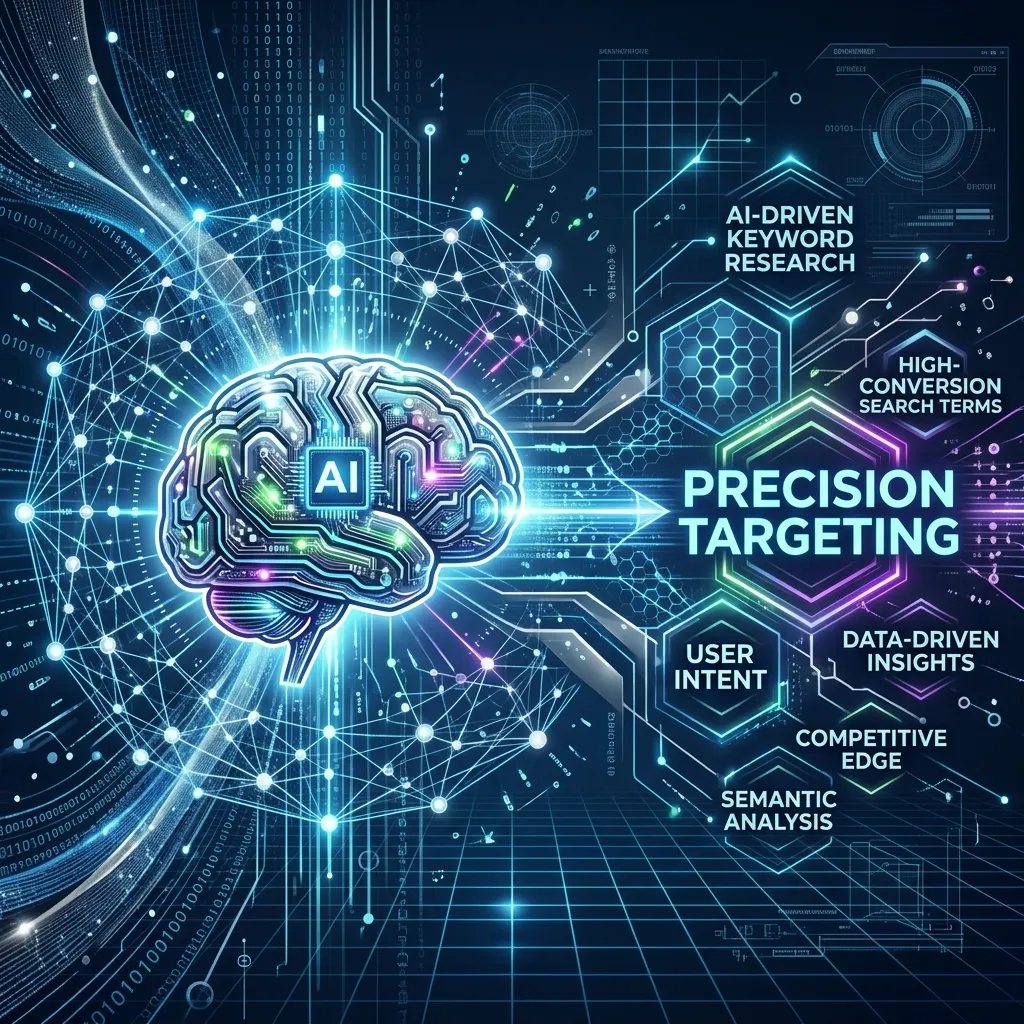
Keyword research has always been a cornerstone of search campaigns. AI-powered SEM strategies take this process to the next level by employing natural language processing (NLP) and advanced data analysis. Rather than relying solely on search volume and competition metrics, AI tools sift through millions of queries to identify semantic relationships, trending topics, and user intent. This enables the discovery of long-tail keywords and phrase variations that deliver higher conversion probabilities.
By leveraging machine learning models, platforms can forecast the performance of each keyword based on historical data and emerging patterns. These insights reveal not only which terms will generate clicks but also which are most likely to drive form submissions, purchases, or other defined conversions. Automated keyword grouping then organizes related terms into coherent ad groups, ensuring that ad copy and landing pages remain highly relevant to each search query.
Implementation is straightforward: integrate your AI-enabled keyword research tool with your SEM account, and allow the system to process data continuously. As user behavior evolves, the platform adapts keyword lists in real time, preventing budget waste on underperforming terms. This approach ensures that your campaigns stay agile and maintain peak relevance, even as search trends shift throughout nowadays.
Implementing Smart Bidding and Predictive Analytics
Optimizing Bids with Machine Learning
One of the most powerful components of AI-powered SEM strategies is smart bidding. Using advanced machine learning algorithms, smart bidding automates bid adjustments for each auction, considering dozens of signals such as time of day, device, location, and historical user interactions. Strategies like Target CPA (Cost Per Acquisition) and Target ROAS allow platforms to allocate budget where it’s most likely to generate value, optimizing for your specific business goals.
Predictive analytics further enhances campaign management by forecasting future performance based on historical trends. These insights alert you to potential budget shortfalls or performance dips before they occur, enabling proactive adjustments. For example, if predictive models identify an upcoming surge in high-value searches during peak hours, your AI system can automatically increase bids to capture that demand. Conversely, it can reduce spending during low-engagement periods to prevent wasted ad spend.
Integrating predictive analytics with your smart bidding strategy requires setting clear conversion goals and ensuring your tracking is accurate. Once configured, your AI-powered SEM platform will continuously evaluate performance, learn from new data, and refine bid strategies. This level of automation reduces manual workload and delivers consistent, data-driven optimizations that outperform manual bidding approaches in most scenarios.
Crafting Dynamic Creatives with AI-Powered Copy and Design

Personalized Messaging at Scale
Delivering relevant ad creative is vital for capturing user attention and driving engagement. Dynamic search ads and AI-generated copy allow you to tailor messaging to each user’s query and context. By analyzing landing page content, search intent, and user behavior, AI systems can automatically generate headlines, descriptions, and ad extensions that resonate with individual searchers. This eliminates the need for manual ad writing and enables rapid testing of multiple variations.
Advanced copywriting tools powered by natural language generation (NLG) can produce dozens of ad variations within seconds. These platforms use machine learning to determine which combinations of keywords, calls to action, and emotional triggers perform best. Through continuous A/B testing, your AI-powered SEM strategy identifies top-performing creatives and reallocates budget accordingly, ensuring that the most effective messages receive the greatest exposure.
Design elements can also benefit from AI assistance. Some platforms leverage computer vision and generative design to create visually appealing ad assets that align with brand guidelines. By automating creative production, your team can maintain a high volume of fresh, relevant ads without sacrificing quality. This approach keeps your campaigns agile and prevents ad fatigue by delivering newly optimized assets to your target audiences.
Measuring Success in AI-Powered SEM Campaigns
One of the most critical aspects of running effective AI-powered SEM strategies is understanding how to measure success accurately. While automation handles optimization in real time, marketers still need clear performance indicators to evaluate whether campaigns are truly delivering business value.
In 2026, measurement goes far beyond basic clicks and impressions. Modern SEM performance analysis focuses on intent quality, conversion efficiency, and long-term customer value.
Key Performance Metrics to Track
| Metric | What It Measures | Why It Matters |
|---|---|---|
| ROAS (Return on Ad Spend) | Revenue generated per ad dollar | Core profitability indicator |
| CPA (Cost Per Acquisition) | Cost to acquire a customer | Helps control budget efficiency |
| CTR (Click-Through Rate) | Ad engagement level | Indicates ad relevance |
| Conversion Rate | Percentage of users who convert | Measures landing page effectiveness |
| Quality Score | Ad relevance and landing page experience | Impacts ad ranking and cost |
| Impression Share | Visibility in search auctions | Shows market competitiveness |
How AI Improves SEM Performance Tracking
AI systems enhance measurement by:
- Detecting performance trends before they become critical issues
- Identifying hidden patterns in user behavior and conversion paths
- Segmenting performance data by audience, device, and location
- Predicting future ROI based on historical campaign data
- Automating anomaly detection in real time
This allows marketers to move from reactive reporting to predictive performance management.
Building an AI-Driven SEM Reporting Framework
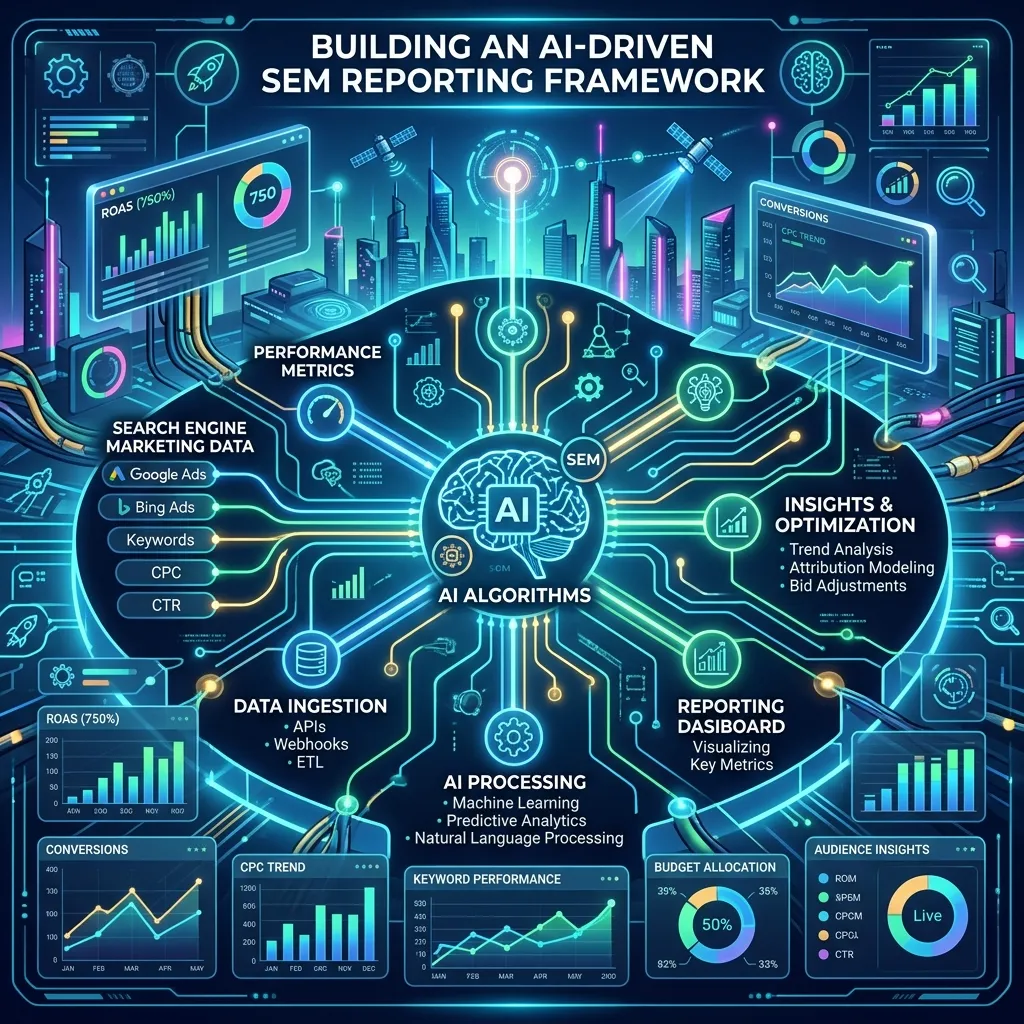
1. Centralize Your Data
Integrate all SEM platforms, analytics tools, and CRM systems into a unified dashboard for a complete performance overview.
2. Use Automated Dashboards
AI-powered dashboards provide real-time insights without manual reporting, saving time and reducing human error.
3. Set Benchmark KPIs
Define baseline performance goals so AI systems can optimize toward measurable business outcomes.
4. Enable Predictive Alerts
Configure AI alerts for sudden drops in performance, budget spikes, or conversion anomalies.
Optimization Loop for Continuous Improvement
AI-powered SEM works best when paired with a structured optimization cycle:
- Collect performance data
- Analyze AI-generated insights
- Adjust bids, keywords, and creatives
- Test new variations
- Repeat continuously
This loop ensures your campaigns evolve alongside market trends and user behavior.
Final Insight
Measuring success in AI-powered SEM strategies is no longer just about tracking numbers—it’s about understanding predictive intelligence, user intent quality, and long-term value creation. Businesses that adopt advanced measurement frameworks gain deeper visibility into campaign performance and can scale advertising efforts with confidence and precision.
How AI Is Transforming SEM Performance
1. Smarter Keyword Targeting
AI tools analyze millions of search queries to identify not just keywords, but user intent patterns. This helps advertisers target high-conversion long-tail keywords that traditional methods often miss.
2. Automated Bid Optimization
With smart bidding strategies like Target CPA and Target ROAS, AI systems automatically adjust bids based on:
- Device type
- Location
- Time of day
- User behavior history
This ensures maximum efficiency in every ad auction.
3. Real-Time Campaign Adjustments
AI continuously monitors campaign performance and instantly reacts to changes. If a keyword starts underperforming, budgets are automatically shifted to higher-performing segments.
4. Personalized Ad Experiences
AI generates dynamic ad variations tailored to user behavior and search intent, significantly improving click-through and conversion rates.
Best Practices for Implementing AI-Powered SEM Strategies
Focus on Clean Data
AI performance depends heavily on data quality. Ensure accurate conversion tracking and properly structured analytics.
Set Clear Conversion Goals
Define whether your priority is leads, sales, or traffic so AI models can optimize effectively.
Combine AI with Human Oversight
While automation handles optimization, marketers should still review insights weekly to ensure alignment with business goals.
Test Continuously
Use AI-driven A/B testing to refine ad copy, landing pages, and bidding strategies over time.
Common Challenges and Solutions
| Challenge | Solution |
|---|---|
| Over-reliance on automation | Maintain regular human performance audits |
| Poor data tracking | Implement accurate conversion tracking systems |
| Budget inefficiency in early stages | Start with conservative smart bidding strategies |
| Lack of transparency in AI decisions | Use platforms with explainable AI reporting |
Strategic Impact of AI in SEM
AI-powered SEM strategies are reshaping digital advertising by making campaigns more adaptive, efficient, and scalable. Businesses can now respond to market changes instantly, reach more relevant audiences, and optimize ad spend with minimal manual intervention.
As machine learning models continue to improve, SEM will become increasingly predictive rather than reactive—allowing marketers to anticipate demand instead of just responding to it.
Adopting AI-powered SEM strategies is essential for staying competitive in today’s search-driven economy. By leveraging intelligent keyword research, automated bidding, predictive analytics, and real-time optimization, businesses can dramatically improve campaign performance and ROI.
The future of SEM is not manual—it is intelligent, automated, and data-driven. Organizations that embrace these technologies early will gain a significant advantage in visibility, efficiency, and long-term digital growth.
Advanced Audience Segmentation and Real-Time Monitoring
Enhancing Engagement with Granular Data
Audience segmentation has evolved from broad demographic and geographic targeting to highly detailed clusters based on user behavior, interests, and purchase propensity. AI-powered SEM strategies apply machine learning to analyze signals such as browsing history, previous conversions, and in-market behavior. The result is micro-segmentation that groups users by predicted intent and lifetime value, ensuring that your ads reach the most promising prospects at the right moment.
Customer Match, lookalike audiences, and in-market segments become more effective when combined with AI-driven propensity scoring. Each user is assigned a likelihood score to convert, allowing you to prioritize high-value segments. By layering predictive scores onto traditional targeting, you can bid more aggressively for audiences that demonstrate stronger purchase intent and reduce spend on lower-propensity groups.
Real-time performance dashboards powered by AI provide continuous monitoring of key metrics, automatically detecting anomalies or pacing issues. If click-through rates suddenly decline or cost per conversion spikes, alerting systems notify your team and suggest corrective actions—such as bid adjustments or creative updates—based on near-instant analysis. This level of oversight ensures that your SEM campaigns remain on track and responsive to changing market conditions.
Frequently Asked Questions
Conclusion
In today’s competitive environment, leveraging AI-powered SEM strategies is no longer optional—it’s a necessity for marketers who want to maximize ROI and stay ahead of the curve. By embracing AI-driven keyword research, smart bidding, predictive analytics, dynamic creatives, and advanced audience segmentation, you can build campaigns that are both efficient and highly effective. Remember to pair automation with human expertise by setting clear goals, monitoring performance trends, and conducting regular audits of automated rules. With these approaches in place , your SEM efforts will deliver sustained growth, improved ROAS, and a stronger connection with high-intent users in today’s digital landscape.



Leave a Reply