

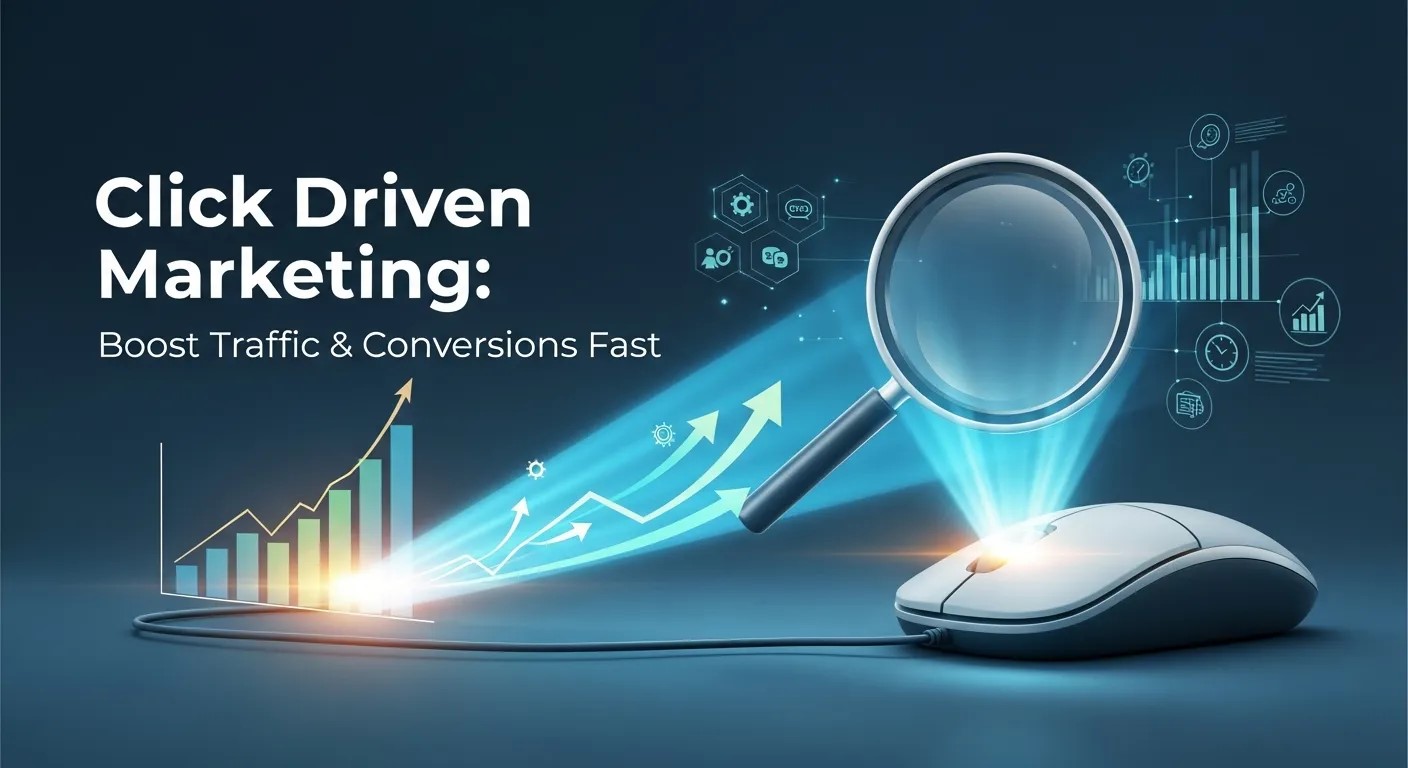
Click Driven Marketing focuses on driving targeted clicks, optimizing user intent, and leveraging analytics. By integrating SEM strategies, Dynamic Search Ads, hyper-personalization, and ROI measurement, businesses can boost traffic, conversions, and sustainable digital growth efficiently.
Understanding Click Driven Marketing
In today’s fast-paced digital landscape, businesses are constantly seeking ways to boost traffic and maximize engagement. Click Driven Marketing has emerged as a game-changing strategy for marketers who want measurable results and high conversion rates. Unlike traditional marketing, which often relies on broad outreach, click-driven approaches focus on driving specific actions, tracking user behavior, and optimizing campaigns for maximum efficiency.
At its core, Click Driven Marketing revolves around understanding the audience’s intent. When users interact with search engines, social platforms, or display networks, they leave digital footprints that can be analyzed to predict likely engagement patterns. By strategically designing ads, landing pages, and content that align with these behaviors, marketers can create campaigns that are both engaging and actionable.
How Click Driven Marketing Works
The success of Click Driven Marketing depends on a combination of targeted advertising, precise analytics, and real-time optimization. Typically, this involves:
-
Keyword Research and Targeting – Identifying high-performing keywords that drive clicks and conversions. Tools for keyword analysis allow marketers to spot trends and user queries that match their offerings.
-
Audience Segmentation – Using demographic, behavioral, and psychographic data to tailor campaigns for specific audience segments.
-
Dynamic Content Delivery – Serving content or ads dynamically based on user behavior or preferences. For instance, personalized product recommendations can significantly increase click-through rates.
-
Analytics and Optimization – Continuously tracking campaign performance, adjusting bids, creative assets, and targeting strategies to improve results.
It’s no surprise that businesses excelling at Click Driven Marketing often outperform their competition. Understanding what motivates users to click, and ensuring a seamless path to conversion, lies at the heart of every successful campaign.
SEM Demystified in the Context of Click Driven Marketing
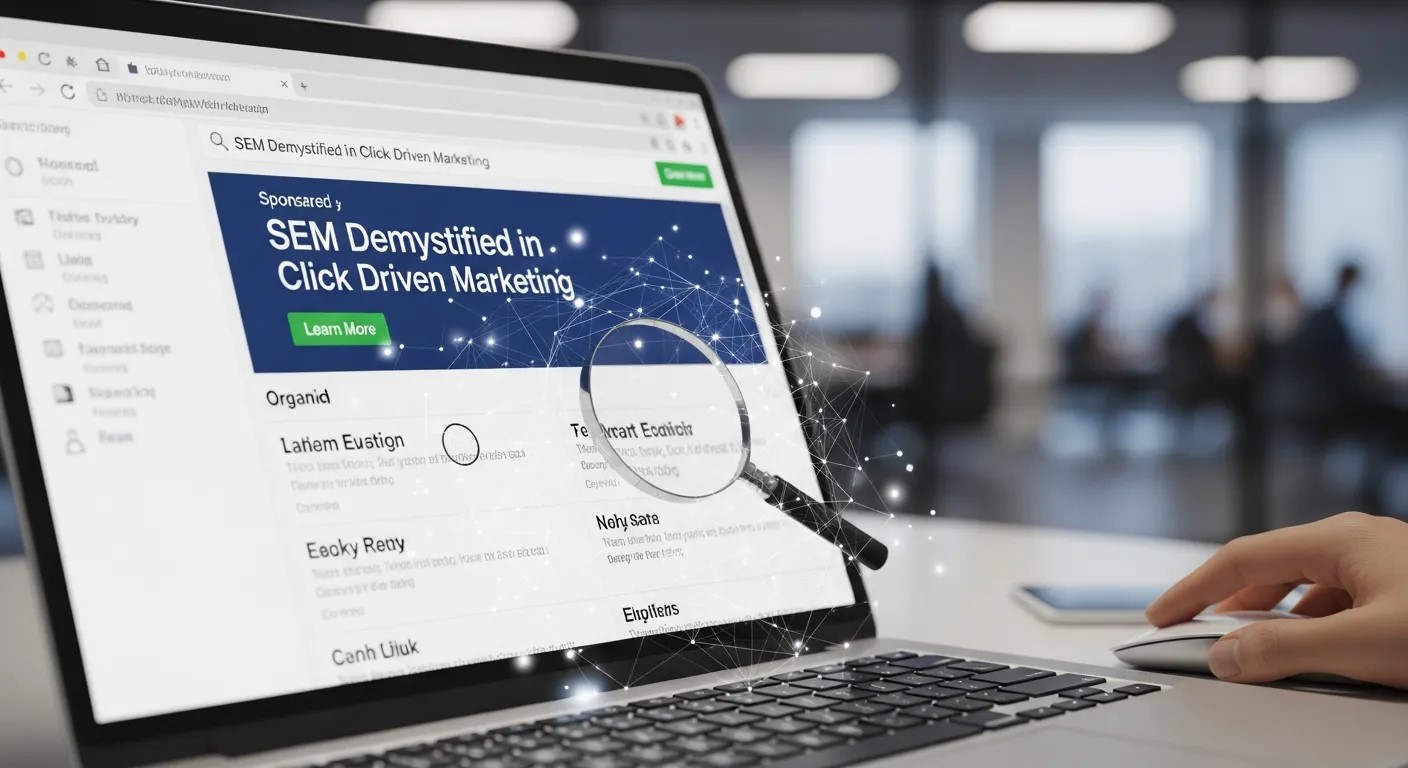
To fully appreciate Click Driven Marketing, it’s essential to understand the role of Search Engine Marketing (SEM). SEM Demystified helps marketers grasp how paid search campaigns can be structured for maximum clicks and ROI. By combining strategic bidding, keyword targeting, and ad copywriting, SEM ensures that ads appear to the right audience at the right moment, driving meaningful engagement rather than random traffic.
A key advantage of integrating Click Driven Marketing with SEM is the ability to test and refine campaigns. Dynamic Search Ads, for example, automatically generate ad headlines and landing pages based on website content. This allows marketers to efficiently target multiple queries without manually creating hundreds of ad variations.
Leveraging Dynamic Search Ads
Dynamic Search Ads (DSA) are a pivotal tool for marketers aiming to maximize clicks with minimal manual effort. Unlike standard search ads, DSAs adapt in real-time, targeting users whose search queries match relevant content on your website. The benefits include:
-
Automated targeting based on website content.
-
Expanded reach without extensive keyword lists.
-
Improved relevance leading to higher click-through rates.
When combined with Click Driven Marketing, DSAs help maintain a steady stream of qualified traffic while freeing marketers to focus on creative optimization and strategy.
Excel at SEM: Strategies for Success
Success in Click Driven Marketing is closely linked to how well marketers can excel at SEM. This means not only mastering keyword targeting but also continuously monitoring performance metrics like CTR (Click-Through Rate), conversion rate, and cost per acquisition. Strategies include:
-
Ad Testing and Rotation – Experiment with multiple ad copies to see which drives the most clicks.
-
Bid Management – Allocate budget dynamically to high-performing keywords.
-
Landing Page Optimization – Ensure that clicks convert by having fast, relevant, and user-friendly pages.
By excelling at SEM, businesses can ensure that their click-driven campaigns are cost-effective and highly targeted, resulting in measurable growth.
Hyper-Personalization at Scale
One of the defining trends in modern Click Driven Marketing is hyper-personalization at scale. Using advanced data analytics and AI-driven tools, marketers can deliver highly individualized content across multiple channels. For instance:
-
Personalized email campaigns based on browsing behavior.
-
Dynamic website content that adapts to user preferences.
-
Targeted display ads that reflect individual interests.
Hyper-personalization doesn’t just increase clicks; it enhances engagement, reduces bounce rates, and drives loyalty. In today’s competitive market, ignoring this approach can mean leaving significant revenue on the table.
Measuring ROI and Analytics
No click-driven campaign is complete without measuring ROI and analytics. Tracking performance at every stage allows marketers to understand what drives clicks and conversions, and which tactics require adjustment. Key metrics include:
| Metric | Why It Matters | How It Helps |
|---|---|---|
| Click-Through Rate (CTR) | Measures engagement | Identifies effective ad copy |
| Conversion Rate | Tracks desired actions | Assesses landing page effectiveness |
| Cost Per Click (CPC) | Evaluates spend efficiency | Optimizes budget allocation |
| Return on Ad Spend (ROAS) | Measures profitability | Guides strategy adjustments |
By leveraging analytics, businesses practicing Click Driven Marketing can make informed decisions that maximize ROI and sustain long-term growth.
Understanding User Intent in Click Driven Marketing
A core principle of Click Driven Marketing is understanding user intent. Every click represents a decision point — the user chose to engage with your content over others. By analyzing search queries, behavior patterns, and demographics, marketers can predict what users want and create campaigns that speak directly to those needs.
For instance, when targeting searchers using informational queries, marketers can craft content that answers questions thoroughly, provides value, and subtly guides users toward a conversion. On the other hand, transactional queries, such as “buy running shoes online,” require direct, conversion-focused messaging that reduces friction and accelerates decision-making.
Integrating Click Driven Marketing with Dynamic Search Ads makes it easier to align ads with intent. Instead of manually guessing which keywords will perform best, dynamic campaigns automatically match search queries with relevant landing pages, ensuring that user expectations meet ad delivery.
The Psychology Behind Click Driven Marketing
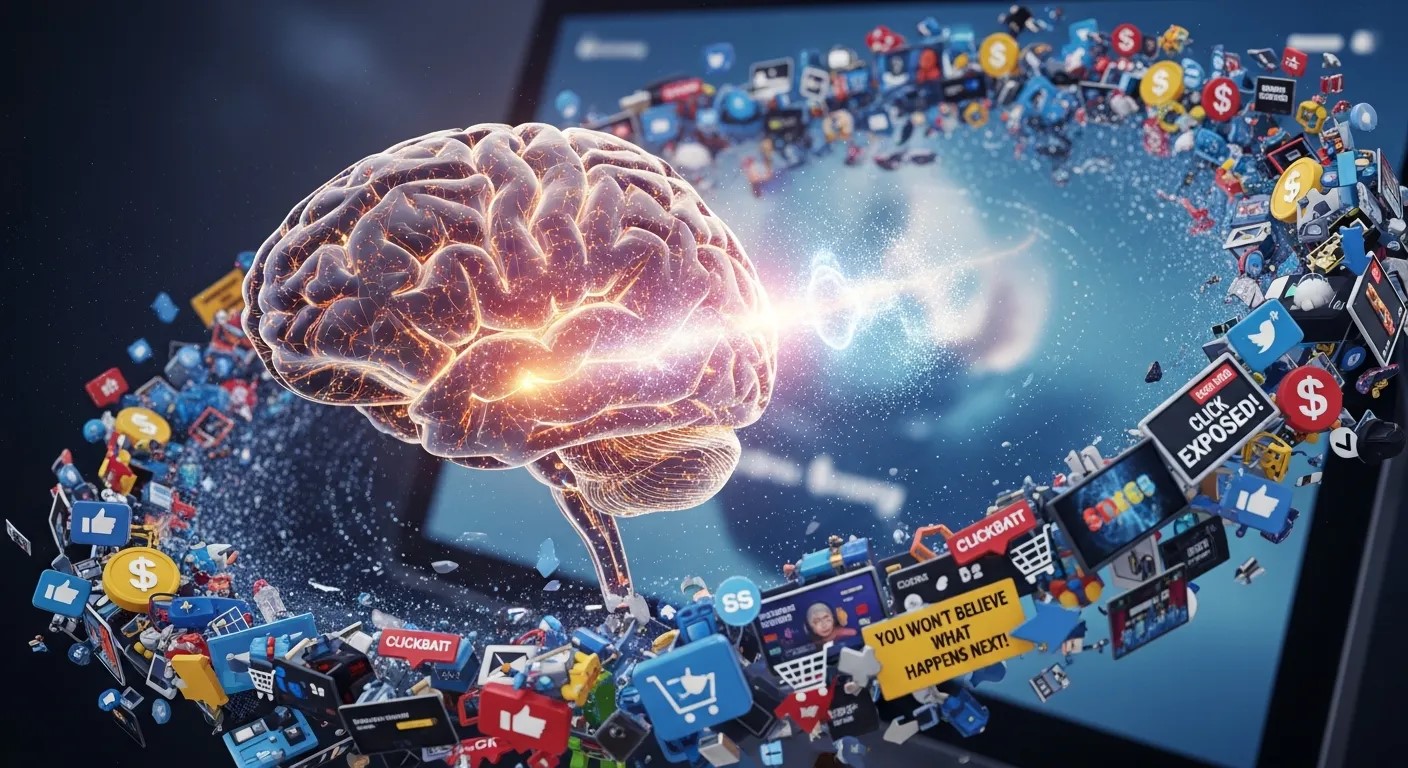
Understanding human behavior is crucial for Click Driven Marketing. The decision to click is often emotional first, rational second. This is why marketers who incorporate psychological triggers in ad copy, call-to-action buttons, and landing pages often see higher engagement rates.
Some proven psychological strategies include:
-
Scarcity and Urgency – Phrases like “limited time offer” or countdown timers encourage immediate action.
-
Social Proof – Testimonials, reviews, and trust badges increase credibility.
-
Anchoring – Presenting a high-value option first makes other options appear more attractive.
-
Reciprocity – Offering free resources or trials can motivate users to engage further.
Combining these tactics with Click Driven Marketing ensures that the right users not only click but also follow through to conversion, amplifying the overall ROI.
Leveraging Search Engine Data: Googles Search Engine Market Share Insights
Googles Search Engine Market Share One often overlooked aspect of Click Driven Marketing is analyzing search engine market dynamics. Knowing that Google’s Search Engine Market Share dominates the global landscape allows marketers to focus efforts where traffic is most abundant. However, niche search engines or region-specific platforms may also provide untapped opportunities.
Marketers who understand market share insights can allocate budgets more strategically, optimize bids for the most competitive environments, and tailor campaigns for specific audiences. This data-driven approach ensures that campaigns reach high-intent users efficiently.
Crafting Effective Click-Driven Campaigns
Building an impactful campaign requires a structured approach. Here’s a framework for marketers looking to maximize their Click Driven Marketing efforts:
1. Keyword Strategy
Selecting the right keywords is fundamental. Instead of targeting generic terms alone, consider long-tail and high-intent keywords. For example:
| Keyword Type | Purpose | Example |
|---|---|---|
| Short-Tail | Broad awareness | “Marketing” |
| Long-Tail | High-intent clicks | “Click Driven Marketing strategies for small businesses” |
By integrating your focus keyword naturally across these variations, campaigns maintain relevance and improve quality scores, reducing cost per click.
2. Ad Copy Optimization
Compelling ad copy is essential. Incorporate the user’s pain points, desired outcomes, and emotional triggers to drive engagement. Avoid overloading ads with technical jargon; simplicity often converts best.
Dynamic Search Ads are particularly useful here, as they automatically align ad copy with relevant landing pages, ensuring a consistent user journey.
3. Landing Page Experience
Once a user clicks, the landing page experience becomes critical. To excel in Click Driven Marketing, ensure landing pages:
-
Load quickly and are mobile-optimized
-
Match ad messaging for consistency
-
Include clear calls-to-action (CTAs)
-
Utilize trust signals like reviews, awards, or certifications
A seamless experience significantly increases the likelihood of conversions, completing the click-to-action loop.
Advanced SEM Techniques for Click Driven Marketing
Marketers who aim to excel at SEM often employ advanced strategies, including:
-
Bid Adjustments – Optimize bids based on device, location, or time of day to capture the most valuable clicks.
-
Negative Keywords – Prevent ads from showing on irrelevant queries, reducing wasted spend.
-
A/B Testing – Continuously test different headlines, CTAs, and landing pages to improve CTR and conversion.
-
Remarketing Campaigns – Re-engage users who clicked but did not convert, leveraging display ads or search retargeting.
These techniques, when executed with precision, amplify the effectiveness of Click Driven Marketing campaigns and drive measurable ROI.
Integrating Hyper-Personalization at Scale
Hyper-personalization is a defining trend in modern digital marketing. For Click Driven Marketing, it involves tailoring content, offers, and messaging to individual users based on behavior, preferences, and demographic data. Examples include:
-
Custom product recommendations based on browsing history
-
Email sequences triggered by past engagement
-
Dynamic landing pages reflecting user interests
This level of personalization increases engagement, encourages repeated interactions, and often improves conversion rates dramatically.
Tools and Platforms to Support Click Driven Marketing
Effective Click Driven Marketing relies on the right set of tools. These can include:
| Tool Type | Example | Purpose |
|---|---|---|
| Analytics | Google Analytics | Track user behavior and campaign performance |
| SEM Management | Google Ads, Bing Ads | Execute and optimize search campaigns |
| Personalization | HubSpot, Optimizely | Deliver hyper-personalized content and experiences |
| Automation | Zapier, Marketo | Automate repetitive marketing tasks |
By leveraging these tools, marketers can streamline campaign management, reduce manual effort, and focus on strategic optimization.
The Role of Data in Click Driven Marketing
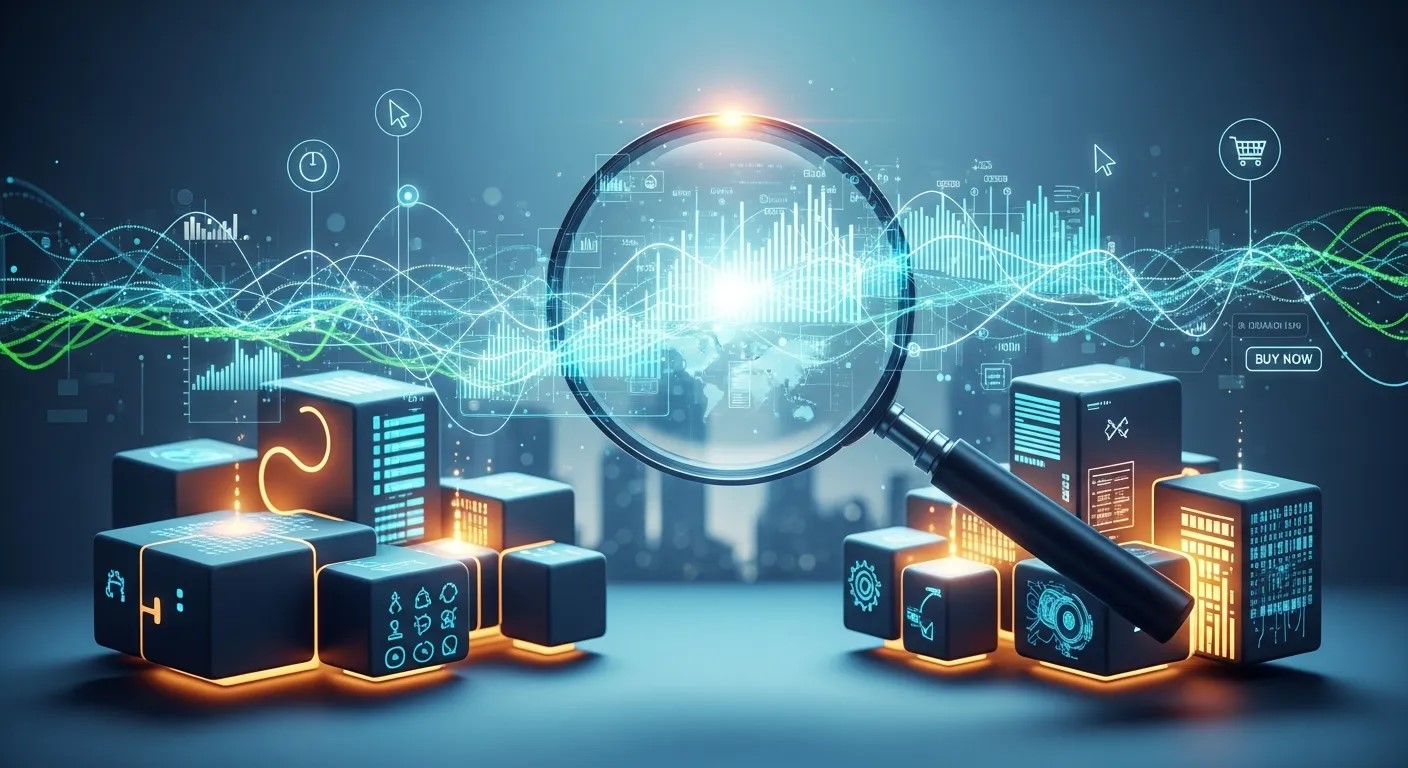
Data is the backbone of any successful click-driven strategy. Beyond Google’s Search Engine Market Share, marketers analyze:
-
CTR trends across campaigns
-
Conversion paths and drop-off points
-
Audience segmentation performance
These insights allow for continuous optimization. For instance, understanding which segments respond best to Dynamic Search Ads or hyper-personalized offers can guide future campaigns and budget allocation.
Balancing Paid and Organic Efforts
While Click Driven Marketing emphasizes paid strategies, integrating organic SEO efforts can maximize reach. Organic content supports paid campaigns by:
-
Building authority and trust
-
Reducing cost per acquisition over time
-
Enhancing overall visibility in search engines
A combined strategy ensures long-term sustainability and strengthens the impact of every click.
Real-World Case Studies in Click Driven Marketing
Understanding how Click Driven Marketing works in practice can help marketers visualize strategies and outcomes. Here are a few examples of companies leveraging this approach successfully:
1. E-Commerce Growth Through Dynamic Search Ads
A mid-sized online retailer specializing in sports gear integrated Dynamic Search Ads into their marketing strategy. By automatically matching search queries to relevant landing pages, they were able to:
-
Increase CTR by 42% within three months
-
Reduce wasted ad spend with targeted ad delivery
-
Boost overall conversion rate by 28%
The campaign emphasized hyper-personalization at scale, serving users product recommendations based on past browsing behavior. This illustrates how Click Driven Marketing is not just about generating clicks, but also about turning them into measurable revenue.
2. B2B SaaS Company Excelling at SEM
A B2B SaaS company focused on content marketing and search engine advertising to drive qualified leads. By applying advanced SEM techniques:
-
They segmented audiences based on industry, company size, and role
-
Optimized ad copy and landing pages for high-intent keywords
-
Conducted continuous A/B testing for maximum engagement
The results? A 35% reduction in cost per lead and a 50% increase in qualified sign-ups. By excelling at SEM, the company maximized ROI from Click Driven Marketing campaigns while providing valuable content to users.
Measuring ROI and Analytics in Click Driven Marketing
Tracking ROI is crucial for Click Driven Marketing. Without proper measurement, campaigns risk becoming inefficient and costly. Key metrics include:
| Metric | Description | How It Supports ROI |
|---|---|---|
| Click-Through Rate (CTR) | % of users who clicked an ad | Shows ad effectiveness |
| Conversion Rate | % of clicks that converted | Measures landing page & offer quality |
| Cost Per Click (CPC) | Average spend per click | Helps manage budget efficiently |
| Return on Ad Spend (ROAS) | Revenue generated vs. ad spend | Quantifies profitability |
Beyond basic metrics, marketers can leverage advanced analytics to understand user journeys:
-
Track multi-touch conversions to see how different ads contribute
-
Identify high-performing keywords that drive revenue, not just clicks
-
Use behavioral analytics to refine hyper-personalized content
By continuously analyzing these data points, businesses can optimize campaigns, reduce unnecessary spending, and increase overall effectiveness.
Step-by-Step Framework for Click Driven Marketing
For marketers ready to implement Click Driven Marketing, a structured framework ensures consistency and results:
Step 1: Audience Research
-
Identify high-value customer segments
-
Analyze user behavior patterns and search intent
-
Develop personas to guide content and ad targeting
Step 2: Keyword Strategy
-
Mix short-tail and long-tail keywords
-
Include focus keyword: Click Driven Marketing
-
Integrate secondary keywords naturally: SEM Demystified, Dynamic Search Ads, Excel at SEM
Step 3: Ad Creation
-
Craft compelling headlines and ad copy
-
Utilize Dynamic Search Ads for scalability
-
Test multiple variations to maximize CTR
Step 4: Landing Page Optimization
-
Ensure speed and mobile-friendliness
-
Match ad messaging to reduce bounce
-
Use clear CTAs and trust indicators
Step 5: Personalization and Automation
-
Implement hyper-personalization at scale
-
Use automation tools to deliver content dynamically
-
Retarget users who clicked but didn’t convert
Step 6: Analytics and Continuous Optimization
-
Track ROI using CTR, CPC, ROAS
-
Analyze multi-touchpoint conversions
-
Adjust campaigns based on performance insights
This framework allows marketers to systematically apply Click Driven Marketing principles and improve campaign effectiveness over time.
Behavioral Insights for Click Driven Marketing
Human behavior is central to any click-driven strategy. Understanding why people click helps in crafting campaigns that maximize engagement. Some actionable behavioral insights include:
-
Visual Hierarchy and Attention – Users are drawn to clear, visually distinct CTAs. Placement and contrast can improve click rates significantly.
-
Cognitive Load Reduction – Simplifying choices and streamlining navigation increases the likelihood of clicks leading to conversions.
-
Emotional Triggers – Fear of missing out (FOMO), curiosity, and excitement are powerful motivators. Ads incorporating these triggers often outperform generic messaging.
By integrating these insights, marketers practicing Click Driven Marketing can design campaigns that are not only clicked but also converted, aligning with both human psychology and business objectives.
Tools for Scaling Click Driven Marketing
Scaling campaigns requires robust tools. In addition to previously mentioned platforms, consider the following:
| Tool Category | Example | Purpose |
|---|---|---|
| Heatmaps | Hotjar, Crazy Egg | Understand user behavior on landing pages |
| Conversion Rate Optimization | Optimizely, VWO | A/B test landing pages and CTAs |
| CRM Integration | Salesforce, HubSpot | Track leads and conversions |
| Paid Media Automation | Marin Software, WordStream | Automate bid management and campaign optimization |
These tools empower marketers to run large-scale campaigns efficiently while maintaining personalization and effectiveness.
Conclusion
Click Driven Marketing is no longer optional for businesses aiming to thrive in the digital space—it’s a necessity. By understanding user intent, leveraging SEM strategies, and applying hyper-personalization at scale, marketers can transform clicks into measurable conversions. Tools like Dynamic Search Ads, analytics platforms, and optimization frameworks enable data-driven decisions that maximize ROI.
Ultimately, success in Click Driven Marketing comes from continuously refining campaigns, aligning content with audience behavior, and integrating insights from analytics. Businesses that adopt this approach can not only boost traffic and conversions but also build sustainable long-term growth in a competitive digital landscape.
Frequently Asked Questions (FAQ)
What is Click Driven Marketing?
Click Driven Marketing is a strategy focused on driving targeted clicks from search engines, social platforms, or ads and optimizing campaigns to convert traffic into measurable results. It combines SEM, analytics, and user intent insights for maximum ROI.
How does Click Driven Marketing differ from traditional marketing?
Unlike traditional marketing, Click Driven Marketing emphasizes data-driven targeting, real-time optimization, and measurable engagement. Every campaign is designed to generate clicks and conversions, rather than relying solely on impressions or broad audience reach.
What role do Dynamic Search Ads play in Click Driven Marketing?
Dynamic Search Ads automatically match search queries with relevant landing pages, increasing click-through rates and efficiency. They help marketers scale campaigns while keeping ads highly relevant to user intent.
How can I excel at SEM using Click Driven Marketing?
To excel at SEM, focus on keyword targeting, ad copy optimization, bid management, and continuous testing. Integrating Click Driven Marketing ensures that ads reach the right audience and drive measurable traffic and conversions.
Why is hyper-personalization important for Click Driven Marketing?
Hyper-personalization at scale allows marketers to deliver tailored messages, content, and offers to individual users. This improves engagement, reduces bounce rates, and increases conversion rates across campaigns.
How do I measure ROI in Click Driven Marketing?
Key metrics include CTR, CPC, conversion rate, and ROAS. Using analytics tools, marketers can track performance, identify high-performing campaigns, and adjust strategies to maximize revenue and reduce wasted spend.
Can Click Driven Marketing work for small businesses?
Yes! Even small businesses can leverage Click Driven Marketing by focusing on high-intent keywords, targeted ads, optimized landing pages, and analytics-driven decision-making. Scalable tools like Dynamic Search Ads make it accessible for all business sizes.



Leave a Reply