


When companies want to rank on search engines such as Google, they often think of running ads or overhauling their website. But for companies, or any organizations operating at scale, a different set of challenges — and strategies — are in play. That’s where Enterprise search engine marketing (SEM) comes to the rescue.
What is Enterprise SEM? Enterprise SEM is the process of organizing and executing high-level pay-per-click advertising programs for companies or multinationals with large and complex websites, many products, diverse audiences and sizable marketing budgets. It doesn’t stop as typical SEM does, and it focuses more on sophisticated structures, data-driven recipes, and granular strategies to meet the needs of large enterprises.
This post will discuss what Enterprise SEM is, how it’s different from traditional SEM, reliable ways to be successful, the tools you should keep the consideration, and a couple of case studies to illustrate its possibilities.
How Does Enterprise SEM Differ from Standard SEM?
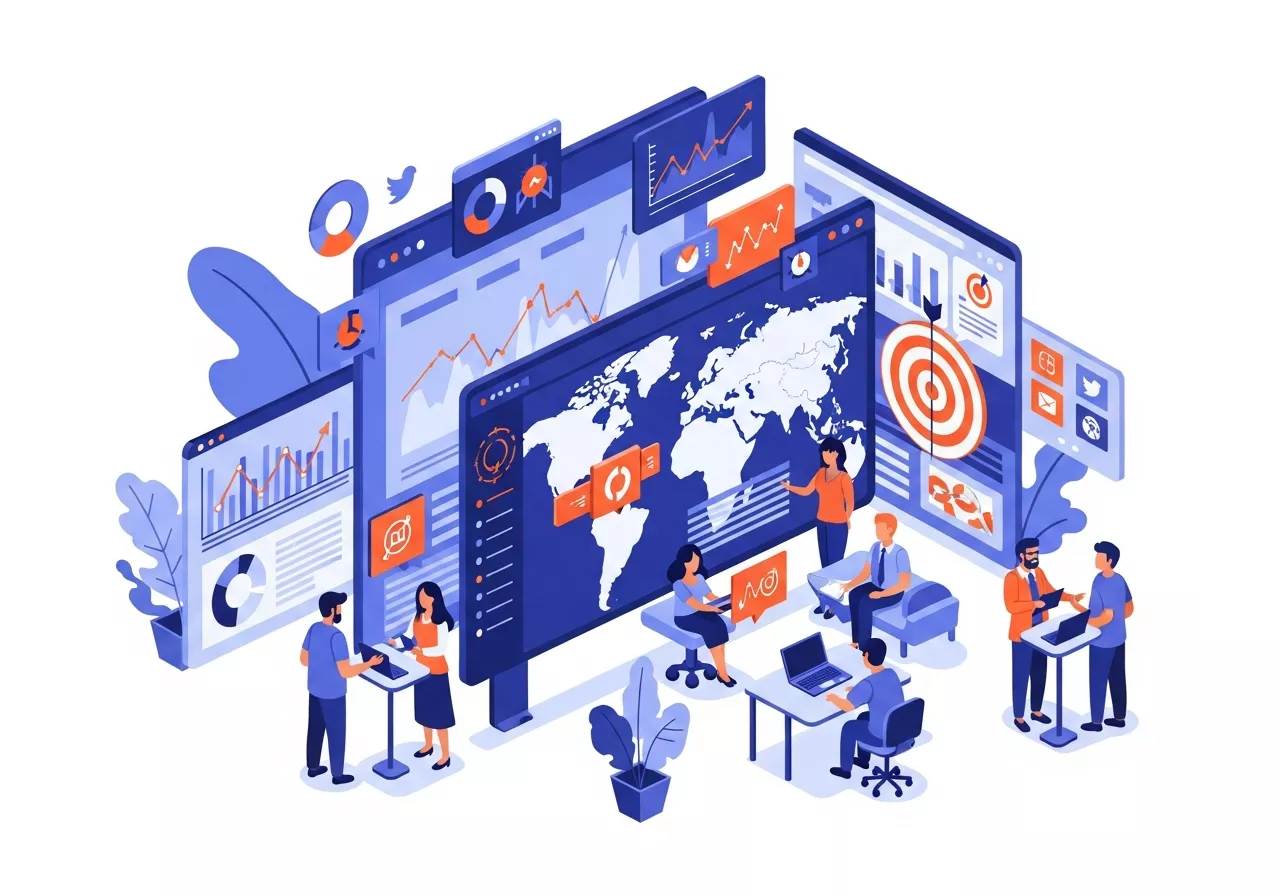
At a glance, both Enterprise SEM and standard SEM aim to improve brand visibility, drive traffic, and generate leads on search engines. But the scale and complexity of enterprise operations create notable distinctions:
1. Larger Budgets and Campaign Scales
Enterprise SEM involves managing significantly higher ad budgets and larger campaigns compared to small businesses or startups. Multinational companies and large corporations often have hundreds or even thousands of campaigns running simultaneously.
2. Multiple Stakeholders
Unlike small businesses, enterprise organizations usually have various stakeholders across regions, departments, and product lines. This requires streamlined collaboration and approval workflows to ensure consistency in messaging and branding.
3. Focus on Enterprise-Level Metrics
While small businesses may focus on singular goals like lead generation or sales, enterprise SEM tracks a wide range of KPIs such as market penetration, brand impact, and regional campaign performance.
4. Complex Ads Targeting
Enterprises must cater to diverse customers spread across geographies, languages, and demographics. Ad targeting has to account for localized preferences and market-specific challenges.
5. Integration with Other Marketing Channels
Enterprise SEM often works in conjunction with other large marketing campaigns, such as programmatic advertising, email marketing, and social media promotions. Ensuring alignment becomes a critical consideration.
Core Strategies for Enterprise SEM Success
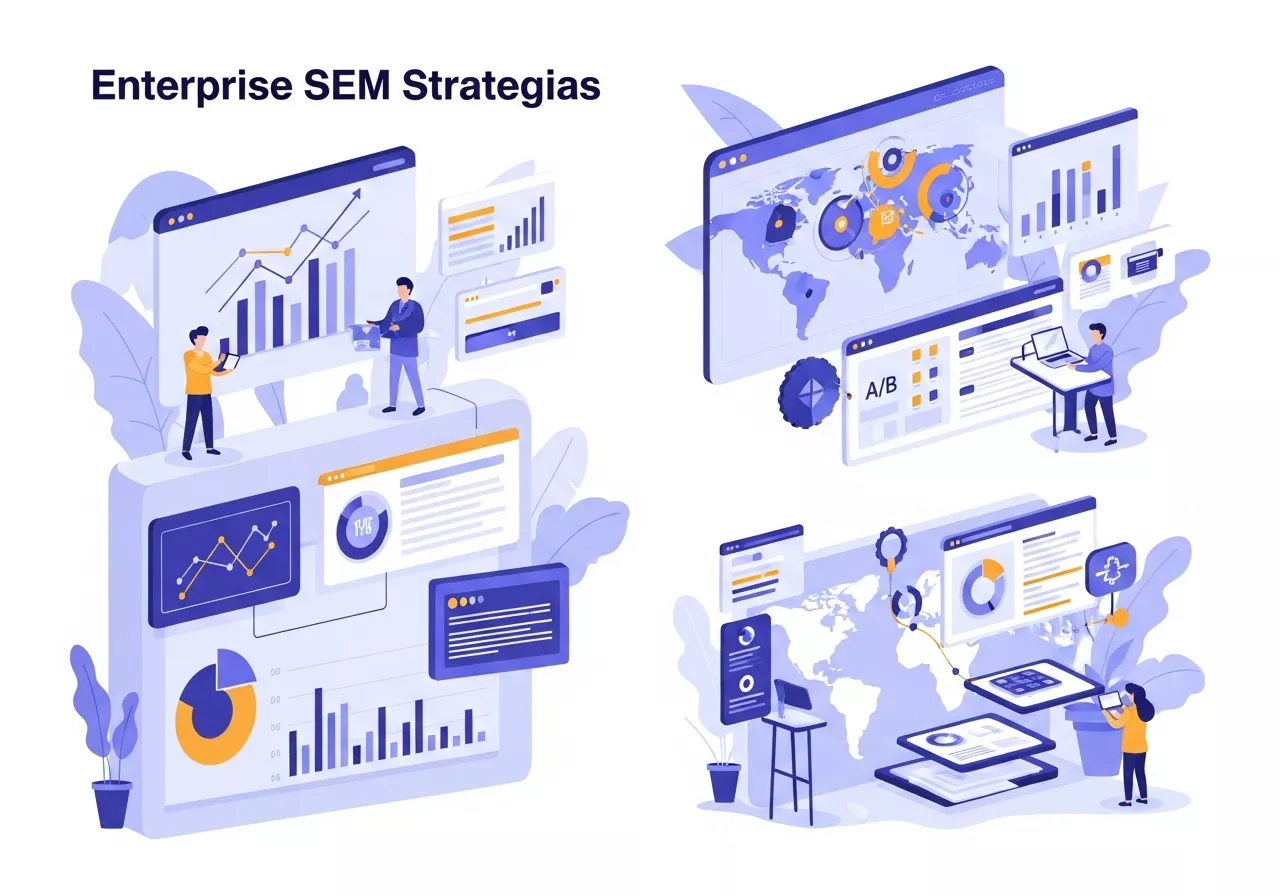
Enterprise SEM strategies need to go beyond the basics of keyword bidding and ad optimization. Here are some proven tactics that large-scale businesses can adopt:
1. Comprehensive Keyword Segmentation
For enterprises with multiple products or services, creating segmented keyword groups for different business units, product categories, or regions is essential. This ensures high relevance and better ad performance.
Example: A franchise restaurant might create separate keyword groups for “vegan options,” “family-friendly dining,” or “beachfront locations” to serve diverse needs.
2. Leverage Dynamic Search Ads
Dynamic search ads automatically generate headlines and landing pages from your website’s content. For enterprises with thousands of products or pages, this is an effective way to save time while ensuring ads reflect current offerings.
3. Local Campaign Optimization
Setting up geographically targeted campaigns with local keywords, ad copy, and language can significantly boost results. Large organizations also benefit from managing campaigns across different regions as separate entities.
4. Automate Campaign Management
For enterprises managing hundreds of campaigns, automation tools can simplify tasks such as bid adjustments, audience targeting, and creative optimizations. Platforms like Google Ads Automated Bidding or third-party tools are instrumental in enhancing efficiency.
5. Ad Copy Customization at Scale
At an enterprise level, personalization in ad copy can improve CTR (Click-Through Rate). Consider using
- Seasonal trends
- Customer persona-specific language
- Promotions or offers personalized to geographic areas
6. Robust A/B Testing Across All Levels
Whether you’re experimenting with ad copy formats, bidding algorithms, or audience segmentation, ongoing A/B testing for enterprise campaigns ensures better learnings and incremental improvements.
7. Invest in Remarketing
Enterprises are uniquely positioned to implement advanced remarketing strategies. Nurturing existing users through ads highlighting complementary products, time-limited offers, or tailored messaging boosts conversions on a larger scale.
A Tip: Utilize audience segmentation to retarget customers based on their buying stage (browsing vs. adding to cart vs. abandoned cart).
Essential Tools and Technologies for Enterprise SEM
Managing the complexity of Enterprise SEM campaigns requires cutting-edge tools purpose-built for scale. Below are several must-have tools:
1. Google Ads and Microsoft Advertising
These platforms are the foundation of any SEM campaign, with in-depth features for audience targeting, keyword planning, and automated reporting.
2. SEMRush or Ahrefs
Keyword research and competitive analysis are key pillars of Enterprise SEM. Both SEMRush and Ahrefs offer advanced tools to identify keyword gaps and track the performance of your competitors.
3. Marin Software
This platform is tailored to enterprises and provides features like cross-channel campaign management, budget optimization, and advanced bid strategies.
4. Kenshoo (Skai)
An enterprise-grade digital marketing tool that powers search campaigns with predictive analytics and AI-driven optimizations.
5. Data Analytics Platforms
From Google Analytics 4 to Tableau, enterprise marketers need robust platforms to monitor performance metrics, compare ROI across campaigns, and analyze customer behavior at a granular scale.
6. Dynamic Tag Management Solutions
Tools like Adobe Launch ensure seamless tracking across massive websites, serving as the backbone for accurate SEM insights.
7. ChatGPT or AI Writing Tools
AI writing assistants help scale and customize ad copy quickly. Tools like ChatGPT or Jasper AI simplify the creation of attention-grabbing headlines and descriptions.
Case Studies in Enterprise SEM Success
Case Study 1: Retail Giant Expands Through Local Ads
A retail chain operating across 200+ locations used local SEM strategies, creating region-centric campaigns. Using geo-targeting and localized keywords, the company saw a 30% boost in foot traffic within three months.
Case Study 2: SaaS Company Doubles Conversions
A SaaS enterprise adopted automation tools like Marin Software to optimize bids and scale dynamically across markets. With extensive A/B testing combined with remarketing efforts, they achieved a 40% higher conversion rate and lowered their CPA (Cost-Per-Acquisition) by 25%.
Case Study 3: Multi-Brand Hotel Group Leverages Seasonal Trends
Using dynamic search ads and remarketing strategies, a global hotel group successfully promoted seasonal events in each market. They achieved a 12% year-over-year increase in bookings with highly targeted campaigns.
The Future of Enterprise SEM
Looking ahead, Enterprise SEM is poised to grow even more sophisticated. Some emerging trends to watch include:
- AI and Machine Learning Integration for predictive audience targeting.
- Voice Search Advertising as voice-activated devices become ubiquitous.
- Interactive SEM Tools that use augmented reality (AR) to display virtual product showcases.
Organizations leveraging these trends will not only stay competitive but also set new industry benchmarks.
Challenges in Enterprise SEM
Enterprise SEM offers huge potential, but it also comes with unique challenges that businesses must navigate. Understanding these hurdles allows marketers to plan more effectively and allocate resources efficiently.
1. Managing Complexity Across Products and Services
Large enterprises often have hundreds or thousands of products or services. Coordinating ad campaigns for multiple business lines requires rigorous organization, clear workflows, and centralized oversight. Without careful management, campaigns can become fragmented, leading to inconsistent messaging and wasted budgets.
2. Ensuring Consistent Brand Messaging
Maintaining a uniform brand voice across all campaigns is crucial. With multiple teams, departments, and geographic regions involved, inconsistencies in messaging can confuse customers and dilute brand identity. A robust governance framework helps enforce standards while allowing flexibility for local adaptation.
3. Handling Massive Data Volume
Enterprise SEM campaigns generate enormous amounts of performance data. From clicks and impressions to conversion rates and customer segmentation, analyzing and deriving actionable insights can be overwhelming without advanced analytics tools and skilled teams.
4. Cross-Department Coordination
Enterprise campaigns often touch multiple departments, including marketing, sales, product, and finance. Aligning objectives, budgets, and timelines across all stakeholders can be challenging, but it’s essential for campaign success.
5. Regulatory Compliance and Privacy Concerns
For multinational enterprises, SEM campaigns must comply with regional regulations such as GDPR in Europe or CCPA in California. Ignoring compliance can result in fines and reputational damage.
Enterprise SEM Metrics That Matter
Measuring the effectiveness of Enterprise SEM goes beyond simple clicks and impressions. Enterprises need to track complex, multi-layered metrics to evaluate ROI, performance, and market impact.
Key Metrics for Enterprise SEM Success:
| Metric | Why It Matters | How to Optimize |
|---|---|---|
| Click-Through Rate (CTR) | Indicates ad relevance and appeal | Optimize ad copy, headlines, and call-to-action buttons |
| Conversion Rate (CVR) | Measures how many users take desired actions | Use A/B testing, personalized landing pages, and remarketing |
| Cost-Per-Acquisition (CPA) | Shows efficiency of ad spend | Adjust bids, segment audiences, and focus on high-intent keywords |
| Return on Ad Spend (ROAS) | Determines overall campaign profitability | Combine SEM with cross-channel attribution for accurate ROI |
| Quality Score | Impacts ad rank and CPC | Improve ad relevance, landing page experience, and CTR |
| Market Share Impact | Tracks brand visibility against competitors | Use competitive analysis tools and adjust campaigns accordingly |
| Geographic Performance | Identifies which regions perform best | Localize campaigns and optimize bids by region |
Pro Tip: Focus on metrics that align with overall business goals. For large enterprises, a single KPI may not be sufficient. Using a dashboard to monitor multiple metrics simultaneously ensures campaigns remain on target.
Best Practices for Enterprise SEM Teams
Successful Enterprise SEM campaigns require well-structured teams and efficient processes. Scaling SEM effectively involves both human expertise and technological support.
1. Build Specialized Roles
- Keyword Strategists: Focus on high-intent keyword research across multiple business units.
- Ad Copywriters: Create localized, personalized, and persuasive ad copy.
- Data Analysts: Monitor campaigns, track metrics, and provide actionable insights.
- Automation Specialists: Implement tools for bid management, audience targeting, and reporting.
2. Foster Cross-Department Collaboration
Establish regular touchpoints between marketing, sales, product, and regional teams. This ensures consistent messaging and quick resolution of bottlenecks.
3. Leverage Automation and AI
- Automated bid adjustments save time and reduce human error.
- AI-powered ad generation and audience targeting can scale campaigns while maintaining personalization.
4. Continuous Testing and Optimization
- Run A/B and multivariate tests regularly for ads, landing pages, and targeting parameters.
- Use insights to refine campaigns incrementally for higher ROI.
5. Align SEM with Overall Marketing Strategy
- Enterprise SEM should integrate seamlessly with SEO, social media, email marketing, and display advertising.
- Coordinated campaigns amplify results and reduce wasted spend.
6. Document Processes and Learnings
Maintaining a playbook with processes, guidelines, and best practices ensures continuity across teams and reduces dependency on individual employees.
Conclusion: Enterprise SEM as a Growth Engine
Enterprise SEM isn’t just another marketing tactic—it’s a strategic growth engine for large organizations. By combining advanced keyword strategies, automation, local targeting, and data-driven insights, enterprises can achieve high visibility, drive qualified traffic, and maximize conversions across multiple markets.
Key Takeaways:
- Scale Matters: Enterprise SEM handles complex campaigns with thousands of ads and multiple stakeholders.
- Data-Driven Decisions: Metrics and analytics guide ongoing optimization.
- Automation and AI: Automation tools and AI-powered strategies streamline operations and improve ROI.
- Continuous Testing: Ongoing A/B testing ensures campaigns evolve with audience behavior.
By embracing Enterprise SEM fully, companies can maintain a competitive edge, adapt quickly to market trends, and consistently deliver relevant, high-performing campaigns that drive growth.
FAQ: Enterprise SEM
1. What is Enterprise SEM?
Enterprise SEM is the execution of large-scale search engine marketing campaigns for organizations with complex websites, multiple products, diverse audiences, and significant marketing budgets.
2. How is Enterprise SEM different from standard SEM?
Enterprise SEM operates at a larger scale, with multiple stakeholders, higher budgets, localized campaigns, integrated marketing channels, and advanced metrics tracking.
3. Why is Enterprise SEM important for large companies?
It ensures consistent brand visibility across multiple markets, manages high-volume campaigns efficiently, and enables data-driven optimization to maximize ROI on substantial marketing investments.
4. What are the key strategies for Enterprise SEM success?
- Comprehensive keyword segmentation
- Dynamic search ads
- Local campaign optimization
- Automation of bidding and targeting
- Personalized ad copy at scale
- Advanced A/B testing
- Robust remarketing campaigns
5. Which tools are essential for Enterprise SEM?
- Google Ads & Microsoft Advertising – Core campaign management
- SEMRush / Ahrefs – Keyword research and competitive analysis
- Marin Software / Kenshoo (Skai) – Automation and bid management
- Google Analytics 4 / Tableau – Performance tracking
- AI tools (ChatGPT, Jasper AI) – Scalable ad copy creation
6. How do enterprises measure SEM success?
Focus on metrics like Click-Through Rate (CTR), Conversion Rate, Cost-Per-Click (CPC), Quality Score, Return on Ad Spend (ROAS), and campaign-level KPIs like market penetration and regional performance.
7. What challenges do enterprises face in SEM?
- Managing complex campaigns across multiple regions
- Aligning messaging across departments and stakeholders
- Balancing budget allocation with performance metrics
- Maintaining personalization at scale
- Integrating SEM with broader marketing campaigns
8. Can automation and AI help?
Yes. Automation and AI tools assist in bid management, keyword optimization, ad copy personalization, performance monitoring, and reporting, which saves time and improves ROI.
9. How often should enterprise SEM campaigns be monitored?
Continuous monitoring is essential. Daily or weekly checks ensure campaigns are on track, while monthly or quarterly analyses help refine strategy and optimize performance across regions.
10. How does localization impact Enterprise SEM?
Localizing campaigns for language, culture, regional trends, and customer behavior increases relevance, improves CTR and conversion rates, and strengthens market presence in each target region.
11. What role does remarketing play in Enterprise SEM?
Remarketing allows enterprises to re-engage users based on previous interactions, abandoned carts, or browsing behavior, boosting conversions and enhancing customer retention.
12. How does Enterprise SEM integrate with other marketing channels?
Enterprise SEM complements email campaigns, social media marketing, display advertising, and programmatic campaigns. Aligning messaging across channels ensures a cohesive brand experience.
Learn more about: What Is Social Media Marketing? A Complete Guide



Leave a Reply