

Social Media Advertising enables businesses to reach targeted audiences, boost engagement, and drive conversions. By combining multi-platform strategies, analytics, personalization, and SEM insights, brands can maximize ROI and create campaigns that are both effective and scalable.
Introduction to Social Media Advertising
In today’s digital age, Social Media Advertising has become an essential tool for businesses of all sizes. The rapid growth of social platforms like Facebook, Instagram, Twitter, LinkedIn, and TikTok has transformed the way brands connect with audiences. Unlike traditional marketing channels, Social Media Advertising offers unparalleled targeting capabilities, allowing brands to reach specific demographics, interests, and behaviors.
With billions of active users worldwide, businesses can leverage Social Media Advertising to build brand awareness, increase engagement, and drive conversions efficiently. Platforms now provide sophisticated analytics, ensuring that campaigns are not only visible but measurable in terms of return on investment (ROI).
The modern consumer expects personalized, relevant content, which makes generic campaigns less effective. Here, the strategy behind Social Media Advertising plays a crucial role, as campaigns need to resonate with users on a personal level while remaining aligned with broader business objectives.
Why Social Media Advertising Matters
Businesses often underestimate the impact of Social Media Advertising in their marketing mix. While organic reach is valuable, it’s limited due to platform algorithms. Paid campaigns allow brands to cut through the noise and reach their intended audience at the right time.
Some key advantages include:
-
Targeted Reach: Reach audiences based on location, demographics, interests, and online behavior.
-
Cost Efficiency: Social media ads can be optimized to fit almost any budget while still generating measurable ROI.
-
Real-Time Analytics: Track engagement, clicks, conversions, and impressions instantly.
-
Brand Awareness: Strengthen brand recall and visibility with visually appealing, shareable content.
Moreover, the competitive landscape means that businesses who invest in Social Media Advertising often outperform competitors who rely solely on organic strategies. By understanding audience behavior and strategically placing ads, brands can maintain a significant advantage.
Key Platforms for Social Media Advertising
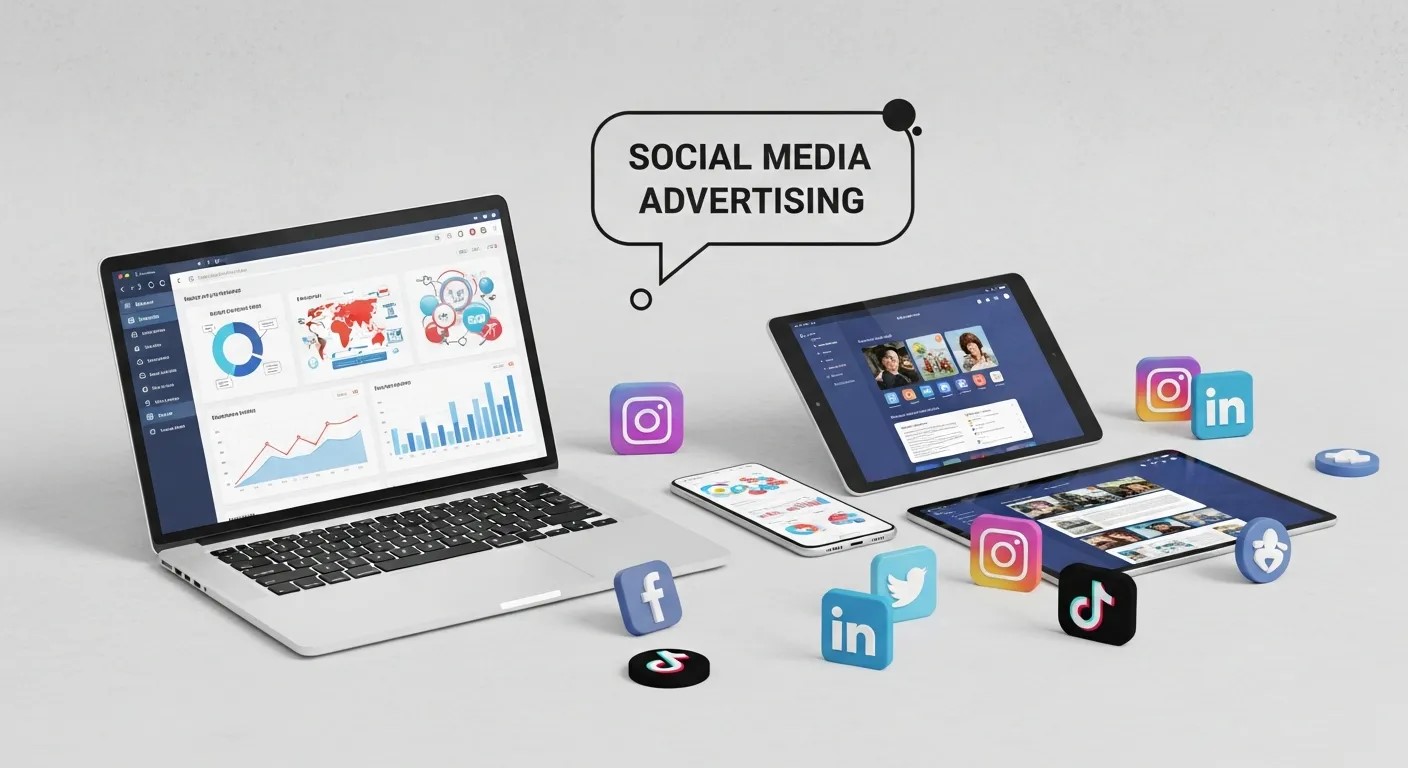
Different platforms offer unique opportunities and challenges for Social Media Advertising. Each platform has its audience, content style, and ad formats, making it critical to tailor campaigns accordingly.
Facebook & Instagram
Facebook remains the largest social network globally, while Instagram continues to thrive with visually-driven content. Effective Social Media Advertising on these platforms involves using:
-
Carousel Ads: Display multiple products or features in a single ad.
-
Video Ads: Engage users through storytelling and demonstrations.
-
Stories Ads: Capture attention in full-screen mobile experiences.
The combination of these formats enables brands to experiment with diverse messaging strategies. By analyzing engagement metrics, businesses can refine campaigns to maximize ROI. Interestingly, integrating Maximizing ROI with SEM techniques into social campaigns helps businesses align paid search insights with social targeting, creating cohesive marketing efforts.
TikTok
TikTok has rapidly emerged as a platform that thrives on short-form video content. Successful Social Media Advertising on TikTok relies on creativity, trends, and audience participation. Brands need to craft content that feels native to the platform, often leveraging influencer collaborations to expand reach. TikTok’s algorithm favors content that resonates quickly, making it an essential platform for younger demographics.
For B2B marketing, LinkedIn offers a unique opportunity to reach professionals. Social Media Advertising on LinkedIn focuses on thought leadership, whitepapers, and webinars. Sponsored content and InMail campaigns are effective ways to engage decision-makers directly. Businesses can apply strategies from Best Time to Use SEM insights to schedule LinkedIn campaigns at moments when professional engagement is highest.
Twitter/X
Although more volatile in reach, Twitter provides an avenue for timely promotions, announcements, and trending content. Successful Social Media Advertising on Twitter requires:
- Short, engaging copy
- Clear call-to-actions
- Use of hashtags and trending topics
Twitter campaigns can also benefit from analytics-driven optimization, helping brands measure engagement and align ad spend with performance metrics.
Audience Targeting & Engagement Strategies
One of the greatest strengths of Social Media Advertising is its precise audience targeting capabilities. Businesses can create campaigns tailored to specific groups, improving relevance and engagement.
Defining Your Audience
Before launching campaigns, it’s vital to define your ideal audience. This includes:
- Demographics (age, gender, income, location)
- Interests (hobbies, content preferences, industry)
- Online behavior (purchasing habits, device usage)
By leveraging these data points, brands can ensure Social Media Advertising reaches users most likely to convert, avoiding wasted spend.
Creating Engaging Content
Engagement is the ultimate goal of social campaigns. Ads must be visually appealing, concise, and emotionally resonant. Types of content include:
- Infographics and educational visuals
- Short-form videos and tutorials
- Polls and interactive content
Integrating Maximize SEM Potential concepts helps here, allowing brands to align ad messaging with search trends and user intent. For example, insights from paid search campaigns can guide creative direction, ensuring consistency across channels.
Hyper-Personalization at Scale
Modern audiences expect content that feels personal. Hyper-personalization involves tailoring messaging based on user data, such as past interactions, preferences, or purchase history. Social Media Advertising campaigns that incorporate hyper-personalized messaging often see higher engagement and conversion rates. Tools like CRM integration, AI-driven recommendations, and dynamic ad content can help achieve this at scale.
Measuring Success
Measurement is critical for refining Social Media Advertising strategies. Key performance indicators (KPIs) include:
- Click-through rate (CTR)
- Conversion rate
- Cost per acquisition (CPA)
- Engagement rate (likes, shares, comments)
Understanding metrics enables marketers to iterate campaigns effectively. Businesses that integrate Measuring ROI and Analytics techniques can optimize campaigns continuously, improving efficiency and achieving better results.
Budgeting & Campaign Optimization
Budget management is central to effective Social Media Advertising. Unlike traditional media, digital ads allow precise control over spend. Businesses can allocate budgets by campaign, audience segment, or platform.
- A/B Testing: Test multiple ad creatives, copy variations, and call-to-actions.
- Bid Strategies: Choose automated or manual bidding to optimize for conversions or clicks.
- Frequency Capping: Avoid ad fatigue by limiting how often users see the same ad.
Additionally, integrating insights from SEM campaigns can help businesses achieve more with less. For instance, applying Freelancing as SMM principles outsourcing campaign management to specialized freelancers can optimize both costs and outcomes.
Crafting a Multi-Platform Strategy
One of the most effective approaches in Social Media Advertising is leveraging multiple platforms simultaneously. Each platform attracts a different audience and offers distinct ad formats, so a cohesive strategy ensures broad reach without redundancy.
Brands should first analyze their audience demographics to determine which platforms align with their objectives. For instance, while Instagram excels in visual storytelling and youth engagement, LinkedIn provides opportunities for B2B lead generation. TikTok, with its algorithm-driven content discovery, favors creative and entertaining campaigns. By mapping content to the strengths of each platform, businesses can maximize engagement and overall impact.
Multi-platform campaigns also benefit from Maximizing ROI with SEM insights. Paid search data can reveal what users are actively searching for, which helps craft ad messaging that resonates across social media channels. By aligning ad copy with high-performing search terms, brands can amplify relevance and improve conversion rates.
Scheduling & Frequency
Timing is critical in Social Media Advertising. Running ads when audiences are most active can significantly enhance engagement. Insights from analytics and Best Time to Use SEM strategies can guide posting schedules. For example, B2B audiences on LinkedIn often engage more during weekday mornings, whereas TikTok audiences may peak in the evenings.
Frequency also matters—too few exposures may limit awareness, while excessive impressions can lead to ad fatigue. Tools provided by most platforms allow for frequency capping and rotation of creatives, ensuring that campaigns remain fresh and effective.
Audience Segmentation & Personalization

Segmentation allows advertisers to divide their audience into smaller groups based on shared characteristics, enabling more precise targeting. In Social Media Advertising, segmentation can be based on:
-
Demographics (age, gender, location)
-
Behavioral patterns (past interactions, purchase history)
-
Psychographics (interests, values, lifestyle)
By tailoring ad messaging to each segment, marketers can enhance relevance and drive higher engagement rates. Hyper-personalization at scale is particularly effective in this context. Using AI and machine learning, brands can dynamically adjust creative elements, headlines, or calls-to-action to match individual user preferences. This ensures that every impression feels relevant, increasing the likelihood of conversion.
Integrating Hyper-Personalization at Scale within campaigns allows businesses to deliver tailored experiences without sacrificing efficiency. For example, e-commerce brands can dynamically showcase products users previously viewed, while service-based companies can highlight offerings relevant to past inquiries.
Creating High-Impact Content
Content is the backbone of successful Social Media Advertising. While targeting is crucial, ads must capture attention instantly. Types of content that perform well include:
-
Video Ads: Short-form, storytelling content captures attention quickly and encourages sharing.
-
Carousel Ads: Multiple images or videos in a single ad allow brands to showcase various products or features.
-
Interactive Polls & Quizzes: Encourage active participation and provide insights into audience preferences.
-
Infographics & Educational Content: Convey valuable information visually, increasing shareability.
A key consideration is aligning content with user intent. By examining search trends through Maximize SEM Potential, marketers can identify topics and messaging likely to resonate. For example, if analytics indicate high interest in specific products or solutions, ad content can reflect these priorities, ensuring a smoother path to conversion.
Visual & Copy Considerations
-
Use bold visuals that stand out in crowded feeds without overwhelming the message.
-
Craft concise, clear copy with a compelling call-to-action (CTA).
-
Maintain brand voice consistently across platforms to reinforce recognition and trust.
Platforms like Instagram and TikTok prioritize visually compelling content, whereas LinkedIn emphasizes informative and professional messaging. Tailoring creative to platform expectations ensures higher engagement and reduces wasted spend.
Budget Optimization & Bid Strategies
Effective Social Media Advertising relies on precise budgeting and bid management. Unlike traditional advertising, digital platforms allow marketers to adjust spend in real-time, optimizing for results.
- A/B Testing: Run multiple versions of an ad to determine which creative, headline, or CTA performs best.
- Bid Optimization: Platforms offer manual or automated bidding strategies to optimize for clicks, conversions, or impressions.
- Audience-Based Budgeting: Allocate more budget to high-performing segments identified through analytics.
Incorporating Measuring ROI and Analytics into campaign management ensures that every dollar spent is accountable. By continuously monitoring KPIs such as CTR, CPA, and engagement rates, marketers can reallocate budgets dynamically, enhancing overall efficiency.
Additionally, employing Freelancing as SMM strategies hiring specialized freelancers for campaign management can improve efficiency and creative quality without significantly increasing costs. Freelancers often bring fresh perspectives and specialized expertise, particularly in content creation and ad optimization.
Leveraging Analytics for Continuous Improvement
Analytics are central to scaling Social Media Advertising campaigns. By monitoring performance, brands can identify which ad formats, creatives, and targeting strategies work best. Metrics to track include:
- Engagement Rate: Measures interactions like likes, shares, and comments.
- Click-Through Rate (CTR): Indicates effectiveness of ad copy and CTAs.
- Conversion Rate: Shows how many users completed a desired action.
- Cost per Acquisition (CPA): Tracks efficiency of ad spend relative to conversions.
By analyzing these metrics, marketers can optimize campaigns iteratively, reducing wasted spend and maximizing results. Integrating insights from SEM campaigns further strengthens decision-making, as patterns from search behavior can guide ad targeting and creative adjustments.
Example: Data-Driven Optimization
| Metric | Facebook Ads | Instagram Ads | TikTok Ads | LinkedIn Ads |
|---|---|---|---|---|
| CTR (%) | 3.5 | 4.2 | 5.1 | 2.8 |
| Conversion Rate (%) | 2.1 | 2.8 | 3.0 | 1.9 |
| Cost per Acquisition | $12 | $10 | $8 | $15 |
| Engagement Rate (%) | 6.0 | 7.5 | 8.2 | 5.0 |
This table illustrates how performance varies across platforms. By combining insights from both Social Media Advertising metrics and SEM trends, marketers can prioritize channels with the highest ROI.
Case Studies & Real-World Applications
Retail & E-Commerce
Retail brands often achieve success with Social Media Advertising through dynamic product ads. By showing products users previously engaged with, brands increase relevance and likelihood of purchase. Integrating SEM insights allows marketers to align ad messaging with search intent, ensuring consistency across digital channels.
Service-Based Businesses
Service providers can leverage LinkedIn and Facebook for lead generation campaigns. Sponsored content highlighting case studies, testimonials, or free resources often attracts qualified leads. By using audience segmentation and hyper-personalization, these businesses can deliver tailored solutions, boosting conversion rates.
B2B SaaS Companies
B2B companies benefit from targeting decision-makers on platforms like LinkedIn. Ad campaigns focusing on webinars, whitepapers, or product demos can generate high-quality leads. Combining insights from Best Time to Use SEM ensures campaigns run during optimal engagement periods for professionals.
Small Businesses & Startups
For small businesses with limited budgets, Social Media Advertising allows precise targeting and cost-effective campaigns. By focusing on highly specific audience segments and using creative, authentic content, startups can compete with larger competitors. Applying Maximize SEM Potential principles ensures campaigns align with search trends, maximizing visibility.
Retargeting & Remarketing Strategies
One of the most powerful tools in Social Media Advertising is retargeting. Unlike standard campaigns, retargeting focuses on users who have already interacted with your brand, visited your website, or engaged with previous ads. This approach increases the likelihood of conversion by keeping your brand top-of-mind.
Effective retargeting strategies include:
-
Dynamic Product Ads: Show users products they viewed but didn’t purchase.
-
Sequential Messaging: Deliver tailored messages over time to nurture leads.
-
Custom Audience Segments: Group users based on engagement patterns or demographic profiles.
Integrating insights from Maximizing ROI with SEM can make retargeting campaigns even more effective. For example, understanding which search queries drive conversions can guide which products or services to highlight in retargeted social ads.
Leveraging Cross-Channel Insights

Successful Social Media Advertising does not operate in isolation. Combining social campaigns with other marketing channels such as email, search, and paid search creates a cohesive ecosystem. Cross-channel campaigns enable consistent messaging and reinforce brand presence.
For instance, insights from Best Time to Use SEM can guide the scheduling of social ads to align with high-traffic periods identified in search campaigns. Similarly, understanding which ad copy resonates in search can inform creative and messaging for social campaigns, ensuring a unified experience for the audience.
Content Calendar & Campaign Planning
Structured planning is essential to execute effective Social Media Advertising campaigns. A content calendar ensures campaigns are timely, organized, and consistent across platforms. Key elements of a content calendar include:
-
Campaign objectives and goals
-
Platform-specific content types and formats
-
Publishing schedule and frequency
-
Key performance indicators (KPIs) for each campaign
By planning ahead, marketers can maintain a balance between promotional, educational, and engaging content. Additionally, content calendars help in allocating resources efficiently, coordinating teams, and preventing gaps in campaign execution.
Emerging Trends in Social Media Advertising
The digital landscape is evolving rapidly, and Social Media Advertising must adapt to remain effective. Some emerging trends include:
AI-Driven Campaign Optimization
Artificial intelligence is transforming how campaigns are optimized. Platforms now offer automated bidding, dynamic creative optimization, and predictive targeting. AI algorithms can analyze large datasets to identify the best-performing audiences, ad formats, and creative elements, improving ROI while reducing manual workload.
Interactive & Immersive Content
Augmented reality (AR) filters, interactive polls, and shoppable videos are increasingly popular. Such content enhances user engagement and provides a memorable experience, making ads more likely to be shared and acted upon. Hyper-personalization techniques can amplify these effects by tailoring experiences to individual users.
Video-First Marketing
Short-form video content dominates social media feeds, particularly on TikTok and Instagram Reels. Brands investing in creative, story-driven videos see higher engagement and brand recall. Incorporating Maximize SEM Potential insights can help ensure video content aligns with what users are actively searching for, creating a seamless cross-channel strategy.
Data Privacy & Ethical Marketing
With growing concerns around data privacy, marketers must adopt transparent and ethical practices in Social Media Advertising. Using first-party data, respecting user consent, and providing clear opt-out options are critical for maintaining trust. Campaigns that prioritize ethical practices often achieve better long-term engagement.
Measuring Campaign Effectiveness
Monitoring and analyzing campaign performance remains critical for success in Social Media Advertising. Beyond standard metrics like CTR and conversion rate, advanced measurement strategies include:
-
Attribution Modeling: Understanding which touchpoints contribute most to conversions.
-
Lifetime Value Analysis: Measuring the long-term value of acquired customers.
-
Audience Retention Metrics: Evaluating how effectively campaigns keep users engaged over time.
Integrating Measuring ROI and Analytics techniques ensures continuous improvement. By combining social metrics with insights from SEM campaigns, marketers can identify high-performing segments, optimize creatives, and refine targeting strategies.
Freelancing & Outsourcing Opportunities
Smaller brands and startups can enhance their Social Media Advertising efforts by hiring freelancers or agencies for specialized tasks such as content creation, campaign management, or analytics. Freelancing as SMM offers flexibility, access to expertise, and cost efficiency. By leveraging external resources strategically, businesses can scale campaigns without overextending internal teams.
Practical Tips for Maximizing Campaign Performance
-
Test Early, Iterate Often: Launch multiple ad variations to learn quickly which messaging resonates.
-
Focus on Audience Insights: Use analytics to understand behaviors and preferences.
-
Align Campaigns with Business Goals: Every ad should support specific objectives, whether awareness, engagement, or conversion.
-
Invest in Visual Storytelling: Images and videos capture attention more effectively than text alone.
-
Leverage SEM Insights: Insights from search behavior can inform creative, targeting, and timing.
By following these tips, businesses can make the most of their Social Media Advertising investments, ensuring campaigns are both effective and sustainable.
Integrating Social Media Advertising with Long-Term Marketing Strategy

While immediate results are important, the true power of Social Media Advertising lies in its role within a broader marketing strategy. Consistently delivering engaging content, monitoring audience behavior, and integrating insights from other digital channels ensures that social campaigns contribute to long-term growth.
Additionally, by combining social media efforts with search, email, and content marketing, brands can build an ecosystem that nurtures leads throughout the customer journey. Cross-channel consistency reinforces messaging, increases brand recall, and drives conversions more efficiently than isolated campaigns.
Conclusion
Social Media Advertising has transformed the way businesses connect with their audiences. From precise targeting to hyper-personalized campaigns, it offers unmatched opportunities to boost engagement, increase brand awareness, and drive conversions. By leveraging multi-platform strategies, integrating insights from SEM campaigns, and continuously measuring performance through analytics, businesses can maximize ROI and maintain a competitive edge in the digital marketplace.
The key to successful Social Media Advertising lies in understanding your audience, crafting relevant content, and adapting to emerging trends. Whether you’re a startup, e-commerce brand, or B2B company, applying these strategies ensures that your campaigns are not only effective today but scalable for long-term growth.
Frequently Asked Questions (FAQ)
What is Social Media Advertising?
Social Media Advertising is a paid marketing strategy where businesses promote their products or services on social media platforms like Facebook, Instagram, LinkedIn, and TikTok to reach specific audiences and drive engagement.
Why is Social Media Advertising important for businesses?
It allows precise audience targeting, increases brand visibility, and delivers measurable results. Unlike organic content, paid ads can reach the right people at the right time, boosting conversions and ROI.
How do I measure the effectiveness of Social Media Advertising?
Key metrics include engagement rate, click-through rate (CTR), conversion rate, and cost per acquisition (CPA). Integrating analytics and insights from SEM campaigns helps refine targeting and improve campaign performance.
Which platforms are best for Social Media Advertising?
The best platform depends on your audience. Instagram and TikTok excel for younger, visually-driven demographics; LinkedIn is ideal for B2B; Facebook offers broad reach; Twitter is effective for timely promotions.
How can small businesses maximize ROI with Social Media Advertising?
Small businesses can optimize ROI by targeting specific audiences, testing ad creatives, using retargeting campaigns, and leveraging freelancers or agencies for specialized campaign management.
What is the role of personalization in Social Media Advertising?
Hyper-personalization at scale ensures content resonates with individual users. By tailoring messages based on behavior, preferences, or past interactions, brands can increase engagement and conversion rates.
How does Social Media Advertising complement SEM strategies?
Insights from SEM campaigns, like search intent and high-performing keywords, can guide social ad content, targeting, and timing, creating a cohesive, cross-channel marketing approach.



Leave a Reply