

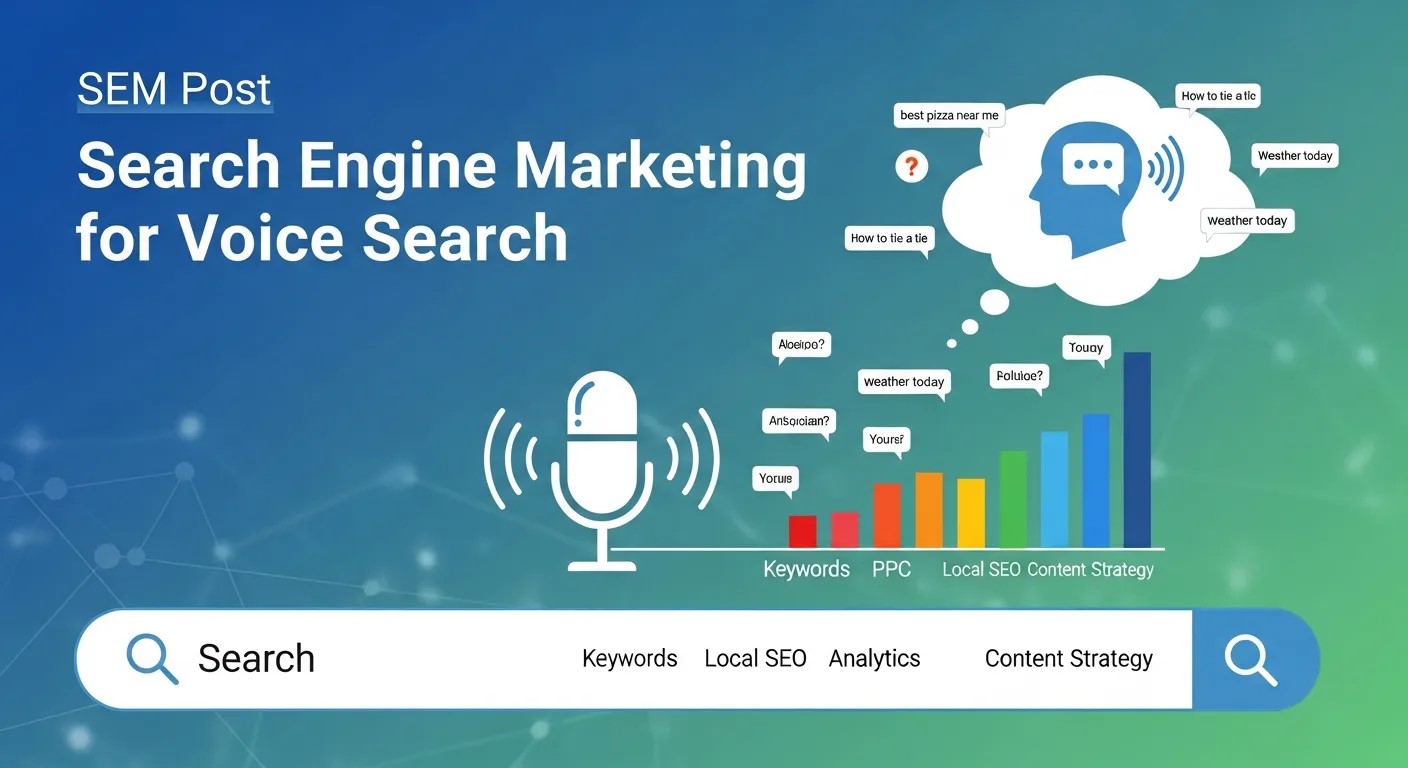
The Evolution of Search Behavior in a Voice First World
Search behavior has undergone a fundamental transformation over the past decade. Users are no longer confined to typing short keyword phrases into search engines. Instead, they are speaking full questions into their devices, expecting immediate and accurate answers. This shift has made SEM for Voice Search an essential component of modern digital marketing strategies.
Voice-driven queries are more conversational, context-aware, and intent-rich than traditional text searches. People speak differently than they type, and this behavioral change forces marketers to rethink how paid search campaigns are structured, targeted, and optimized. As voice adoption continues to grow across mobile devices, smart speakers, cars, and wearables, search engines increasingly prioritize results that align with natural language patterns and user intent.
The psychology behind voice usage is also different. Users often rely on voice when multitasking, driving, or seeking quick solutions. This means the margin for error is smaller, and ads must be exceptionally relevant. SEM for Voice Search bridges this gap by aligning paid campaigns with conversational intent, context signals, and real-time user needs.
Why Voice Search Is Changing Paid Advertising Forever
Voice queries tend to be longer, more specific, and framed as complete questions. This creates both challenges and opportunities for advertisers. Traditional keyword stuffing or short exact-match strategies are no longer enough to capture high-intent voice traffic.
From a psychological standpoint, voice users trust search engines more deeply because they receive a single or limited set of answers. This heightened trust means that appearing in voice-driven paid results carries greater influence over decision-making. SEM for Voice Search allows advertisers to position themselves at these critical micro-moments when users are actively seeking help, recommendations, or immediate solutions.
Another important factor is urgency. Voice queries often signal readiness to act. Whether the user is searching for nearby services, product availability, or quick comparisons, the intent is usually closer to conversion. By understanding this urgency, advertisers can tailor bidding strategies, ad copy, and landing pages to meet voice-driven expectations.
Understanding Conversational Intent in Paid Search

The Psychology of Spoken Queries
When people speak, they reveal more about their intent than when they type. Spoken language includes emotional cues, urgency, and contextual hints that are often absent in text-based searches. SEM for Voice Search leverages this by focusing on intent clusters rather than isolated keywords.
Voice users commonly phrase searches as questions beginning with who, what, where, when, why, and how. These question-based patterns indicate informational, navigational, or transactional intent. Understanding these nuances allows marketers to craft ads that directly address user concerns instead of pushing generic promotional messages.
Natural Language and Semantic Targeting
Modern search engines rely heavily on semantic understanding. This means ads are evaluated not only on keyword relevance but also on contextual alignment. Voice Search Optimization plays a critical role here, as it ensures that paid campaigns are structured around natural speech patterns rather than rigid keyword lists.
Semantic targeting allows advertisers to capture a broader range of voice queries without sacrificing relevance. Instead of targeting hundreds of fragmented keywords, marketers can focus on intent-driven themes that align with how users naturally speak.
Structuring Campaigns for Voice Driven SEM Success
Rethinking Keyword Strategy
A voice-first approach requires a shift from traditional keyword thinking. Long-tail, conversational phrases become more valuable, and match types must be handled carefully. SEM for Voice Search benefits from a balanced combination of broad match with smart exclusions and intent-based keyword grouping.
Advertisers should prioritize phrases that reflect real conversations, such as problem-solving queries or location-specific needs. This approach not only improves relevance but also enhances Quality Score by aligning ads more closely with user expectations.
Ad Copy That Sounds Human
Voice users expect natural responses, not robotic marketing language. Ad copy should mirror how people speak, using clear, concise, and reassuring language. SEM for Voice Search thrives when ads feel like helpful answers rather than sales pitches.
This human-centered approach taps into trust psychology. When users feel understood, they are more likely to engage, click, and convert. Simple sentence structures, direct answers, and empathetic wording all contribute to higher engagement rates.
Device Ecosystems and Voice Search Behavior
Voice interactions are no longer limited to smartphones. Smart speakers, in-car systems, and wearable devices all contribute to the growing voice ecosystem. Voice Search and Smart Assistants play a central role in shaping how paid ads are delivered and experienced.
Each device context introduces different user expectations. For example, voice searches conducted at home may be more exploratory, while in-car searches often indicate immediate needs. SEM for Voice Search must account for these contextual differences by adjusting bidding, scheduling, and messaging strategies accordingly.
Understanding device behavior also helps advertisers prioritize which voice moments are worth targeting. Not all voice searches are commercially viable, but those with clear intent can deliver exceptional ROI when approached strategically.
Cross-Channel Integration for Voice-Led Campaigns

Voice does not exist in isolation. Users often move between channels before making a decision. Cross-Channel SEM ensures that voice-driven paid campaigns are supported by consistent messaging across search, display, social, and messaging platforms.
This integrated approach reinforces brand recall and reduces friction in the conversion journey. When users encounter a brand through multiple touchpoints, trust builds more quickly. SEM for Voice Search benefits from this synergy by capturing early intent and guiding users toward conversion through complementary channels.
Consistency across channels also strengthens attribution models, allowing marketers to better understand how voice interactions influence downstream conversions.
Automation and Smart Bidding in Voice-Centric SEM
Automation plays a crucial role in managing the complexity of voice-driven campaigns. Machine learning algorithms analyze user behavior, contextual signals, and historical performance to optimize bids in real time. SEM for Voice Search relies heavily on these systems to remain competitive in fast-moving auctions.
Smart bidding strategies help advertisers allocate budget efficiently, especially when dealing with unpredictable voice query patterns. Automated systems can adjust bids based on location, device, time of day, and intent signals, ensuring that ads appear when they are most likely to convert.
Dynamic Ad Experiences and Search Intent Matching
Dynamic Search Ads in SEM offer a powerful solution for capturing voice-driven intent at scale. These ads automatically match user queries with relevant landing pages, reducing the need for exhaustive keyword lists.
SEM For voice search, dynamic ads are particularly effective because they adapt to conversational phrasing and unexpected query variations. This flexibility ensures broader coverage without compromising relevance. SEM for Voice Search becomes more resilient when dynamic elements are incorporated into campaign structures.
Landing Page Optimization for Voice Traffic
Voice-driven users expect fast, clear, and actionable content. Landing pages must deliver immediate value, with concise answers and intuitive navigation. SEM for Voice Search performs best when landing pages are optimized for clarity, speed, and mobile usability.
Psychologically, voice users are often in decision-making mode. Reducing friction through simple layouts, clear calls to action, and relevant information increases conversion likelihood. Aligning landing page content with spoken queries further enhances trust and engagement.
Measuring Performance Beyond Traditional Metrics
Traditional metrics like click-through rate and cost per click provide limited insight into voice-driven performance. SEM for Voice Search requires a deeper focus on engagement quality, assisted conversions, and intent fulfillment.
Voice interactions often initiate longer customer journeys. Understanding their role in the conversion funnel helps marketers make more informed optimization decisions. Attribution models should account for voice touchpoints to accurately measure their impact.
The Role of Messaging Channels in Voice-Influenced SEM
Voice-driven intent often extends beyond search engines into messaging platforms. The SMS Market has become an important extension of paid search strategies, allowing brands to follow up on high-intent interactions with timely, personalized communication.
Integrating messaging with SEM campaigns creates a seamless experience that supports user intent across channels. When done correctly, this approach reinforces trust and accelerates decision-making.
Brands that Boost Sales With SMS Marketing often find that voice-initiated leads respond more positively to conversational follow-ups, as the communication style aligns with how the interaction began.
Scaling Voice Search Campaigns Sustainably
Scaling SEM for Voice Search requires careful balance. Overexpansion can dilute relevance, while underinvestment can limit visibility. Sustainable growth depends on continuous testing, data analysis, and refinement.
Advertisers should regularly review search term reports, refine intent groupings, and adjust automation settings. This iterative process ensures that campaigns remain aligned with evolving voice behavior and user expectations.
Future-Proofing Paid Search for a Voice-First Era
Voice adoption is not a passing trend; it represents a long-term shift in how people interact with technology. SEM for Voice Search positions brands to remain visible, relevant, and competitive as this shift accelerates.
By focusing on conversational intent, human psychology, and cross-channel alignment, advertisers can build resilient paid search strategies that adapt to future innovations. Voice-driven SEM is not about chasing technology—it is about understanding people and meeting them where they are.
Voice Search Query Patterns and Paid Keyword Mapping
Voice-based queries follow unique linguistic patterns that differ significantly from typed searches. Users tend to speak in full sentences, often including intent modifiers such as location, urgency, or specific outcomes. SEM for Voice Search becomes more effective when advertisers map these spoken patterns into intent-based keyword groups rather than rigid match structures.
Instead of targeting fragmented terms, marketers should analyze conversational phrasing found in search query reports and align them with thematic clusters. This approach improves ad relevance and reduces wasted spend. Voice queries also frequently include follow-up intent, meaning the user expects contextual continuity rather than isolated answers.
From a psychological perspective, spoken searches indicate trust in the system’s ability to interpret meaning. Paid campaigns that respect this expectation by aligning ads with natural speech patterns achieve stronger engagement. When keyword mapping reflects how people actually speak, paid ads feel less intrusive and more like helpful responses, strengthening overall campaign performance.
Local Intent Signals and Voice-Driven SEM Performance
A large percentage of voice searches carry strong local intent. Users often ask for nearby solutions, operating hours, or immediate availability. SEM for Voice Search must account for this behavior by emphasizing location-based targeting and contextual relevance.
Local voice queries tend to signal high readiness to act. When users ask questions verbally, they are often moments away from making a decision. Paid ads that surface at this stage influence outcomes more directly than traditional discovery-based campaigns. Adjusting bids based on proximity, time of day, and device type allows advertisers to capture these micro-moments efficiently.
Psychologically, voice users expect instant clarity. Ads that clearly address local relevance build trust faster and reduce hesitation. By aligning paid campaigns with real-world context, advertisers improve conversion efficiency while meeting user expectations naturally.
Ad Rank Optimization in Voice Search Environments
Ad rank plays an even more critical role in voice-driven environments because users are typically presented with fewer results. SEM for Voice Search demands stronger alignment between relevance, expected performance, and landing page experience to compete effectively.
Voice queries are evaluated based on contextual meaning rather than strict keyword matching. This means advertisers must focus on improving Quality Score through intent alignment and user satisfaction. Higher ad relevance signals help ensure visibility when voice-based auctions are triggered.
From a behavioral standpoint, users rarely question voice-delivered results. This places greater responsibility on advertisers to deliver accurate, trustworthy messaging. Improving ad rank is not just a technical goal—it is a psychological commitment to user confidence and reliability within voice-led search experiences.
Voice Search Attribution and Assisted Conversion Analysis
Attribution becomes more complex when voice interactions are introduced into the customer journey. SEM for Voice Search often initiates awareness or consideration rather than immediate conversion, making traditional last-click models insufficient.
SEM for Voice search frequently act as entry points that influence later actions across devices or channels. Understanding assisted conversions helps advertisers recognize the true value of voice-driven paid interactions. This insight allows for smarter budget allocation and performance evaluation.
From a strategic perspective, voice attribution highlights how trust develops over time. Users who begin their journey through voice tend to engage more deeply later. Recognizing this behavioral pattern ensures that paid campaigns are optimized for long-term value rather than short-term metrics alone.
Budget Allocation Strategies for Voice-Centric Campaigns
Voice-driven campaigns require flexible budget strategies due to fluctuating query patterns and intent strength. SEM for Voice Search benefits from adaptive budget allocation that responds to real-time demand rather than static assumptions.
Advertisers should prioritize high-intent voice segments while maintaining exploratory coverage for emerging query patterns. Automation tools help redistribute spend based on performance signals, ensuring that budget flows toward the most impactful moments.
Psychologically, SEM For voice search often occur during high-attention moments. Investing budget during these windows increases the likelihood of meaningful engagement. Strategic allocation ensures that paid ads are present when users are most receptive, maximizing efficiency and relevance simultaneously.
Preparing Paid Search Teams for a Voice First Future

Adopting a voice-first mindset requires more than technical adjustments—it demands a shift in how teams think about user behavior. SEM for Voice Search encourages marketers to focus on conversations, intent, and emotional context rather than isolated keywords.
Training teams to analyze spoken query data, understand conversational psychology, and optimize for contextual relevance prepares organizations for long-term success. Collaboration between SEO, SEM, and content teams becomes increasingly important as voice blurs traditional channel boundaries.
By aligning internal processes with voice-driven realities, brands build adaptable paid search strategies that evolve with user behavior. This preparation ensures sustained visibility and relevance as voice continues to shape the future of search.




Leave a Reply