

How Smart Meta Advertising Drives Real Business Growth
Meta ads have reshaped the way businesses connect with online audiences. When campaigns are planned strategically, they can elevate digital marketing efforts by converting casual clicks into long-term customers and driving sustainable growth. In today’s highly competitive digital space, mastering ad placements, audience targeting, and AI-driven optimization techniques is essential for maintaining visibility and achieving consistent results.
Understanding Meta Ads and Their Power
Meta ads operate across Facebook, Instagram, and other platforms in the Meta ecosystem, offering businesses access to highly targeted audiences. Unlike generic marketing campaigns, these ads rely on user behavior, interests, and interaction patterns to deliver content to the most promising leads.
Why Businesses Must Focus on Meta Ads Strategy
Developing a Meta Ads Strategy isn’t just about creating ads; it’s about crafting a roadmap for consistent engagement, conversion, and ROI. Businesses that adopt a structured approach see measurable improvements in traffic, lead generation, and overall revenue. Key elements include:
-
Audience segmentation and retargeting
-
Creative and copy optimization
-
Performance tracking and iterative testing
Integrating AI in Meta Ads
Modern Meta Ads Strategy increasingly incorporates AI tools to optimize bidding, audience selection, and content placement. Techniques such as AI-Powered Bidding Strategies allow advertisers to maximize budget efficiency while reaching high-intent users, making campaigns more cost-effective and results-driven.
Building an Effective Meta Ads Campaign
Creating a successful campaign requires careful planning and execution. Businesses should follow a systematic approach to ensure every ad delivers measurable value.
Step 1: Define Objectives
Every ad campaign begins with clear objectives—brand awareness, lead generation, traffic, or conversions. Mapping objectives against measurable KPIs ensures alignment between marketing efforts and business goals.
Step 2: Audience Research
Understanding your audience is paramount. Meta platforms provide robust targeting tools, allowing marketers to segment users by demographics, interests, and online behavior. Retargeting previous visitors and creating lookalike audiences can dramatically improve engagement and conversion rates.
Step 3: Ad Creative & Messaging
Creativity is central to an effective Meta Ads Strategy. Engaging visuals and compelling copy attract attention, while messaging tailored to audience needs fosters trust. Testing different versions using A/B Testing in SEM ensures campaigns are optimized for maximum impact.
Advanced Techniques to Enhance Your Meta Ads Strategy
In today’s competitive landscape, simple ad posting isn’t enough. Businesses must leverage advanced techniques to stay ahead.
Multi-Platform Integration
Combining Meta Ads with other channels strengthens visibility. For example, blending Google Ads for Ecommerce with Meta campaigns ensures your brand reaches audiences across multiple touchpoints. This approach enhances recognition and boosts conversions.
Data-Driven Insights
Analytics are the backbone of any successful Meta Ads Strategy. Integrating Chatbot Marketing Analytics allows businesses to track user interactions, measure engagement, and refine messaging in real-time, ensuring every campaign is backed by actionable insights.
Leveraging AI for Creative & Targeting
AI isn’t limited to bidding; it also helps in ad creation and audience segmentation. With AI-Powered Object Recognition, businesses can analyze visual content performance, tailoring creatives to what resonates most with audiences. Predictive algorithms forecast trends, enabling proactive campaign adjustments before performance dips.
Optimizing Ad Spend and Maximizing ROI
A critical aspect of Meta Ads Strategy is resource allocation. Smart budgeting ensures businesses extract maximum value from every dollar spent.
Cost-Efficient Campaigns
By combining AI optimizations with iterative testing, marketers can reduce wasted spend. Insights from SEM with Social Media Ads allow allocation of budget toward high-performing audiences and ad types, improving overall ROI.
Continuous Testing and Refinement
Meta platforms offer granular data on click-through rates, conversions, and engagement. Using A/B Testing in SEM, marketers can refine creatives, adjust messaging, and tweak placements to continually enhance campaign performance.
Sample Meta Ads Performance Metrics
| Metric | Description | Goal / Benchmark |
|---|---|---|
| Click-Through Rate (CTR) | % of users clicking the ad | 2–5% typical range |
| Cost Per Click (CPC) | Average cost per ad click | Varies by industry |
| Conversion Rate | % of visitors completing target action | 5–10% typical range |
| Return on Ad Spend (ROAS) | Revenue generated per $ spent | 4:1 or higher |
| Engagement Rate | Likes, shares, comments | 1–3% standard |
Crafting a Winning Meta Ads Strategy
A Meta Ads Strategy begins with understanding the goals of your business. Without a clearly defined, even the best creatives may fail to deliver results. Companies that integrate a Meta Ads Strategy from the start can align ad campaigns with their broader marketing goals, driving measurable growth and ROI.
The first step in crafting audience research. Businesses using a segment audiences based on demographics, interests, and online behavior. This ensures that ads reach the most relevant users while minimizing wasted spend. Combining this approach with SEM with Social Media Ads allows for cross-channel consistency, enhancing overall campaign effectiveness.
Designing Ads That Convert
An effective Meta Ads Strategy depends heavily on creative design and messaging. Using a Meta Ads Strategy, marketers develop ad creatives that not only attract attention but also drive action. Each ad must align with the business’s objectives while resonating with the target audience.
Incorporating A/B Testing in SEM within your Meta Ads Strategy is crucial. Testing different ad visuals, copy variations, and CTAs allows marketers to refine campaigns and maximize engagement. Additionally, leveraging AI-Powered Bidding Strategies ensures that the most relevant users see the ads at the optimal time, increasing the likelihood of conversions.
Leveraging AI in Your Meta Ads Strategy
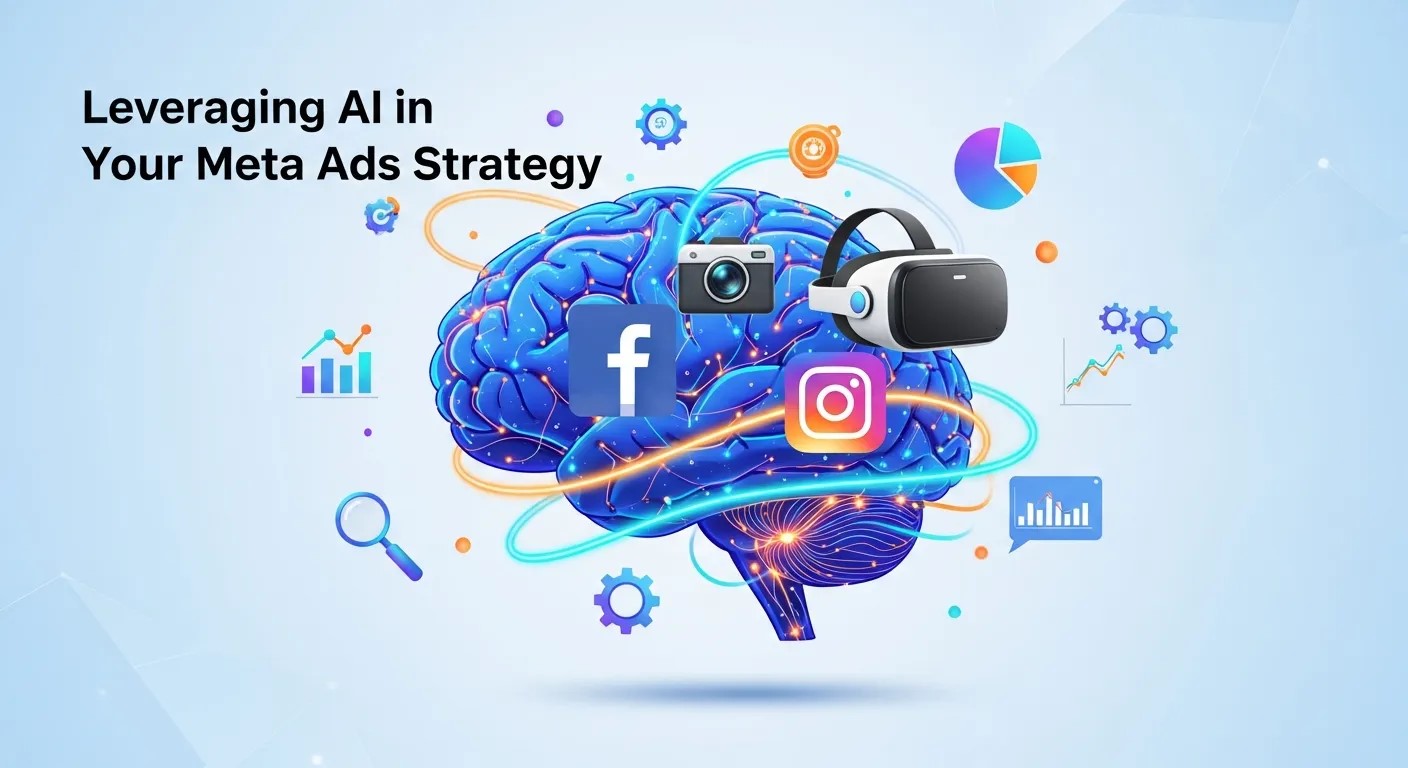
AI has transformed the way businesses approach a Meta Ads Strategy. By integrating AI tools into your automate bid adjustments, predict audience behavior, and identify high-performing segments faster than manual methods.
For example, AI-Powered Object Recognition can analyze visual elements in ad creatives, ensuring that the content resonates with the audience. Combined with insights from Chatbot Marketing Analytics, a Meta Ads Strategy can be continuously refined, allowing businesses to stay agile and ahead of competitors.
Multi-Platform Optimization
A strong Meta Ads Strategy does not operate in isolation. Integrating campaigns with other digital marketing channels, such as Google Ads for Ecommerce, ensures that the audience is engaged across multiple touchpoints. A cohesive Meta Ads Strategy enhances brand recognition and reinforces messaging, improving overall conversion rates.
Incorporating SEM with Social Media Ads within your Meta Ads Strategy allows marketers to track cross-channel performance and identify opportunities for optimization. By analyzing engagement metrics, businesses can allocate budget toward the most effective ad sets, maximizing ROI while minimizing wasted spend.
Tracking and Analytics
Every successful Meta Ads Strategy relies on robust analytics. Monitoring key metrics such as CTR, conversion rate, ROAS, and engagement rate ensures that the Meta Ads Strategy is delivering the expected results.
Integrating tools like Chatbot Marketing Analytics into your enables real-time feedback and performance tracking. This allows businesses to make data-driven decisions, adjust targeting, and improve creatives systematically. By consistently analyzing metrics, a Meta Ads Strategy evolves to meet changing market dynamics and user behavior.
Early-Stage Meta Ads Strategy Planning
When starting any digital marketing initiative, an early-stage Meta Ads Strategy is essential. Planning your Meta Ads Strategy before creating ads ensures campaigns are structured, goals are measurable, and budgets are efficiently allocated.
A comprehensive begins with clear objectives. Whether the goal is brand awareness, lead generation, or conversions, integrating these objectives into makes it actionable. During this phase, businesses often combine their with Google Ads for Ecommerce, ensuring visibility across multiple platforms from day one.
Audience Segmentation
Audience segmentation is a core pillar of any Meta Ads Strategy. A targeted ensures that the right users see the right ads at the right time. Businesses using a Meta Ads Strategy segment audiences based on demographics, interests, and online behavior.
Incorporating SEM with Social Media Ads into your Meta Ads Strategy allows cross-platform segmentation, giving businesses the ability to reach users wherever they spend their time online. Combining these insights with Chatbot Marketing Analytics can further refine segmentation, helping your Meta Ads Strategy identify high-value customers efficiently.
Creative Optimization for Meta Ads Strategy
A Meta Ads Strategy is only as effective as its creatives. Using a Meta Ads Strategy, businesses design visuals and messaging that resonate with the target audience. A strong leverages compelling headlines, clear CTAs, and visually engaging media to increase clicks and conversions.
Incorporating A/B Testing in SEM within your Meta Ads Strategy allows marketers to test different ad variations, ensuring the best-performing creative drives maximum results. Furthermore, integrating AI-Powered Object Recognition into your Meta Ads Strategy can analyze ad visuals, predicting which images or videos will perform best.
Budgeting and Bidding
Financial planning is a key aspect of a Meta Ads Strategy. A well-structured that ad spend is allocated efficiently, reducing waste and increasing ROI. Using AI-Powered Bidding Strategies, businesses can automatically adjust bids based on audience engagement, maximizing the effectiveness of each ad dollar.
By combining these techniques with cross-platform insights from SEM with Social Media Ads, a Meta Ads Strategy ensures that campaigns remain cost-efficient while maintaining high performance.
Tracking Performance and Iterative Improvements
A data-driven continuously monitors key performance metrics. Implementing a Meta Ads Strategy without tracking is like driving blindfolded; insights from metrics guide adjustments and optimizations. Metrics such as CTR, CPC, ROAS, and conversion rates are essential to refine your Meta Ads Strategy over time.
Integrating Chatbot Marketing Analytics in your Meta Ads Strategy provides real-time user interaction data, allowing businesses to make rapid adjustments to creatives, targeting, and bidding strategies. This iterative approach ensures that your Meta Ads Strategy evolves with market trends and user behavior.
Scaling Your Meta Ads Strategy
Once campaign performance becomes stable, scaling is the natural next phase. Smart scaling allows businesses to reach broader audiences without sacrificing efficiency. By gradually expanding campaigns and leveraging AI-driven optimization, brands can grow revenue while keeping acquisition costs under control.
Pairing this growth phase with Google Ads for Ecommerce helps extend visibility across high-intent search channels, while A/B Testing in SEM ensures ad quality and conversion performance remain consistent across expanded campaigns.
Integrating Meta Ads Strategy with Content Marketing
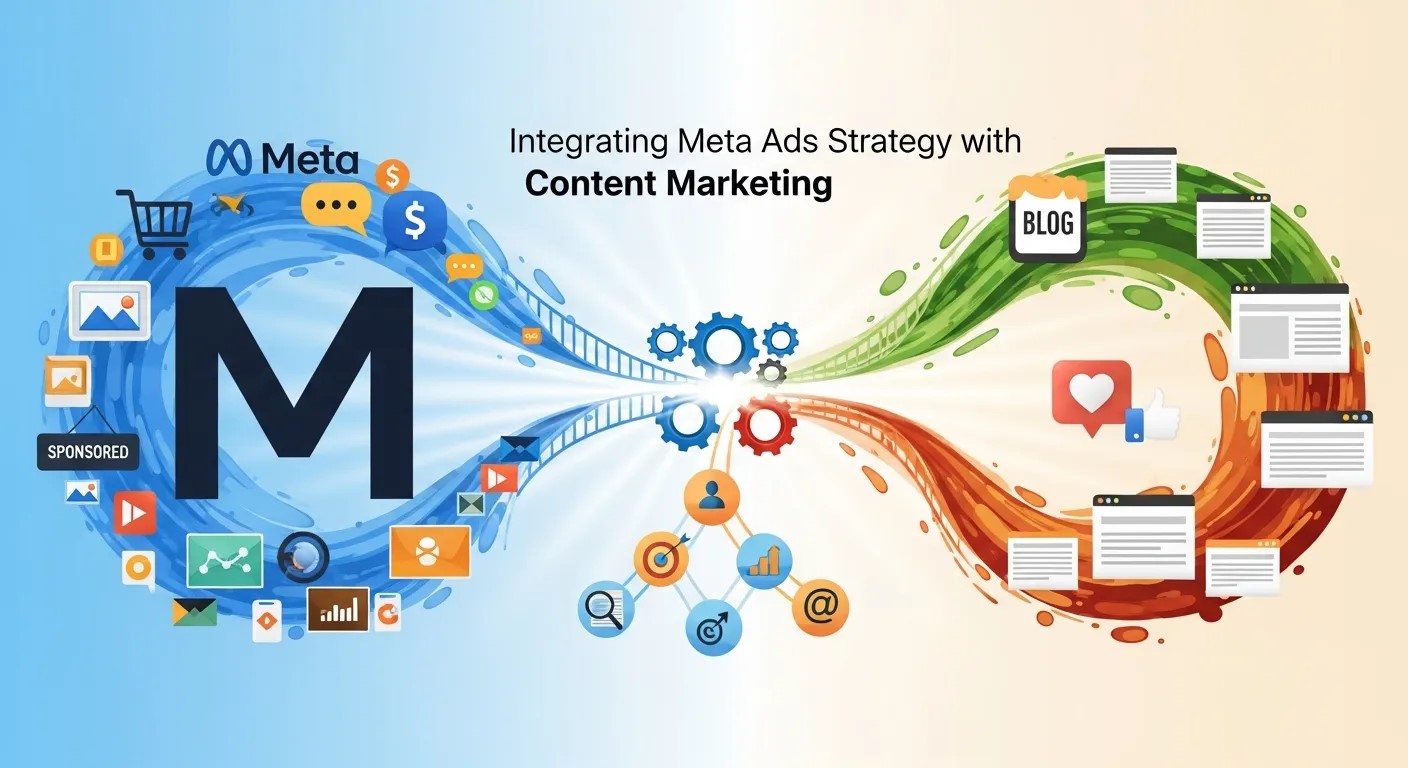
A Meta Ads Strategy becomes far more effective when paired with strong content marketing. By aligning a Meta Ads Strategy with blog posts, videos, and social media content, businesses can nurture leads more effectively. Every element of your content ecosystem supports, reinforcing messaging and increasing audience trust.
Using alongside Chatbot Marketing Analytics enables businesses to track how users interact with content, allowing further optimization. Integrating educational posts, case studies, or product demos into campaigns strengthens engagement, making the Meta Ads Strategy more conversion-driven.
Retargeting Tactics
Retargeting is a critical component of any advanced Meta Ads Strategy. A Meta Ads Strategy that includes retargeting reconnects with users who previously interacted with your brand but did not convert. Retargeted audiences often have higher conversion rates, making more cost-effective.
Implementing retargeting campaigns with insights from SEM with Social Media Ads ensures consistent messaging across platforms. Businesses using a Meta Ads Strategy can dynamically adjust ad content based on previous user actions, creating a personalized experience that increases conversions.
Seasonal Campaigns
Businesses using a Meta Ads Strategy to capitalize on holidays, product launches, or industry events often see spikes in engagement and revenue.
Incorporating A/B Testing in SEM ensures that seasonal creatives resonate with audiences, while AI-Powered Bidding Strategies help allocate budget efficiently during peak periods. By aligning ad timing with market demand, a Meta Ads Strategy drives maximum results when it matters most.
Leveraging AI Insights
AI is transforming the landscape of Meta Ads Strategy. By integrating AI into a Meta Ads Strategy, businesses can predict audience behavior, optimize ad placement, and personalize content at scale. Tools like AI-Powered Object Recognition allow marketers to understand which visuals drive the highest engagement.
Combining AI insights with Chatbot Marketing Analytics ensures that a Meta Ads Strategy continuously evolves. Real-time data helps marketers make immediate adjustments, keeping campaigns relevant and impactful.
Common Mistakes Businesses Make with Meta Advertising
Many businesses struggle with Meta advertising not because the platform is ineffective, but due to strategic mistakes. One common issue is targeting audiences too broadly, which leads to wasted budget and low engagement. Another frequent mistake is relying on a single creative or message for too long without testing variations. Ignoring performance data and failing to optimize campaigns regularly can also limit results. To achieve consistent growth, businesses must continuously review metrics, refine audience segments, and update creatives based on real user behavior.
Future Trends in Meta Advertising
Meta advertising continues to evolve as user behavior and technology advance. Automation and AI-driven optimization are becoming more prominent, enabling advertisers to predict performance and personalize campaigns at scale. Video-first formats, interactive ads, and deeper data integration are shaping the future of digital advertising. Businesses that stay updated with these trends and adapt early are more likely to maintain competitiveness, improve engagement, and achieve long-term success in an increasingly dynamic digital marketing landscape.
Optimizing Landing Pages Strategy
Even the best underperform if the landing pages aren’t optimized. A Meta Ads Strategy works hand-in-hand with high-converting landing pages to drive measurable results. Businesses using a Meta Ads Strategy should ensure that messaging, design, and CTAs are aligned across ads and landing pages.
Integrating Google Ads for Ecommerce insights into your Meta Ads Strategy helps identify high-performing landing pages and audience segments, improving overall conversion rates.
Measuring Success and Improving Campaign Performance
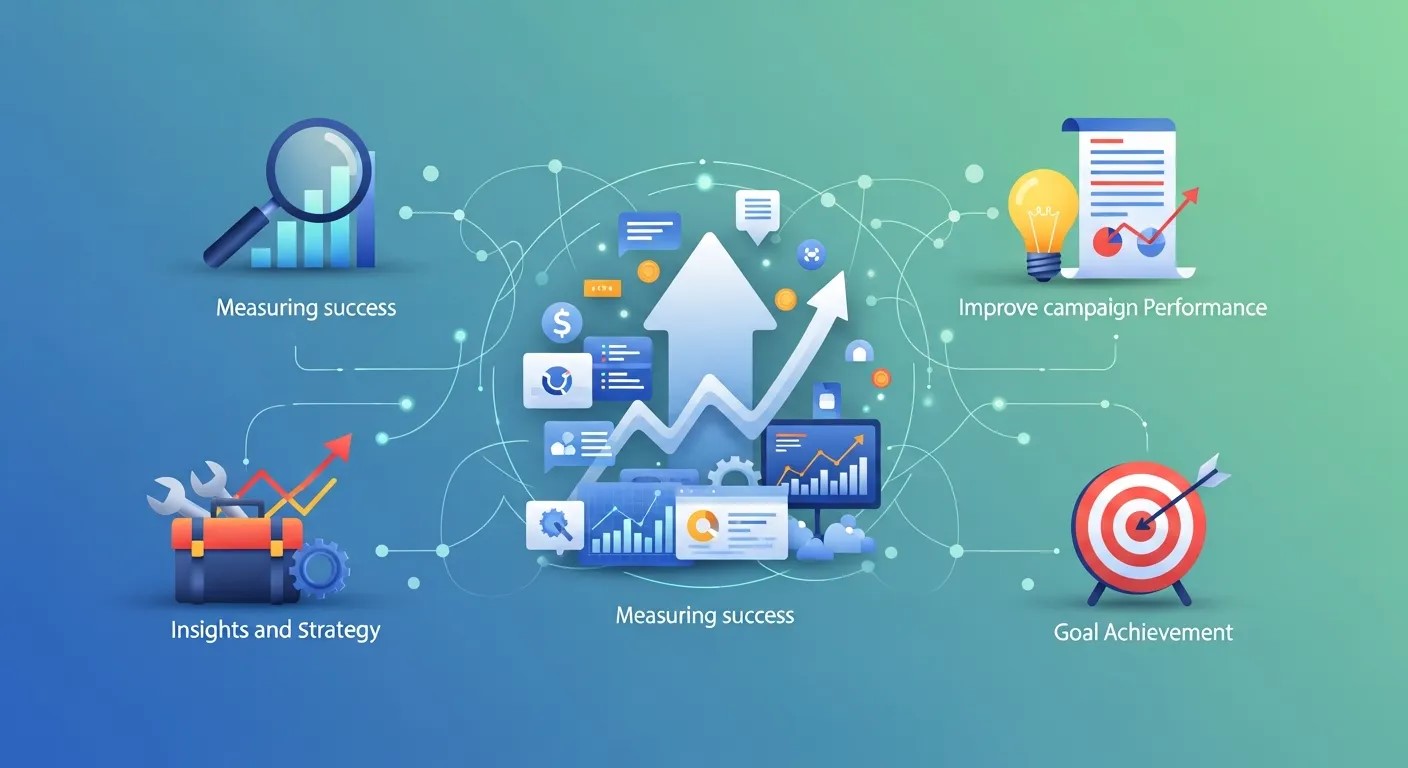
Evaluating advertising performance is essential for long-term growth. Key metrics such as engagement rate, click-through rate, conversion rate, and return on ad spend help businesses understand what is working and what needs improvement. Regular performance reviews allow marketers to identify trends, adjust targeting, refine creatives, and optimize budgets. By using data-driven insights and continuous testing, businesses can improve efficiency, reduce wasted spend, and build more sustainable, high-performing campaigns over time.



Leave a Reply