

Googles Search Engine Market Share dominates globally, shaping SEM strategies, advertising, and content marketing. Its user-focused algorithms, hyper-personalization, and analytics-driven insights empower businesses to optimize campaigns, leverage dynamic ads, and maximize ROI in an evolving digital landscape.
Inside Googles Search Engine Market Share Dominance
In the digital era, search engines have become the primary gateway to information, products, and services. Among all competitors, Google has consistently maintained an unprecedented position, capturing a significant portion of the global search traffic. The phenomenon of Googles Search Engine Market Share is not just a reflection of brand popularity but also of strategic dominance driven by technology, user experience, and adaptive marketing approaches.
Google’s ability to retain users and grow its share stems from a deep understanding of user intent. By continually refining algorithms and delivering relevant results, the search engine ensures that users remain engaged, creating a feedback loop that strengthens its position. For marketers and businesses, this dominance underscores the importance of understanding how Googles Search Engine Market Share impacts digital visibility and advertising strategies.
The scale at which Google operates allows it to innovate across multiple dimensions, from search algorithms to advertising platforms. Concepts such as SEM Demystified and Winning Keyword for Paid Search illustrate the intricate ecosystem of search marketing that is heavily influenced by Google’s reach. For instance, businesses leveraging Dynamic Search Ads can optimize campaigns by tapping into real-time search trends, reflecting the broader influence of Google’s market share on paid search performance.
Google’s dominance is also fueled by its integration of hyper-personalized experiences. Techniques like Hyper-Personalization at Scale enable search results and ad placements to resonate deeply with user preferences. This personalized approach not only strengthens user retention but also maximizes ROI for advertisers. Understanding Measuring ROI and Analytics in this context becomes crucial, as it connects the dots between Googles Search Engine Market Share, marketing strategies, and business outcomes.
Global Market Share Insights
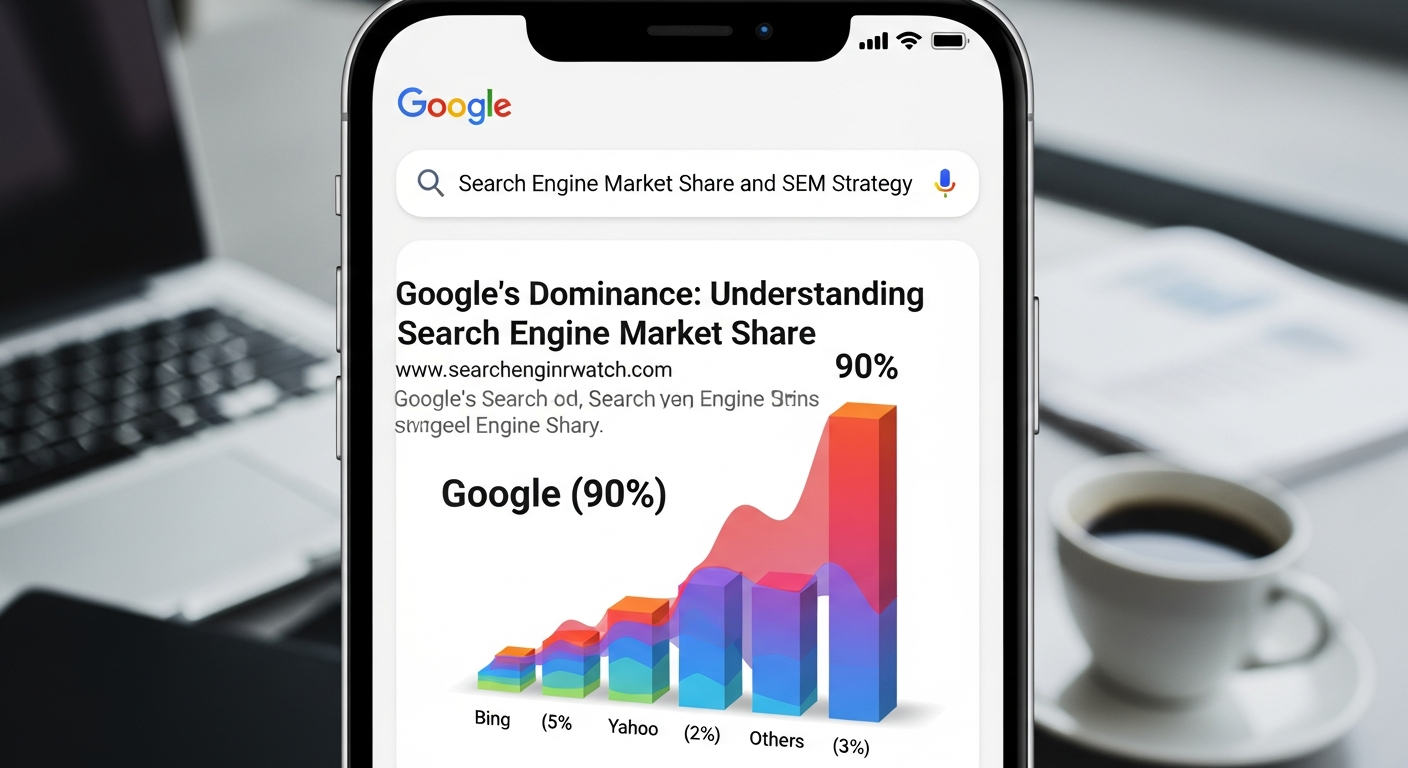
Analyzing Googles Search Engine Market Share globally reveals that it controls over 90% of desktop and mobile search queries in many regions. This overwhelming dominance has led to shifts in digital marketing practices, with businesses prioritizing Google-first strategies for SEO, paid search campaigns, and content optimization. Competitors such as Bing, Yahoo, and DuckDuckGo, while valuable in niche contexts, collectively hold a fraction of the search market, reinforcing the criticality of Google-focused marketing strategies.
The graph below provides a snapshot of global search engine distribution, demonstrating the magnitude of Google’s market share compared to competitors:
| Search Engine | Global Market Share (2025) |
|---|---|
| 91.7% | |
| Bing | 3.1% |
| Yahoo | 2.2% |
| DuckDuckGo | 1.2% |
| Others | 1.8% |
Such dominance impacts both organic and paid search strategies. SEO professionals must constantly align with Google’s evolving algorithms, while marketers must optimize campaigns using insights drawn from Measuring ROI and Analytics to ensure maximum effectiveness.
Factors Driving Google’s Search Engine Dominance
Several elements contribute to the sustained growth of Googles Search Engine Market Share:
Algorithmic Precision: Google’s search algorithms are unmatched in their ability to interpret user intent and deliver relevant results. Advanced AI and machine learning integrations have enabled continuous improvements, ensuring users find what they are looking for quickly.
User Experience: From page speed to mobile-first indexing, Google prioritizes usability. The simplicity and efficiency of its search interface encourage habitual usage, which reinforces its market dominance.
Advertising Ecosystem: Google Ads, including Dynamic Search Ads, allow businesses to reach highly targeted audiences. This not only fuels revenue but also reinforces the brand’s central role in online marketing.
Personalization at Scale: Features like Hyper-Personalization at Scale ensure that search results and recommendations reflect individual preferences, driving engagement and loyalty.
Global Reach and Integration: From Gmail to Google Maps, Google’s suite of products feeds into its search engine, enhancing user retention and increasing Googles Search Engine Market Share across devices and regions.
By understanding these core factors, marketers can better align their digital strategies with the realities of search dominance. The interplay between organic search optimization, paid campaigns, and data-driven analytics is crucial for businesses seeking visibility in a Google-centric digital world.
Historical Growth and Evolution of Googles Search Engine Market Share
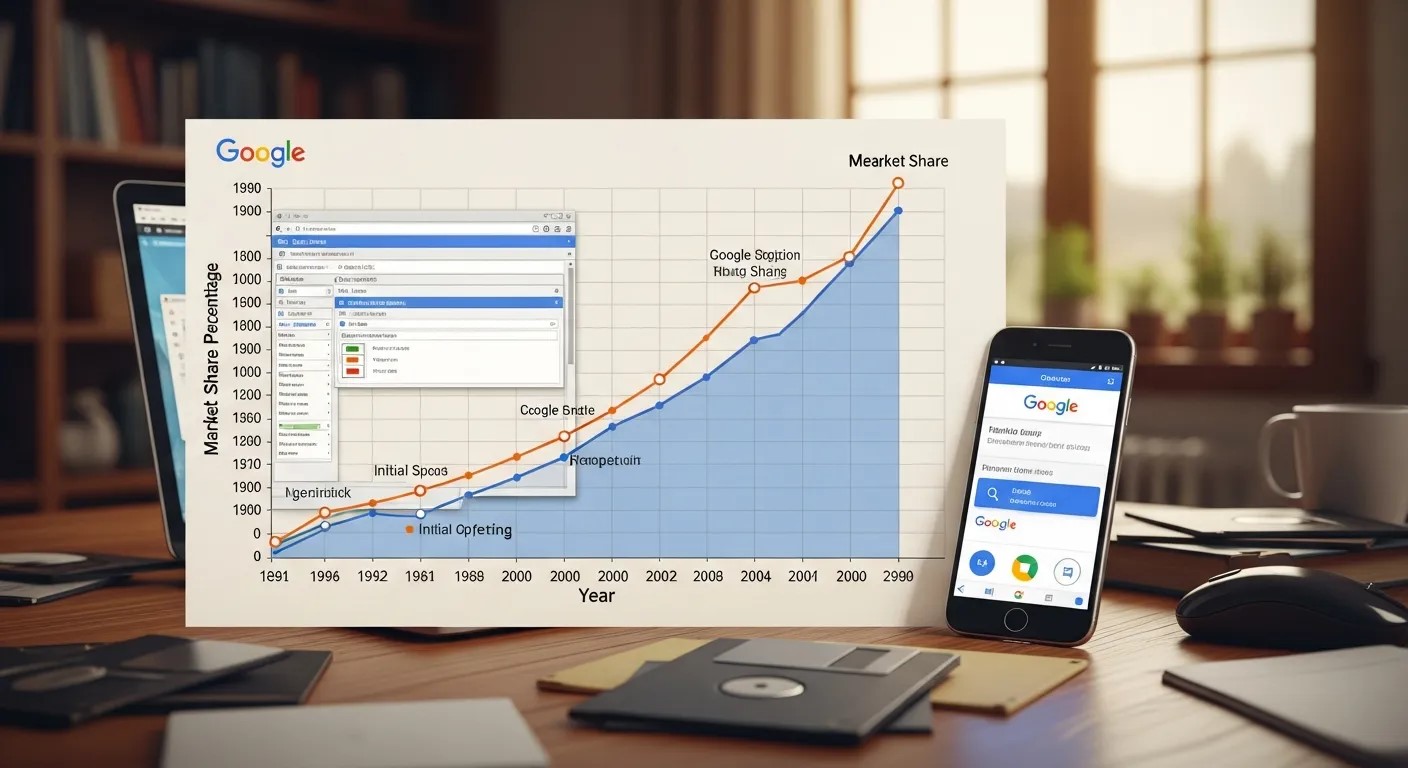
The story of Googles Search Engine Market Share is not just a tale of technological innovation but also of strategic foresight and understanding human behavior. From its inception in 1998, Google rapidly gained traction because it focused on relevance, speed, and a clean user experience—key elements that other search engines struggled to optimize. Early competitors such as Yahoo, AltaVista, and Ask Jeeves dominated in the 1990s, yet Google’s approach to algorithmic precision allowed it to gradually overtake them.
By the early 2000s, Googles Search Engine Market Share began to skyrocket, surpassing 50% in several major markets. This growth was not accidental. Google understood the psychology of search users: simplicity, trustworthiness, and immediate access to relevant information drive repeated usage. Businesses, recognizing this shift, adjusted their marketing strategies to prioritize SEM Demystified principles, ensuring campaigns aligned with the evolving digital landscape.
The Role of Competitors
Despite Google’s dominance, competitors still play important roles in shaping search behaviors and market share dynamics. Bing, for instance, while holding a smaller share of global searches, attracts users in enterprise and Microsoft-integrated environments. Yahoo, although declining in influence, still retains a loyal audience segment, particularly in email-integrated search services. Even niche players like DuckDuckGo highlight the growing demand for privacy-conscious search alternatives.
Understanding these competitors is essential for marketers targeting Googles Search Engine Market Share, as it provides context for campaign optimization and budget allocation. For example, businesses running Dynamic Search Ads on Google can leverage insights from competitor strategies to refine keyword targeting, bid adjustments, and content relevance.
User Behavior Insights Driving Market Share
The psychology behind Googles Search Engine Market Share is as critical as its technology. Users tend to form habitual patterns around platforms that consistently meet their needs. Google has leveraged this behavioral tendency, offering features like auto-suggestions, instant answers, and highly relevant search snippets. These design choices create a sense of reliability, reinforcing user loyalty.
Moreover, personalization strategies like Hyper-Personalization at Scale contribute to this dominance. By delivering search results and ads tailored to individual behavior, Google ensures users feel understood, which increases session frequency and engagement. Marketers using Measuring ROI and Analytics can track how personalized experiences directly correlate with improved conversions and click-through rates.
Search Engine Marketing in a Google-Dominated World
For businesses, Googles Search Engine Market Share dictates where marketing budgets are most effectively deployed. Paid search campaigns, particularly those using Winning Keyword for Paid Search, must align with Google’s dominance to maximize visibility. The interplay between organic SEO strategies and paid search is crucial: high market share amplifies the value of top-ranking content, while targeted ad campaigns benefit from Google’s broad user base.
A strategic approach often combines both, guided by comprehensive SEM Training programs to ensure teams understand nuances like keyword selection, bid optimization, and ad copy relevance. Companies that fail to adapt risk losing competitive advantage, even in niche markets.
Technology Innovations Supporting Google’s Market Share
Technological advancements are a major reason why Googles Search Engine Market Share has remained high. Machine learning, AI-powered search predictions, and real-time indexing allow Google to respond faster than competitors. For instance, the integration of natural language processing enhances understanding of user intent, which makes searches more intuitive and results more accurate.
Additionally, Google’s advertising ecosystem, including Dynamic Search Ads, seamlessly integrates with search behavior, creating a feedback loop: advertisers benefit from user intent data, which in turn improves ad targeting and revenue generation. This technological synergy strengthens Google’s overall dominance in the search market.
Regional Analysis of Googles Search Engine Market Share
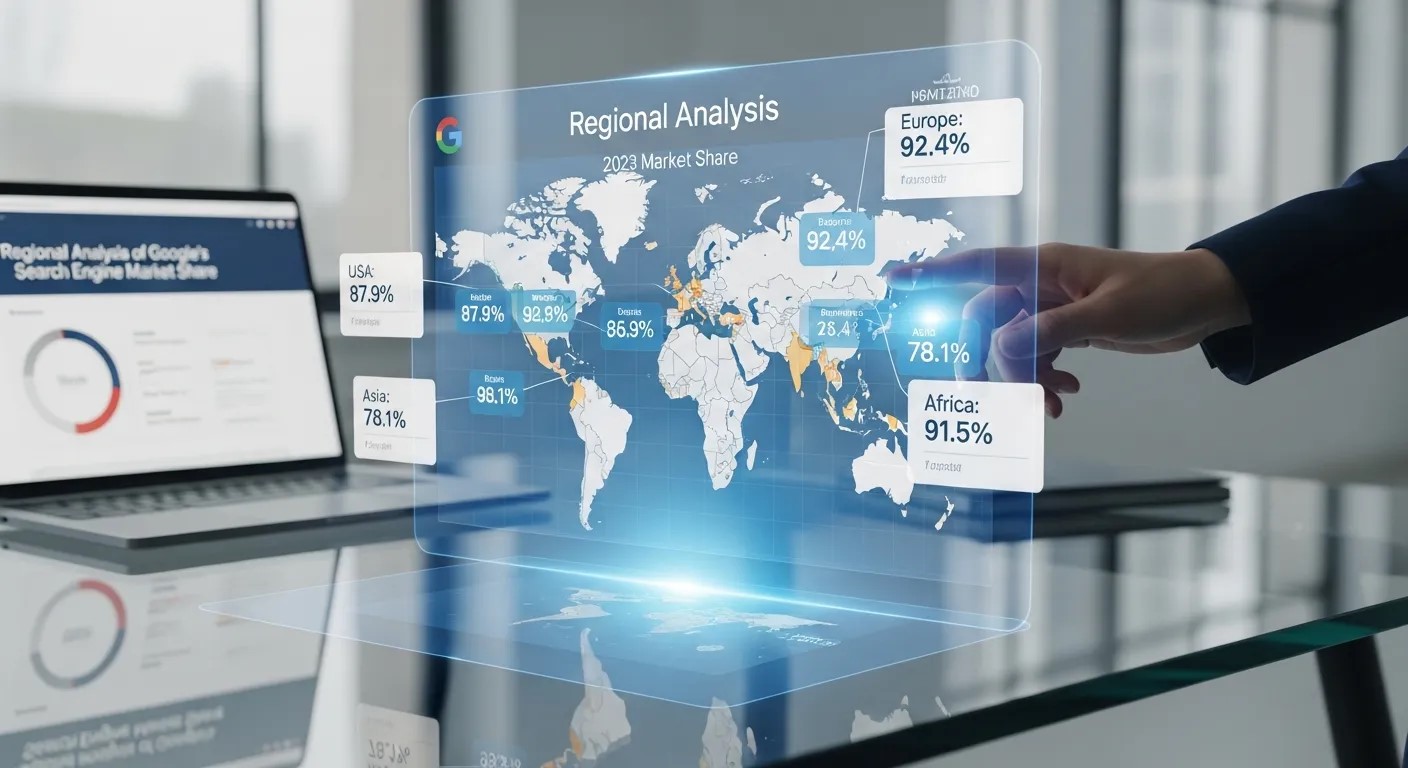
Understanding Googles Search Engine Market Share requires examining its performance across different regions. Globally, Google dominates in most markets, but nuances exist. For instance, in North America and Europe, Google commands over 90% of search queries, reinforcing its position as the default choice for information discovery. In Asia, while Google leads in countries like India and Japan, competitors such as Baidu in China hold substantial shares due to regulatory and cultural factors.
This regional diversity impacts digital marketing strategies. Businesses targeting global audiences must consider how Googles Search Engine Market Share differs by geography to optimize campaign allocation. Paid search strategies, including Dynamic Search Ads, must account for regional user behavior, language differences, and local competitors to maximize ROI.
In markets where Google is dominant, leveraging Winning Keyword for Paid Search is critical. Advertisers can focus budgets on high-traffic regions, knowing that the potential reach aligns with Googles Search Engine Market Share. Meanwhile, in regions with significant local competitors, marketers may need hybrid strategies that combine Google-focused campaigns with local search engine optimization.
Advertising Dominance
The supremacy of Google extends beyond organic search—it also shapes the digital advertising ecosystem. With Googles Search Engine Market Share controlling the majority of search traffic, advertisers rely heavily on Google Ads platforms to reach targeted audiences. Campaigns that integrate Hyper-Personalization at Scale ensure ads resonate with individual user preferences, enhancing engagement and conversion rates.
Furthermore, measuring success through Measuring ROI and Analytics is essential. Businesses can track how Googles Search Engine Market Share influences click-through rates, conversion metrics, and overall digital marketing performance. The sheer volume of data generated by Google’s search engine allows advertisers to refine strategies, optimize bids, and target campaigns with unprecedented precision.
Behavioral Trends Amplifying Google’s Market Share
User behavior continues to reinforce Googles Search Engine Market Share. Studies show that once users trust a search engine, switching costs—both psychological and practical—are high. Features like auto-complete suggestions, knowledge panels, and instant answers reduce friction and enhance satisfaction, making Google the preferred choice for repeated searches.
Search engine marketing strategies, guided by SEM Training, increasingly incorporate these behavioral insights. For example, understanding how users interact with search snippets allows marketers to create content that aligns with intent, improving visibility in top search positions. By tapping into these patterns, businesses can maximize the benefits of Google’s high market share.
Future Trends in Google Search Dominance
Looking ahead, Googles Search Engine Market Share is likely to be influenced by several emerging trends:
AI and Predictive Search: Artificial intelligence will continue to enhance relevance, helping Google anticipate queries before users finish typing, reinforcing its dominant position.
Voice and Visual Search: The rise of voice assistants and visual search capabilities expands Google’s reach, embedding the search engine into new aspects of daily life.
Privacy and Regulation: While dominance is strong, privacy regulations and antitrust scrutiny may affect data collection and ad targeting practices, indirectly influencing market share.
Integration Across Platforms: Google’s ecosystem, including Maps, YouTube, and Android, further strengthens Googles Search Engine Market Share by creating seamless multi-platform experiences.
Marketers preparing for these trends must adapt, using insights from Measuring ROI and Analytics and applying strategies like Dynamic Search Ads to maintain visibility in a continually evolving environment.
Googles Search Engine Market Share and SEM Strategy
The dominance of Googles Search Engine Market Share profoundly shapes search engine marketing (SEM) strategies. Businesses recognize that securing visibility on Google is no longer optional—it is central to digital success. Strategies that leverage insights from SEM Demystified enable marketers to craft campaigns aligned with user intent, optimizing content for both organic rankings and paid search placements.
For instance, understanding how Googles Search Engine Market Share influences click-through behavior allows marketers to prioritize high-performing keywords. By using Winning Keyword for Paid Search tactics, campaigns can target queries with the highest conversion potential, ensuring that advertising budgets yield optimal returns. This is particularly crucial in competitive industries where even small variations in search visibility can impact revenue.
Content Marketing in a Google-Centric World
Content marketing strategies are deeply intertwined with Googles Search Engine Market Share. High market dominance means that top-ranking content receives exponentially higher exposure, emphasizing the importance of quality, relevance, and search intent alignment. Businesses aiming to increase their visibility must integrate Dynamic Search Ads insights into content planning, ensuring that web pages and blogs resonate with search patterns and user queries.
Furthermore, Hyper-Personalization at Scale can transform content engagement. By tailoring content to user preferences and behavior, brands can enhance session duration, reduce bounce rates, and improve overall satisfaction metrics that indirectly reinforce Googles Search Engine Market Share dominance by increasing trust and habitual usage.
Advanced Analytics for Strategic Advantage
To fully leverage Googles Search Engine Market Share, businesses must employ advanced analytics frameworks. Tools that measure user engagement, conversion paths, and ROI provide insights that inform campaign optimization. By incorporating Measuring ROI and Analytics, companies can track how Google’s market dominance translates into tangible business outcomes, refining both paid and organic strategies.
For example, multi-channel attribution models allow marketers to understand the role of Google searches in driving conversions across various touchpoints. This knowledge informs keyword strategy, ad copy refinement, and content development, ensuring alignment with user intent and maximizing the benefits of Googles Search Engine Market Share.
Integration of Paid and Organic Strategies
The interplay between organic SEO and paid search is critical in leveraging Googles Search Engine Market Share. Organic content optimized for Google search benefits from high traffic volume, while paid campaigns, including Dynamic Search Ads, target high-intent queries for immediate impact. Businesses that master this integration see higher ROI and better visibility across the full search landscape.
SEM Training is essential in this context, equipping marketing teams with the knowledge to balance organic and paid strategies effectively. Properly trained teams can identify opportunities where Google’s dominant market share can be exploited for maximum reach, from keyword targeting to ad scheduling and regional segmentation.
Case Study: Leveraging Googles Search Engine Market Share
Consider a global e-commerce brand expanding into new markets. By analyzing Googles Search Engine Market Share regionally, the brand can prioritize campaigns in areas with the highest search volume. Using Winning Keyword for Paid Search and Dynamic Search Ads, combined with hyper-personalized content, the company achieves higher engagement and conversion rates.
Additionally, continuous Measuring ROI and Analytics ensures campaigns remain adaptive to market trends, user behavior, and seasonal fluctuations, allowing the brand to maximize its investment in Google-centric strategies. This case highlights how dominance in Google search is not just about visibility it is a strategic lever for growth.
Conclusion
The dominance of Googles Search Engine Market Share is more than a statistic—it reflects a combination of technological innovation, user behavior insights, and strategic marketing opportunities. Businesses that understand this dominance can leverage it to optimize SEM campaigns, refine content marketing strategies, and deploy Dynamic Search Ads effectively.
By integrating SEM Demystified principles, identifying Winning Keyword for Paid Search, and utilizing Hyper-Personalization at Scale, marketers can maximize engagement and conversions. Continuous Measuring ROI and Analytics ensures that strategies remain aligned with evolving search trends, making Google’s market share not just a benchmark but a powerful lever for growth.
Frequently Asked Questions (FAQ)
What is Googles Search Engine Market Share?
Googles Search Engine Market Share refers to the percentage of global search queries handled by Google compared to other search engines. Its dominance exceeds 90% in many regions, making it the primary platform for online search.
Why does Google dominate the search engine market?
Google’s dominance stems from algorithmic precision, superior user experience, and integration across platforms. Features like Hyper-Personalization at Scale, instant answers, and predictive search make it the preferred choice for users worldwide.
How does Googles Search Engine Market Share affect digital marketing?
High market share impacts SEM strategies, content marketing, and paid advertising. Businesses rely on insights from SEM Demystified and Winning Keyword for Paid Search to optimize visibility and ROI on Google’s platform.
What role do Dynamic Search Ads play?
Dynamic Search Ads leverage Google’s search algorithms to target relevant queries automatically. They allow marketers to adapt campaigns to real-time search trends, enhancing engagement and capitalizing on Googles Search Engine Market Share.
How can businesses measure success on Google?
Using Measuring ROI and Analytics, companies track performance metrics such as click-through rates, conversions, and user engagement. These insights ensure campaigns align with the reach and influence of Googles Search Engine Market Share.
How important is SEM training in leveraging Google’s dominance?
Proper SEM Training equips teams to understand keyword targeting, ad placement, and content optimization. Mastering these skills allows businesses to fully utilize the opportunities presented by Googles Search Engine Market Share.
Will Google continue to dominate in the future?
While emerging technologies like AI, voice search, and privacy regulations may influence the landscape, current trends suggest Googles Search Engine Market Share will remain substantial due to its technological edge and user loyalty.



Leave a Reply