


Search Engine Marketing (SEM) combines paid ads and SEO to boost brand visibility, drive targeted traffic, and increase conversions. With measurable, cost-effective campaigns, SEM ensures businesses reach interested customers in real time, enhancing credibility and maximizing ROI.
Are your marketing efforts bringing in the visibility and conversions you’re aiming for? If not, maybe it’s time to tap into the potential of search engine marketing (SEM).
SEM is a powerhouse strategy that combines paid advertisements with search engine optimization (SEO) tactics to help businesses appear at the top of search engine results pages (SERPs). Unlike traditional advertising, SEM allows you to target customers when they’re actively searching for products or services, making it one of the most effective ways to grow your business online.
Increased Visibility and Brand Awareness
Capturing Attention in a Competitive Market
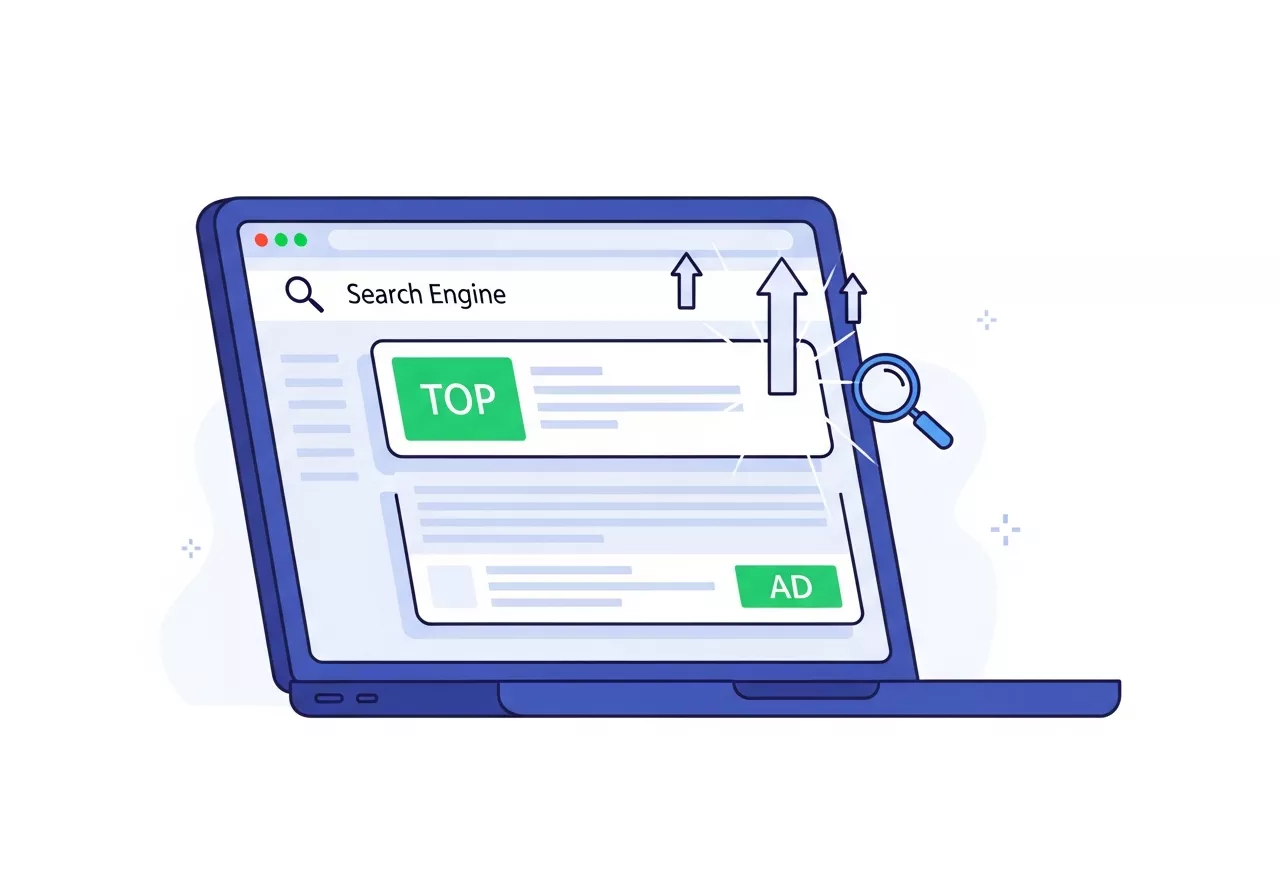
The digital space is crowded. Standing out among competitors is challenging, especially if your brand is relatively new or small. SEM gives you the opportunity to appear at the very top of search results, instantly grabbing users’ attention.
For example, imagine running a small online fitness business. By bidding on keywords like “best at-home workout programs” through Google Ads, your brand can appear at the very moment potential customers are actively looking for fitness solutions, increasing visibility significantly.
Building Trust and Credibility
Appearing at the top of search results doesn’t just boost clicks; it establishes credibility. People are more likely to trust companies that rank highly in search engines, even if those positions are paid ads. Spending on SEM is not just an investment in visibility but also in your brand’s reputation.
Targeted Traffic and Higher Conversion Rates
Reaching the Right Audience
Unlike other forms of advertising that cast a wide net and hope for the best, SEM helps you zero in on your ideal audience. You can target users based on keywords, location, demographics, and even the time of day. This precision ensures that your marketing dollars are spent only on people who are likely to convert.
For instance, a pet grooming service in New York could use Google Ads to target “pet grooming in NYC” or “dog grooming near me.” Only users searching these exact terms would see the business’s ad, making it incredibly focused and more likely to result in bookings.
Increased Conversions Over Time
One of SEM’s most significant advantages is its ability to drive high-quality leads. When users click on a paid ad, they are already interested in what you’re offering. This intent-driven nature of SEM often results in higher conversion rates compared to other online marketing techniques.
Measurable Results and Data-Driven Optimization
Search engine marketing (SEM) provides unparalleled transparency and insights, allowing businesses to track performance, optimize campaigns, and maximize return on investment (ROI). By leveraging real-time data, SEM enables marketers to make informed decisions and continuously improve results.
1. Tracking What Works (and What Doesn’t)
SEM campaigns provide detailed analytics on every aspect of your marketing efforts, including:
- Impressions: How often your ad appears in search results.
- Click-Through Rate (CTR): Percentage of users who click your ad after seeing it.
- Conversions: Number of users completing a desired action (purchase, sign-up, download).
- Cost Per Click (CPC): Amount paid for each click on your ad.
- Quality Score: How relevant your ad and landing page are to the audience.
By analyzing these metrics, businesses can identify high-performing keywords, ads, and targeting strategies while optimizing low-performing elements to ensure every advertising dollar is used effectively.
2. Continuous Improvement Through A/B Testing
A/B testing, or split testing, is a critical tool for optimizing SEM campaigns. By testing variations of ad headlines, CTAs, and landing pages, marketers can determine which versions drive the most engagement and conversions.
Example:
- A travel agency might test CTAs like “Book Your Dream Trip Today” vs. “Discounted Vacation Packages Now Available” to see which performs better.
- Testing ad headlines such as “Affordable Home Fitness Programs” vs. “Get Fit at Home – Start Today” can reveal the most compelling messaging for your audience.
3. Leveraging Audience Insights
SEM platforms provide valuable information about audience behavior and preferences, such as location, device type, demographics, and engagement timing. This data allows businesses to:
- Target ads more precisely.
- Schedule campaigns for peak engagement times.
- Promote high-performing products or services for better ROI.
Example:
- A local café may find higher engagement from mobile users between 7–9 AM and adjust its ad schedule accordingly.
- E-commerce stores can focus budget on products that historically drive the most conversions.
4. Real-Time Adjustments and Optimization
Unlike traditional advertising, SEM allows instant adjustments to campaigns. Marketers can tweak bids, pause underperforming ads, or reallocate budgets in real time, ensuring optimal performance.
Example:
- Increase bids temporarily if competition spikes to maintain visibility.
- Update ad copy if click-through rates decline to regain engagement.
5. Creating a Feedback Loop for Long-Term Success
Every SEM campaign generates insights that can be used to improve future campaigns. By analyzing historical data, businesses can:
- Identify trends in customer behavior.
- Refine keyword and targeting strategies.
- Develop more effective ad creatives.
- Reduce wasted spend on underperforming elements.
SEM is a dynamic, data-driven strategy. By measuring results, analyzing insights, and continuously optimizing campaigns, businesses can maximize visibility, engagement, and conversions over time.
Cost-Effective Marketing Strategy

Pay for Results, Not Visibility
One of SEM’s key differentiators is its cost-effectiveness. Unlike traditional advertising models, where you pay upfront for visibility, SEM ensures you only pay when someone clicks on your ad (pay-per-click or PPC). This means you’re spending your budget exclusively on engaged leads. Understanding the search engine marketing cost is essential for planning an effective campaign and maximizing ROI. Costs can vary depending on competition, industry, keywords, and targeting settings, but every dollar spent can be tracked and optimized for results.
Scalable for Any Budget
Whether you’re a small business with limited funds or a large corporation with significant ad spend, SEM campaigns can be tailored to fit your budget. You set your maximum spend, ensuring you never go over budget.
For example, a local café might invest $200 per month to target phrases like “best coffee in downtown.” Meanwhile, a national coffee chain could set aside thousands of dollars to target the same keyword in multiple cities. Both businesses can achieve measurable results without exceeding their financial limits.
The Future of Search Engine Marketing
Search engine marketing isn’t just a current trend; it’s a long-term strategy that is becoming more essential as the digital landscape evolves. With advancements like AI-driven ad targeting, enhanced analytics tools, and the rise of smart devices, SEM for voice search is becoming increasingly important. Optimizing campaigns for voice queries allows businesses to capture users who search differently—often using longer, conversational phrases—providing a new avenue for targeted traffic and higher conversions.
Businesses that harness the power of SEM, including strategies for voice search, not only gain a competitive edge today but also position themselves for success in the future. Start investing in SEM now to reap benefits that last far beyond the initial click.
Advanced SEM Targeting Strategies
Hyper-Targeted Campaigns
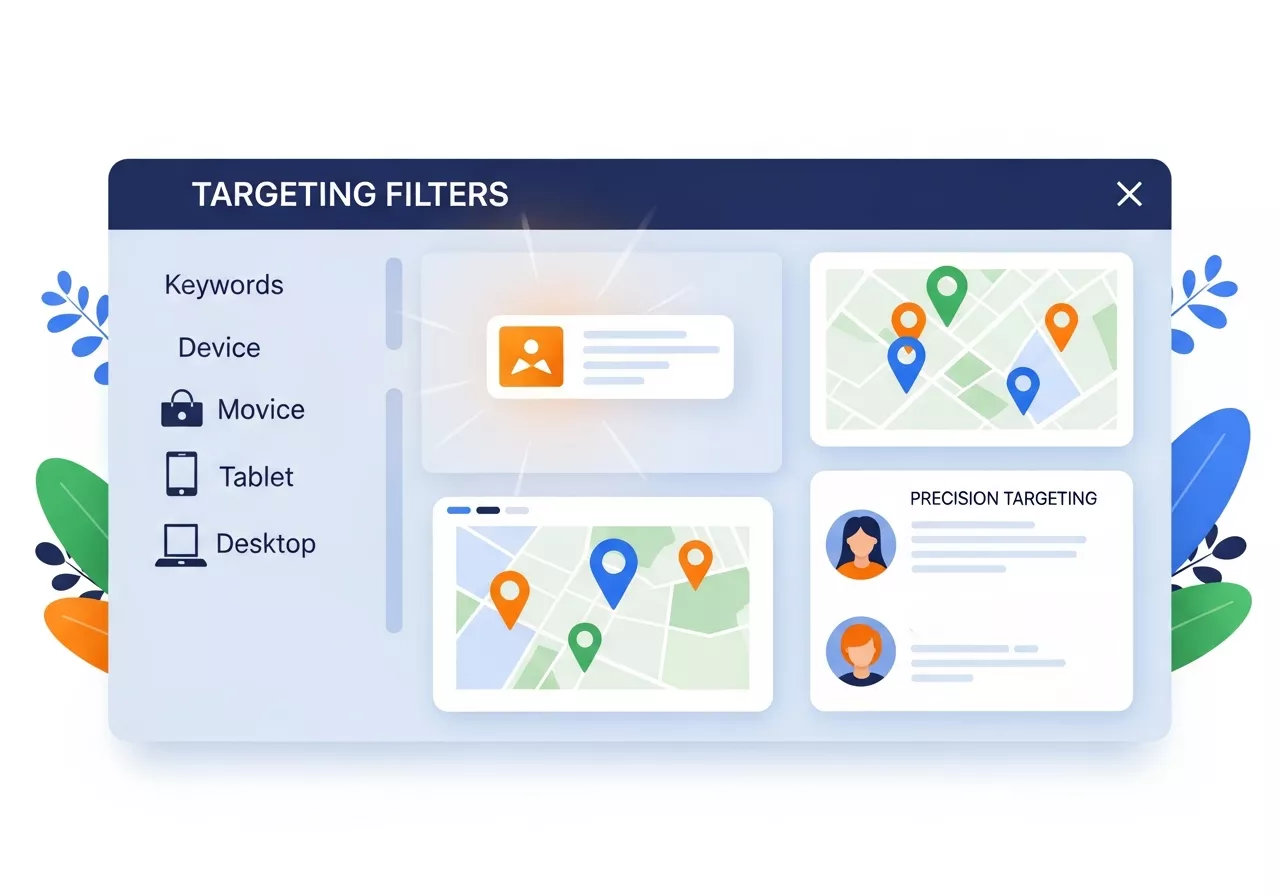
SEM allows businesses to go beyond basic keyword targeting by leveraging advanced audience segmentation. You can target users based on behavior, interests, past purchases, device type, and even search intent. For example, a tech store can target users searching for “best gaming laptops under $1000” who previously visited tech review websites. This ensures your ads reach the most qualified audience, improving ROI and reducing wasted spend.
Geo-Targeting and Local SEM
For local businesses, SEM provides the ability to target users based on geographic location. Geo-targeted ads can reach people within a specific radius, city, or region. For instance, a plumbing service in Los Angeles can show ads only to users searching for “emergency plumbing services near me” in that city, maximizing relevance and conversions.
Device and Platform Optimization
SEM platforms allow you to adjust bids and strategies based on device type (mobile, desktop, or tablet). With mobile searches on the rise, optimizing campaigns for smartphone users ensures that your ads appear correctly, load quickly, and deliver an excellent user experience. Similarly, platforms like Google Ads provide options to target specific devices, operating systems, or even apps, tailoring your campaigns for maximum impact.
SEM vs. SEO: Complementary Strategies
Many marketers wonder whether to focus on SEM or SEO. While both aim to drive traffic from search engines, they operate differently. Here’s a detailed comparison:
| Feature | SEM (Paid Ads) | SEO (Organic) | Benefit of Combining |
|---|---|---|---|
| Cost | Pay-per-click (PPC) | Free (time & effort) | Balanced budget for immediate and long-term traffic |
| Speed of Results | Immediate visibility | Weeks to months | SEM drives instant traffic while SEO builds sustainable rankings |
| Control | High – choose keywords, location, time | Moderate – depends on search algorithms | Greater flexibility and audience targeting |
| Click-Through Rates | High for top ad positions | Dependent on ranking & meta optimization | Combined strategy maximizes overall visibility |
| Analytics | Detailed performance tracking | Limited compared to SEM | Data from SEM can inform SEO keyword strategy |
| Longevity | Short-term – runs while budget lasts | Long-term – continues generating traffic | SEM provides immediate gains while SEO builds lasting authority |
Key Takeaway: Using SEM and SEO together creates a powerful search engine strategy. SEM provides instant visibility and targeted traffic, while SEO ensures long-term organic growth. Together, they maximize brand exposure and conversions.
Optimizing SEM for ROI
A/B Testing for Continuous Improvement
Running multiple versions of your ads allows you to test different headlines, descriptions, and calls-to-action (CTAs). For example, an online course provider might test “Enroll in the Best Digital Marketing Course Today” versus “Boost Your Career with Expert Marketing Lessons” to see which yields higher clicks and conversions. Continuous testing ensures your campaigns evolve and perform at their peak.
Landing Page Optimization
High-quality traffic is only valuable if your landing page converts. SEM campaigns should always direct users to landing pages specifically designed for the ad’s message. Elements like strong CTAs, fast loading times, mobile responsiveness, and clear product/service descriptions significantly improve conversion rates.
Bid Management and Budget Allocation
Using smart bidding strategies like target CPA (cost per acquisition) or ROAS (return on ad spend) helps optimize your ad spend. Allocate budgets to campaigns or keywords that generate the highest ROI, and pause underperforming ads. Modern platforms also offer automated bidding powered by AI, which adjusts bids in real time for maximum effectiveness.
Remarketing Strategies
SEM remarketing allows you to re-engage visitors who have previously interacted with your website but did not convert. For instance, an e-commerce store can show ads for abandoned cart items or promote complementary products to returning users. Remarketing keeps your brand top-of-mind and increases the likelihood of conversions.
Get Started with SEM Today
Search engine marketing is more than just another advertising method; it’s a game-changer for businesses that want to grow their online presence, attract targeted customers, and drive measurable results. Don’t get left behind in the competitive digital marketplace.
If you’re ready to see what SEM can do for your business, consider consulting experts or using trusted tools to get started. For example, check out Google Ads’ official guide here to learn more about launching your first campaign.
With SEM, your business can achieve visibility, credibility, and conversions like never before. Start optimizing today!
Frequently Asked Questions (FAQ) About Search Engine Marketing (SEM)
1. What is search engine marketing (SEM)?
SEM is a digital marketing strategy that combines paid advertising (like Google Ads) with optimization techniques to appear prominently in search engine results pages (SERPs), targeting users actively searching for products or services.
Click here to learn more about: How to Learn Search Engine Marketing (SEM): A Beginner’s Guide
2. How is SEM different from SEO?
SEO focuses on organic search results through website optimization, content creation, and backlinks, while SEM uses paid ads to appear at the top of search results. Together, they create a comprehensive search strategy.
3. Why is SEM important for my business?
SEM increases brand visibility, drives targeted traffic, boosts conversions, and provides measurable results in real time. It allows businesses to reach potential customers when they’re actively searching for relevant solutions.
4. How much does SEM cost?
SEM typically operates on a pay-per-click (PPC) model, meaning you pay only when someone clicks on your ad. Costs vary depending on keywords, competition, and your target audience. Campaigns can be scaled to fit any budget.
5. Can SEM target specific audiences?
Yes. SEM allows targeting based on keywords, location, demographics, devices, time of day, and even user behavior. This precision ensures your ads reach people most likely to convert.
6. How do I measure SEM success?
Key metrics include click-through rates (CTR), conversions, cost per click (CPC), return on ad spend (ROAS), and overall traffic growth. Most SEM platforms, like Google Ads, provide real-time analytics for tracking performance.
7. How quickly will SEM generate results?
SEM can drive traffic and conversions immediately after campaign launch, unlike SEO, which takes longer to show results. Its instant visibility makes it ideal for promotions, product launches, or competitive markets.
8. Can small businesses benefit from SEM?
Absolutely. SEM is scalable, so small businesses can compete with larger brands by targeting specific keywords and audiences efficiently, maximizing ROI even on a limited budget.
9. How often should I optimize my SEM campaigns?
Regular monitoring and optimization are essential. Adjust bids, keywords, ad copy, and targeting based on performance metrics to improve efficiency and maximize conversions.
10. Is SEM worth investing in long-term?
Yes. When integrated with SEO and broader marketing strategies, SEM provides lasting benefits by generating consistent traffic, increasing brand awareness, and driving sales growth over time.
Learn more about: Google Ads for Ecommerce: How to Drive Sales with Product Listing Ads



Leave a Reply