

Learn the best practices for SEM success to drive more clicks, conversions, and ROI. Optimize campaigns with strategic planning, A/B testing, AI-powered tools, and advanced targeting for measurable, high-performing search engine marketing results.
Introduction to SEM Success Strategies
Search Engine Marketing (SEM) has become a cornerstone of modern digital marketing. For businesses seeking measurable results, Best Practices for SEM are no longer optional they are essential. Implementing these best practices for SEM ensures campaigns drive clicks, conversions, and maximize return on ad spend (ROAS) while maintaining an efficient marketing budget. Understanding the nuances of SEM requires more than just creating ads; it involves strategic planning, continuous testing, and leveraging technology to optimize campaigns across platforms. By following Best Practices for SEM, businesses can build campaigns that are both cost-effective and highly targeted.
Understanding SEM and Its Importance
At its core, SEM is a paid digital advertising strategy designed to increase visibility on search engine results pages (SERPs). Unlike organic search engine optimization (SEO), SEM relies on paid placements, typically in the form of pay-per-click (PPC) campaigns. A crucial component here is CPC in Digital Marketing, which determines how much an advertiser pays per click. Understanding the dynamics of CPC can help businesses allocate budgets effectively, target the right audience, and optimize their ads for maximum performance.
SEM is not just about driving traffic it’s about attracting the right kind of traffic. A well-optimized SEM campaign ensures that the people clicking on your ads are likely to convert, improving both ROI and long-term brand value. Following Best Practices for SEM ensures that campaigns maintain this balance, combining cost-efficiency with high-quality lead generation. This strategic approach is what separates average campaigns from truly high-performing SEM initiatives.
Laying the Foundation for SEM Campaigns

Before launching any SEM campaign, businesses must establish a solid foundation. This involves defining clear objectives, understanding the target audience, and structuring campaigns to align with marketing goals. Applying Best Practices for SEM at this stage ensures campaigns are built on actionable insights rather than guesswork. Key steps include:
-
Defining Campaign Goals: Determine whether the goal is lead generation, product sales, brand awareness, or website traffic. Each goal requires a different approach and bidding strategy. Implementing best practices for SEM at this step ensures your objectives translate into measurable results.
-
Keyword Research: Identify high-performing keywords that align with your target audience’s search intent. Tools like Google Keyword Planner, SEMrush, and Ahrefs can be instrumental.
-
Audience Segmentation: Segment audiences by demographics, interests, and behavior to create highly targeted campaigns.
-
Competitive Analysis: Analyze competitors’ strategies, ad copy, and landing pages to uncover opportunities for differentiation.
A strategic foundation ensures that SEM campaigns are not built on guesswork but on data-driven insights that increase the likelihood of success. Adhering to Best Practices for SEM here lays the groundwork for higher CTRs, better conversion rates, and more efficient ad spend.
Crafting High-Converting Ads
The creative aspect of SEM is often underestimated. Ad copy must be compelling, relevant, and optimized for user intent. By applying best practices for SEM during ad creation, businesses can significantly improve engagement and ROI. Here’s how to approach ad creation:
Writing Effective Ad Copy
- Relevance: Ensure ad text aligns with search queries and keywords. Irrelevant ads lead to low click-through rates (CTR).
- Value Proposition: Highlight what makes your product or service unique. Why should users click your ad instead of competitors’?
- Call-to-Action (CTA): Encourage users to take immediate action, such as “Buy Now,” “Learn More,” or “Get a Free Quote.”
- Ad Extensions: Utilize site links, callouts, and structured snippets to provide additional value and increase ad visibility.
Testing and Optimization
A/B Testing in SEM is an indispensable practice to refine ad performance. By running multiple ad variants, marketers can identify which copy, headline, or CTA resonates most with their audience. Testing should be ongoing, as search trends, competitor strategies, and user behavior evolve constantly.
| Test Element | Purpose | Metric to Track |
|---|---|---|
| Headline | Grab attention | CTR |
| Description | Convey value | Conversion rate |
| CTA | Drive action | Leads generated |
| Landing Page | Support ad | Bounce rate, time on page |
Regularly analyzing test results and implementing learnings is a hallmark of SEM.
Leveraging Advanced Bidding Techniques
SEM performance is heavily influenced by bidding strategies. Choosing the right bid can mean the difference between wasted spend and high ROI. Modern marketers increasingly rely on AI-Powered Bidding Strategies to automate bid adjustments based on real-time performance data. These strategies allow for more precise targeting, ensuring that bids reflect user intent and conversion probability.
Manual bidding still has its place, especially for highly specialized campaigns or niche markets. However, combining manual oversight with AI-powered automation often yields the most efficient results, maintaining cost-effectiveness while optimizing performance.
Advanced Analytics and Performance Tracking in SEM
Tracking, analyzing, and interpreting SEM performance is crucial to ensure campaigns are delivering on goals. Businesses that implement Best Practices for SEM rely heavily on data-driven insights to optimize spend and refine targeting.
Key Performance Metrics to Monitor
Understanding which metrics matter helps marketers make informed decisions:
-
CTR (Click-Through Rate): Measures how often users click your ads. High CTR indicates strong ad relevance.
-
Conversion Rate: Shows the percentage of users completing the desired action, whether it’s a purchase, signup, or download.
-
Quality Score: Google assigns a score based on ad relevance, expected CTR, and landing page experience.
-
Cost per Conversion: Evaluates ROI by analyzing spend relative to successful conversions.
-
Impression Share: Indicates how often your ads are appearing compared to competitors.
| Metric | Why It Matters | Optimization Tip |
|---|---|---|
| CTR | Measures engagement | Test ad copy and targeting |
| Conversion Rate | Measures effectiveness | Optimize landing pages & CTAs |
| Quality Score | Affects CPC | Improve ad relevance & UX |
| Cost per Conversion | ROI measure | Refine bidding & keywords |
| Impression Share | Visibility check | Adjust budget & bids |
By regularly monitoring these metrics, SEM managers can identify weak points, adjust campaigns in real-time, and scale what works.
Setting Up Advanced Tracking
Advanced tracking allows marketers to get granular insights into user behavior:
- Google Analytics & Tag Manager: Track conversions, event completions, and user flows.
- UTM Parameters: Monitor which campaigns or keywords drive traffic and conversions.
- Attribution Models: Understand the role of SEM in multi-channel journeys.
Integrating these tools ensures that every ad dollar is accounted for, reinforcing Best Practices for SEM by enabling precise decision-making.
Remarketing Strategies for Higher Conversions
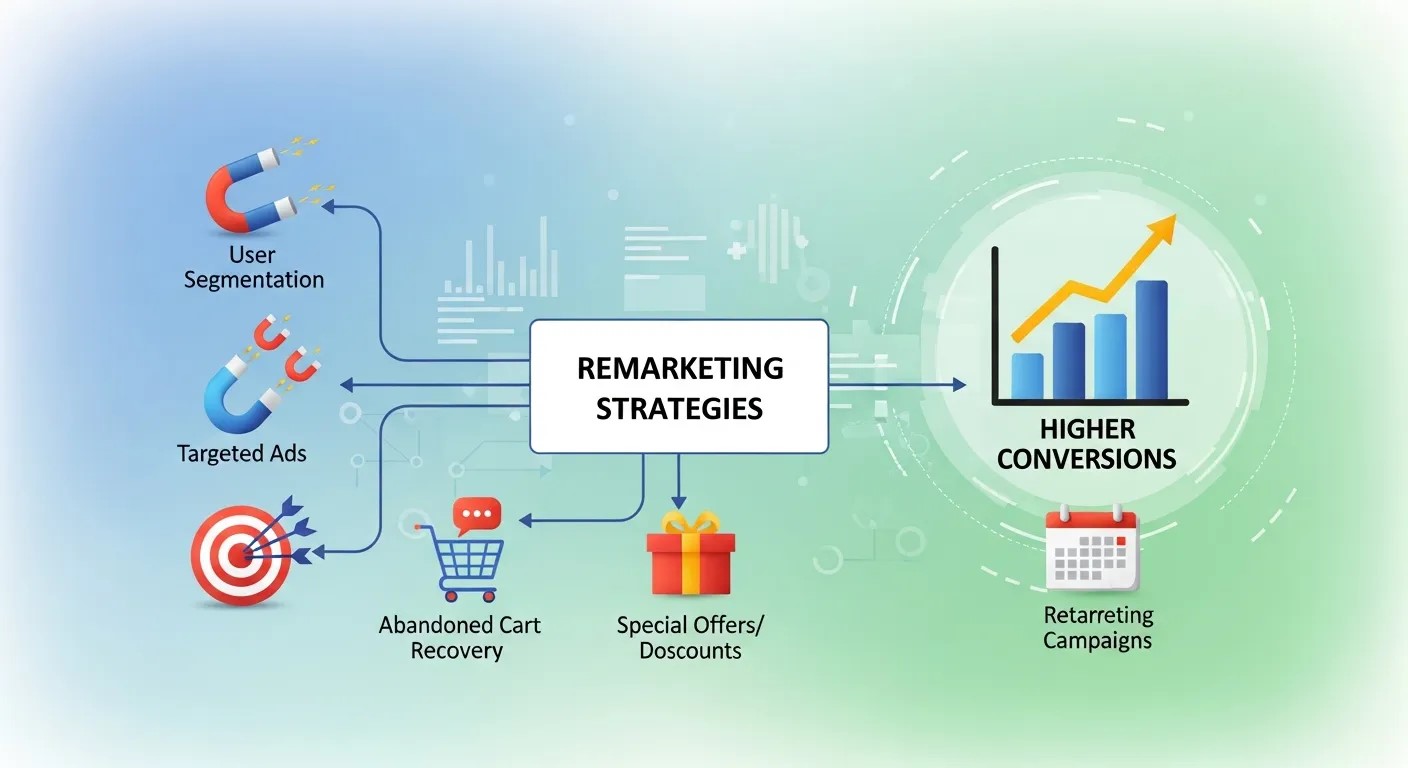
Not every user converts on the first interaction. Implementing Best Practices for SEM emphasizes remarketing as a core strategy to re-engage potential customers and maximize ROI.
Dynamic Remarketing
Dynamic remarketing allows ads to display products or services that users previously interacted with. By applying Best Practices for SEM, marketers can increase conversion potential through highly personalized ad experiences. For eCommerce, this could include:
-
Recently viewed products
-
Complementary product recommendations
-
Time-limited discounts
Dynamic remarketing ensures that your ads remain relevant, guiding users back to complete their purchase journey.
Cross-Platform Remarketing
Re-engaging users across multiple platforms—Google Display Network, YouTube, Meta Ads—creates a cohesive touchpoint strategy. For example:
-
A user clicks a SEM ad on Google but does not convert.
-
They later see a Meta ad highlighting the same product with a special offer.
Following Best Practices for SEM Success, this multi-touch approach increases conversion likelihood while strengthening brand recall across channels.
Integrating SEM with AI-Driven Tools
AI is transforming SEM beyond bidding strategies. Leveraging AI tools is a key component of Best Practices for SEM Success, allowing marketers to optimize creative, targeting, and analytics efficiently.
AI-Powered Ad Copy Generation
Modern AI tools can generate hundreds of ad variations in seconds, each tailored to specific audience segments. By applying Best Practices for SEM Success, marketers can:
-
Test multiple ad copies quickly
-
Identify high-performing language or CTAs
-
Reduce manual workload
Predictive Analytics
AI can forecast trends based on historical performance and market behavior. Businesses following Best Practices for SEM Success can anticipate:
-
High-converting keywords
-
Peak traffic periods
-
User preferences for ad formats
This predictive insight ensures campaigns remain proactive rather than reactive, maximizing conversions and efficiency.
AI-Powered Object Recognition in Ads
AI-Powered Object Recognition enhances visual campaigns, particularly for retail and eCommerce. By recognizing products in images or videos, platforms can serve highly relevant ads:
-
Users searching for sneakers see visually similar options.
-
Users uploading photos of furniture receive recommendations for comparable items.
Integrating this technology aligns perfectly with Best Practices for SEM Success, providing highly contextual experiences that increase engagement and conversion rates.
Optimizing Landing Pages for Maximum ROI
Even the best SEM campaigns fail without optimized landing pages. Adhering to Best Practices for SEM Success ensures every click has the potential to convert.
Core Landing Page Elements
-
Consistent Messaging: The landing page must reflect the promise of the ad.
-
Minimal Distractions: Reduce navigation links and focus users on the CTA.
-
Fast Loading Speed: Delays lead to high bounce rates and lower Quality Scores.
-
Social Proof: Reviews, testimonials, and trust badges enhance credibility.
-
Clear CTAs: Placement and phrasing of CTA buttons guide users naturally.
Advanced Optimization Techniques
-
A/B Testing: Continuously test headlines, form lengths, and images to identify the highest converting combination.
-
Heatmaps: Tools like Hotjar show where users click or scroll, revealing optimization opportunities.
-
Mobile Optimization: With most traffic coming from mobile devices, landing pages must load quickly and remain fully usable.
By following Best Practices for SEM Success, optimized landing pages directly improve CPC efficiency and overall campaign performance.
Scaling SEM Campaigns Across Platforms
While Google Ads remains the most popular SEM channel, businesses can scale campaigns by integrating multiple platforms. Leveraging Best Practices for SEM Success ensures consistent messaging, effective targeting, and higher ROI.
Google Search and Display
-
Search Ads: Target high-intent users actively looking for products or services.
-
Display Ads: Build awareness among audiences who may not yet be searching but match demographic and interest profiles.
Meta Ads Integration
Combining SEM with a Meta Ads Strategy allows businesses to:
-
Retarget users who interacted with SEM campaigns
-
Utilize lookalike audiences to expand reach
-
Maintain consistent messaging across search and social platforms
Emerging Platforms
Platforms like Bing, TikTok Ads, and Pinterest Ads are increasingly viable for niche targeting. Following Best Practices for SEM Success, early adoption can reduce CPC while reaching untapped audiences.
Cross-Device and Cross-Channel Targeting
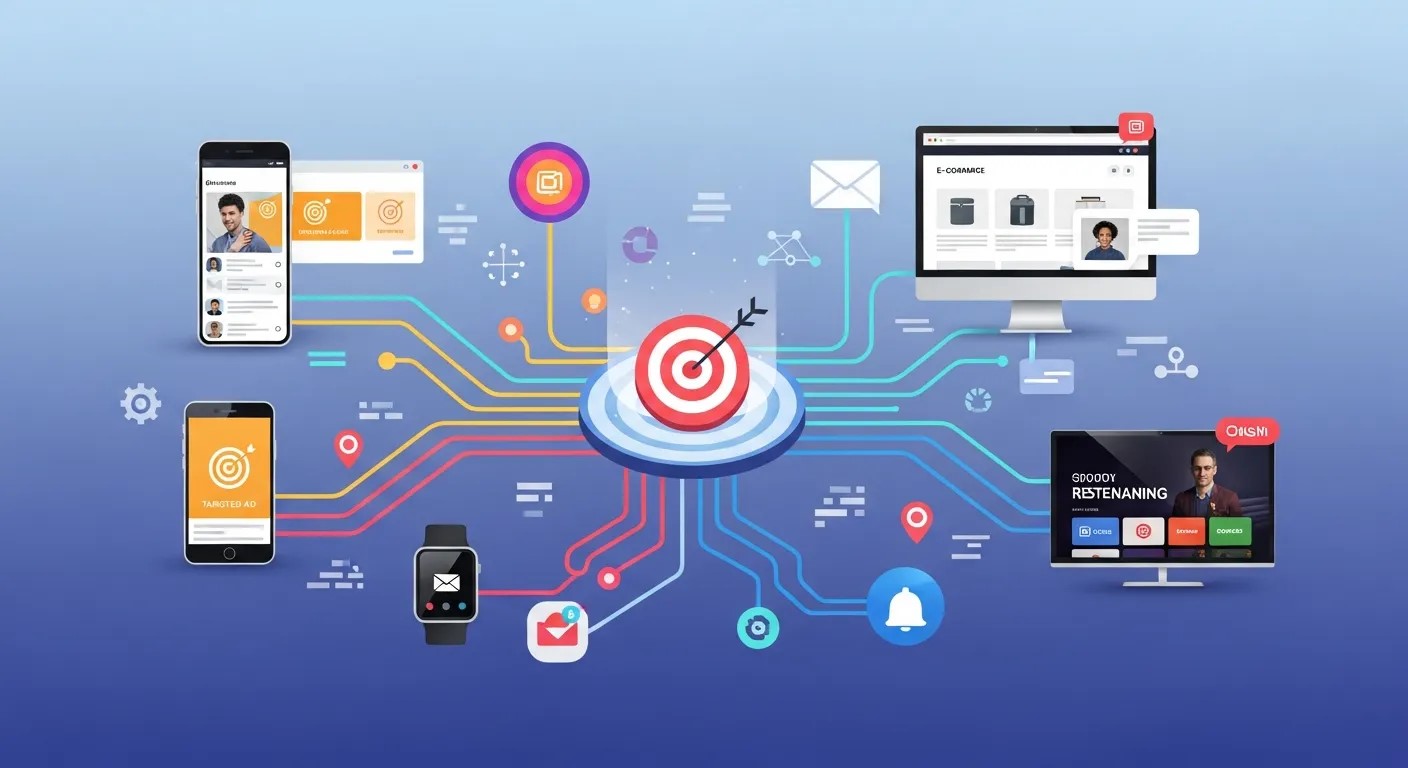
In today’s digital ecosystem, users interact with brands across multiple devices and platforms. Implementing Best Practices for SEM Success requires a strategy that accounts for this multi-device behavior.
Cross-Device Targeting
Cross-device targeting ensures that ads reach the same user regardless of device:
-
Mobile Optimization: Most searches now happen on mobile devices. Ads and landing pages must be mobile-friendly.
-
Desktop & Tablet Considerations: For high-intent research or B2B audiences, desktop targeting remains valuable.
-
Device-Specific Bidding: Adjust bids based on device performance to optimize cost per conversion.
For example, an eCommerce store selling electronics might notice higher conversion rates on desktops, while mobile users may click more frequently but convert less. Adjusting bids per device ensures efficient budget allocation.
Cross-Channel Targeting
SEM campaigns should integrate seamlessly with other channels:
-
Search and Display: While search captures active intent, display ads nurture prospects earlier in the journey.
-
Social Media Integration: Platforms like Facebook, Instagram, and LinkedIn provide powerful targeting options that complement SEM efforts.
-
Video and YouTube Ads: Engaging video content can re-engage users who interacted with SEM campaigns, enhancing brand recall.
Following Best Practices for SEM Success, marketers can create cohesive user journeys that maximize ROI and ensure every touchpoint reinforces the campaign’s effectiveness.
Example Table: SEM Optimization Checklist
| Task | Description | Frequency |
|---|---|---|
| Keyword Review | Identify high-performing and low-performing keywords | Monthly |
| Ad Copy Testing | Run A/B tests on headlines and CTAs | Bi-weekly |
| Landing Page Audit | Optimize page speed, UX, and conversion flow | Monthly |
| Bidding Strategy Update | Adjust AI or manual bids based on performance | Weekly |
| Analytics Review | Track CTR, conversion rate, cost per conversion | Weekly |
| Remarketing Campaigns | Target users who did not convert | Continuous |
This checklist serves as a tangible framework for marketers to maintain Best Practices consistently.
Conclusion
Achieving success in SEM requires a blend of strategic planning, continuous optimization, and smart use of technology. By understanding your audience, crafting compelling ads, leveraging AI-powered tools, and analyzing campaign performance, businesses can maximize ROI and drive meaningful results. Staying updated with emerging trends, testing ad variations, and refining targeting ensures that SEM campaigns remain effective, efficient, and adaptable in the ever-evolving digital landscape.
Frequently Asked Questions (FAQ)
What is SEM and why is it important?
Search Engine Marketing (SEM) is a paid digital advertising strategy that increases visibility on search engines. It helps businesses drive targeted traffic, generate leads, and boost Sales and Product Recommendation Bots effectively.
How do I optimize my SEM campaigns?
Optimization involves keyword research, creating compelling ad copy, refining landing pages, implementing A/B testing, and leveraging AI-powered bidding strategies to maximize conversions and ROI.
What is CPC in digital marketing?
CPC, or Cost-Per-Click, is the amount an advertiser pays each time a user clicks on their ad. Managing CPC efficiently ensures better ROI on SEM campaigns.
How does A/B testing help in SEM?
A/B testing compares multiple ad versions to determine which performs better, improving click-through rates, conversions, and overall campaign effectiveness.
Can AI tools improve SEM performance?
Yes. Tools like AI-powered bidding strategies, ad copy generation, and predictive analytics help optimize campaigns, reduce costs, and target high-intent audiences more effectively.
Should SEM be combined with social media ads?
Absolutely. Integrating SEM with a Meta Ads Strategy and other social platforms enhances reach, remarketing opportunities, and overall campaign effectiveness.
How can I measure SEM success?
Key metrics include CTR (Click-Through Rate), conversion rate, cost per conversion, quality score, and ROI. Regular analytics tracking ensures data-driven decisions for continuous improvement.



Leave a Reply