


CPC Advertising for E-commerce drives targeted traffic, increases conversions, and boosts revenue. By leveraging predictive analytics, cross-channel strategies, and optimized campaigns, e-commerce brands can maximize ROI and engage customers effectively in today’s competitive digital landscape.
Strategies to Boost Revenue with CPC Advertising for E-commerce
In the rapidly evolving digital landscape, businesses are constantly looking for strategies that maximize returns and engage the right audience at the right time. One of the most effective strategies available today is CPC Advertising for E-commerce. With consumers spending more time online than ever before, e-commerce brands must leverage cost-effective, targeted campaigns that drive traffic, conversions, and revenue growth. This article explores how CPC Advertising for E-commerce works, what strategies perform best, and how advanced tools like Predictive Analytics in SEM and Cross Channel SEM can amplify campaign performance.
Understanding CPC Advertising for E-commerce
CPC Advertising for E-commerce (Cost-Per-Click advertising) is a model where advertisers pay only when a user clicks on their ad. Unlike traditional advertising, where costs are fixed irrespective of engagement, CPC ensures that every dollar spent is tied directly to a potential customer interaction.
E-commerce businesses often leverage platforms like Google Ads, Microsoft Ads, and social media networks to implement CPC campaigns. This type of advertising is particularly useful for:
-
Promoting seasonal sales and new product launches
-
Driving high-intent traffic to product pages
-
Retargeting users who have previously shown interest in the brand
A key advantage of CPC Advertising for E-commerce is its measurability. Marketers can track impressions, clicks, conversions, and ROI, allowing campaigns to be optimized in real-time.
Key Benefits of CPC Advertising
| Benefit | Explanation |
|---|---|
| Cost Efficiency | Pay only for actual clicks, reducing wasted ad spend. |
| Measurable ROI | Track every interaction from click to conversion. |
| Targeted Reach | Ads can be shown based on demographics, interests, and search intent. |
| Scalability | Campaigns can scale quickly based on budget and performance data. |
By combining CPC campaigns with Search Engine Marketing (SEM) techniques, e-commerce businesses can ensure that their ads appear exactly where their target audience is searching.
How CPC Advertising for E-commerce Fits into SEM
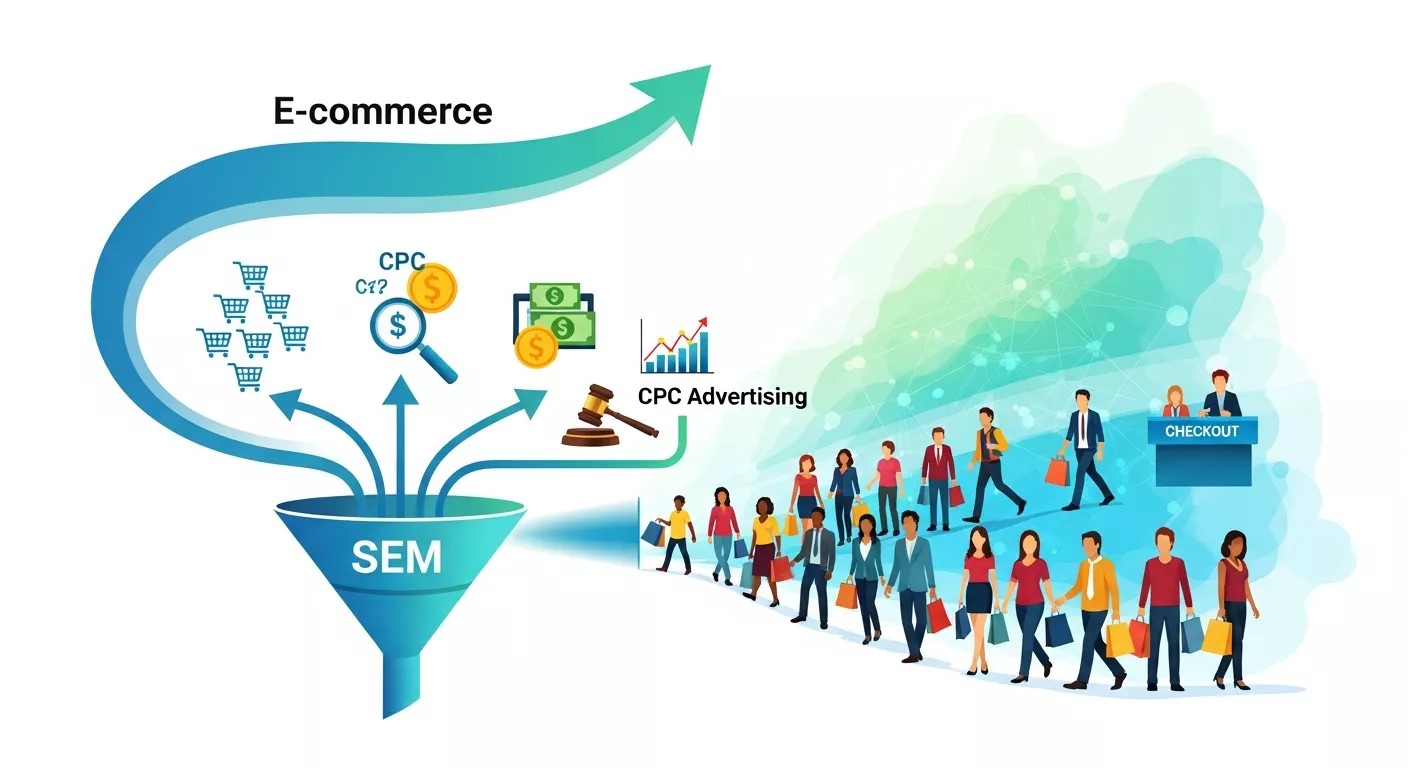
Search Engine Marketing (SEM) is the umbrella term for paid search strategies, including PPC (Pay-Per-Click) and CPC campaigns. By integrating CPC Advertising for E-commerce into a broader SEM strategy, brands can:
-
Capture high-intent searches
-
Improve quality scores to reduce CPC
-
Increase ad visibility across search engines
For example, a fashion e-commerce brand launching a summer collection might bid on keywords like “summer dresses online” using CPC campaigns. By analyzing historical click-through rates (CTR) and conversion data, brands can allocate budgets more efficiently.
Predictive Analytics in SEM plays a crucial role here. By leveraging historical data, AI-driven predictive models can forecast which keywords are likely to perform best and at what time, allowing brands to maximize ROI while minimizing unnecessary ad spend.
Strategies That Work for CPC Advertising for E-commerce
Audience Segmentation
The foundation of successful CPC Advertising for E-commerce lies in targeting the right audience. Modern tools allow segmentation based on:
-
Demographics (age, gender, location)
-
Purchase behavior
-
Search intent
-
Engagement history
For instance, segmenting users who abandoned their shopping cart and retargeting them with specific ads can significantly improve conversion rates. Using Cross Channel SEM, these retargeting campaigns can be synchronized across Google, social media platforms, and email campaigns for maximum effect.
Keyword Research and Optimization
Effective CPC Advertising for E-commerce depends heavily on selecting the right keywords. This process involves:
-
Identifying high-intent keywords
-
Analyzing competitor campaigns
-
Testing long-tail keywords to capture niche searches
Tools like SEMrush, Ahrefs, and Google Keyword Planner can help marketers discover untapped opportunities. Integrating Predictive Analytics in SEM can further refine keyword selection by predicting click-through rates and conversions for specific terms.
Ad Copy and Creative Optimization
Even with the perfect audience and keywords, poorly written ad copy can limit performance. Best practices for CPC ads in e-commerce include:
-
Clear value proposition
-
Strong call-to-action (CTA)
-
Highlighting promotions or discounts
-
Using high-quality visuals in display ads
Example:
“Shop Summer Dresses Today – Free Shipping on Orders Over $50!”
By testing multiple versions of ad copy, marketers can determine which messaging resonates best with their audience, improving both CTR and conversion rates.
Landing Page Experience
Once users click on an ad, the landing page experience becomes critical. E-commerce sites must ensure:
-
Fast loading speed
-
Mobile responsiveness
-
Clear product descriptions and images
-
Easy navigation and checkout
A well-optimized landing page ensures that traffic from CPC Advertising for E-commerce converts efficiently, maximizing ROI.
Budget Allocation and Bid Strategy
Efficiently allocating your advertising budget is crucial. CPC campaigns can operate under various bid strategies:
-
Manual CPC: You set a maximum bid per click
-
Automated CPC: Platforms optimize bids to maximize clicks within a set budget
-
Target ROAS: Focuses on return on ad spend, adjusting bids to meet revenue goals
By combining predictive insights with cross-platform data from Cross Channel SEM, marketers can dynamically adjust bids to achieve optimal results.
Advanced Analytics and Tracking
Measuring campaign performance goes beyond basic metrics. E-commerce businesses should track:
-
Cost-per-acquisition (CPA)
-
Conversion rate per product
-
Lifetime value of customers acquired through CPC
-
Engagement metrics (time on site, pages per session)
Using Predictive Analytics in SEM, brands can anticipate trends and adjust campaigns proactively, ensuring consistent performance improvements over time.
Cross Channel SEM Integration
Cross Channel SEM refers to running synchronized paid campaigns across multiple platforms, such as Google Ads, Bing Ads, Facebook, Instagram, and Pinterest. Benefits include:
-
Increased brand visibility
-
Unified messaging across channels
-
Better retargeting opportunities
For example, a user who clicked on a Google CPC ad but didn’t convert can later be retargeted on Instagram with a tailored ad, increasing the likelihood of purchase.
Leveraging Predictive Analytics in SEM
Predictive analytics uses historical data and machine learning models to forecast which campaigns, keywords, and audiences will perform best. Applications include:
-
Predicting high-converting keywords
-
Forecasting seasonal trends and consumer behavior
-
Optimizing budget allocation before campaigns go live
By integrating Predictive Analytics in SEM with CPC campaigns, e-commerce businesses can reduce guesswork and focus resources on strategies most likely to deliver results.
Common Mistakes to Avoid in CPC Advertising for E-commerce
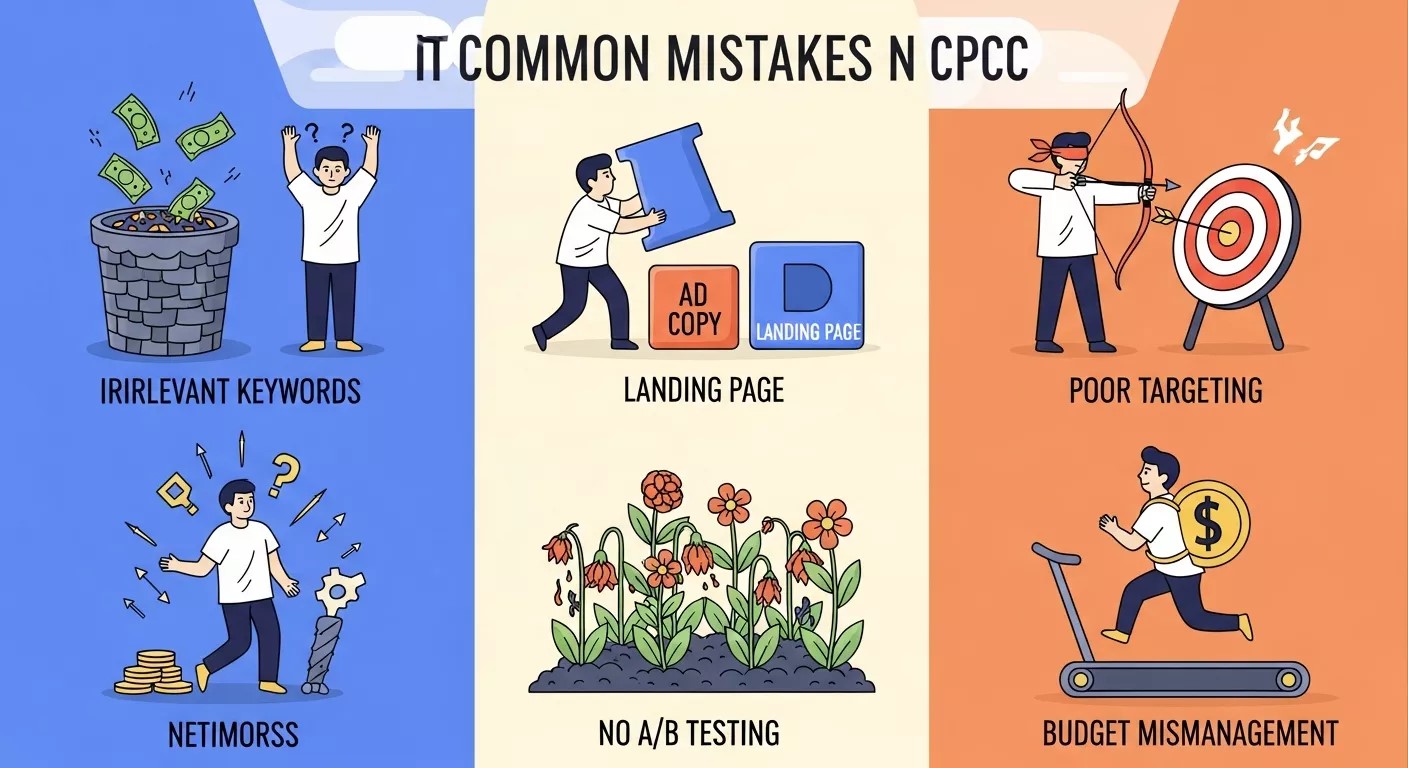
While CPC campaigns are powerful, there are common pitfalls:
-
Ignoring Negative Keywords: Without filtering irrelevant searches, budgets can be wasted.
-
Overlooking Mobile Optimization: Most e-commerce traffic comes from mobile devices.
-
Poor Ad Copy Testing: Failing to A/B test ads reduces potential CTR.
-
Neglecting Analytics: Not monitoring campaign data can lead to missed optimization opportunities.
Avoiding these mistakes ensures that CPC Advertising for E-commerce campaigns remain efficient and profitable.
Tools and Platforms for CPC Advertising
| Platform | Strengths | Best Use Case |
|---|---|---|
| Google Ads | Massive reach, robust analytics | Search & display campaigns |
| Microsoft Ads | Lower CPC, less competition | Niche B2B campaigns |
| Facebook Ads | Advanced targeting, social integration | Retargeting & engagement |
| Instagram Ads | Visual-first, high engagement | Product launches & promotions |
| SEMrush / Ahrefs | Keyword research & competitor insights | SEM & SEO planning |
| Google Analytics | Tracking & reporting | Measuring ROI & conversions |
Integrating these platforms with Cross Channel SEM and predictive analytics ensures e-commerce brands get the most value from every ad dollar.
Case Study: CPC Advertising for E-commerce Success
Consider a mid-size online fashion retailer that integrated CPC Advertising for E-commerce into their marketing strategy:
-
Objective: Increase online sales for the new summer collection
-
Strategy: Combined search ads, display retargeting, and social media campaigns using Cross Channel SEM
-
Results:
-
35% increase in website traffic
-
25% reduction in CPC cost due to predictive keyword optimization
-
40% increase in conversion rate
-
This demonstrates how a structured, data-driven approach to CPC campaigns can deliver measurable results.
The Future of CPC Advertising for E-commerce
The e-commerce landscape is constantly evolving, and CPC strategies must adapt. Emerging trends include:
-
Dynamic creative optimization for personalized ads
-
Cross-platform automation to reduce manual management
-
Integration of voice search and smart device targeting
Brands that adopt these technologies early will gain a competitive advantage, ensuring that their CPC Advertising for E-commerce campaigns remain effective and ROI-positive.
Integrating CPC Advertising with Overall Marketing Strategy
CPC campaigns should not operate in isolation. Effective e-commerce marketing integrates:
-
SEO: Driving organic traffic to complement paid campaigns
-
Email Marketing: Retargeting users who clicked but didn’t convert
-
Content Marketing: Educating potential customers and building trust
-
Social Media Engagement: Amplifying reach and engagement
This holistic approach ensures that CPC Advertising for E-commerce contributes not only to immediate sales but also to long-term brand growth.
Seasonal Strategies in CPC Advertising for E-commerce
Seasonal campaigns are a goldmine for CPC Advertising for E-commerce. Events like Black Friday, Cyber Monday, Christmas, and summer sales create spikes in consumer demand, which brands can capitalize on through targeted campaigns. By analyzing past data, marketers can predict which products are likely to sell fast and adjust bids accordingly. Incorporating Predictive Analytics in SEM allows brands to forecast high-converting keywords and optimize budget allocation before the rush. Ad copy and visuals should reflect seasonal themes, promotions, and urgency to drive clicks. Additionally, integrating Cross Channel SEM ensures that audiences encounter consistent messaging across Google, social media, and email, increasing the likelihood of conversions. Seasonal CPC campaigns not only boost short-term revenue but also attract new customers who can be nurtured for long-term loyalty. E-commerce businesses that strategically plan seasonal campaigns see higher ROI and a better understanding of customer behavior trends.
Mobile-First CPC Advertising for E-commerce
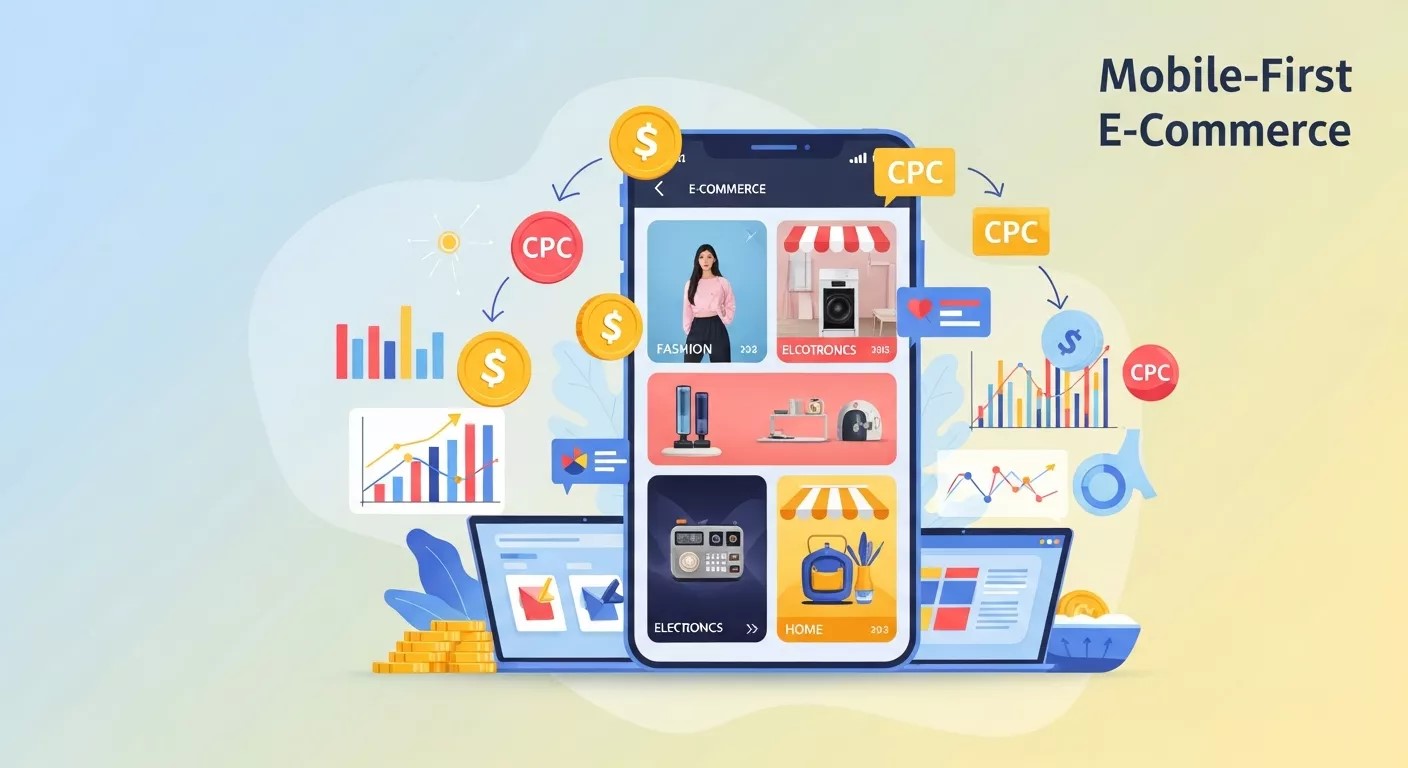
With over half of e-commerce traffic coming from mobile devices, CPC Advertising for E-commerce must prioritize mobile-first strategies. Ads need to be visually compelling on smaller screens, with clear CTAs and concise messaging. Mobile-optimized landing pages ensure that users can browse products and complete purchases without friction. Slow-loading pages or confusing layouts can drastically reduce conversion rates, even if ad CTR is high. Leveraging Cross Channel SEM, marketers can track mobile user journeys across platforms, retarget users who abandoned carts, and synchronize messaging across social media and search engines. Mobile-first campaigns should also account for location-based targeting, push notifications, and in-app promotions to maximize relevance. By understanding mobile consumer behavior and optimizing campaigns accordingly, e-commerce businesses can significantly improve engagement, lower CPC costs, and increase sales.
Advanced Retargeting Techniques for CPC Advertising
Retargeting is a powerful way to enhance CPC Advertising for E-commerce ROI. Users who visited a site but didn’t convert can be reminded of products they viewed through personalized ads. Segmenting audiences into cart abandoners, repeat visitors, or high-value customers allows campaigns to deliver more relevant messaging. Integrating Cross Channel SEM enables retargeting across search engines, social media, and display networks, creating a cohesive experience that reinforces brand recall. Adding incentives like discounts, free shipping, or loyalty points can increase the likelihood of purchase. Tracking performance metrics such as conversion rate, CPA, and engagement helps refine retargeting campaigns. By combining predictive insights and multi-platform retargeting, e-commerce businesses can recover lost sales, strengthen customer relationships, and maximize the effectiveness of their CPC Advertising for E-commerce campaigns.
A/B Testing and Optimization in CPC Advertising for E-commerce
Continuous optimization is essential for any successful CPC Advertising for E-commerce campaign. A/B Testing in Ads enables marketers to compare different ad copies, visuals, CTAs, and landing pages to determine which variations perform best. Even minor changes, like button color or headline wording, can significantly impact CTR and conversions. Using insights from Search Engine Marketing (SEM), marketers can identify patterns in audience behavior and adjust campaigns accordingly. Predictive analytics can further enhance testing by forecasting which variants are likely to generate higher ROI. Additionally, optimizing bids, scheduling ads during peak traffic hours, and refining audience segments ensures that campaigns remain cost-effective. Consistent testing and optimization not only improve campaign performance but also provide valuable insights that guide broader marketing strategies, making CPC Advertising for E-commerce a continually evolving and profitable channel.
Conclusion
In today’s fast-paced digital world, CPC Advertising for E-commerce has become a cornerstone strategy for driving targeted traffic and increasing sales. By combining well-researched keywords, optimized ad copy, mobile-first design, and predictive insights from Predictive Analytics in SEM, brands can maximize ROI while minimizing wasted ad spend. Integrating campaigns across multiple platforms using Cross Channel SEM ensures consistent messaging and better customer engagement. Continuous A/B testing, retargeting, and seasonal strategy adjustments allow e-commerce businesses to stay ahead of competitors. Ultimately, a structured, data-driven approach to CPC Advertising for E-commerce not only boosts short-term revenue but also builds lasting customer relationships, positioning brands for sustained growth in the ever-evolving online marketplace.
Frequency Asked Question (FAQ)
What is CPC Advertising for E-commerce?
CPC Advertising for E-commerce is a cost-per-click model where brands pay only when a user clicks on their ad. It’s highly measurable, allowing e-commerce businesses to drive targeted traffic and increase conversions efficiently.
How can I optimize my CPC campaigns for better results?
Optimizing CPC campaigns involves proper keyword research, creating compelling ad copy, designing mobile-friendly landing pages, and leveraging Predictive Analytics in SEM to forecast high-performing keywords. Continuous A/B testing also improves click-through and conversion rates.
What role does Cross Channel SEM play in CPC Advertising?
Cross Channel SEM helps synchronize ads across multiple platforms Google, social media, and display networks ensuring consistent messaging, better retargeting, and increased engagement, ultimately maximizing ROI for CPC Advertising for E-commerce campaigns.
How do seasonal trends affect CPC Advertising for E-commerce?
Seasonal trends like holidays or sales events increase consumer demand. E-commerce brands can adjust bids, ad copy, and visuals to match these trends, using predictive insights to capture high-intent traffic and boost conversions during peak periods.
Is mobile optimization important for CPC campaigns?
Absolutely. With most e-commerce traffic coming from mobile devices, mobile-optimized ads and landing pages are essential. Mobile-first strategies reduce bounce rates, improve conversions, and make CPC Advertising for E-commerce campaigns more effective.



Leave a Reply