

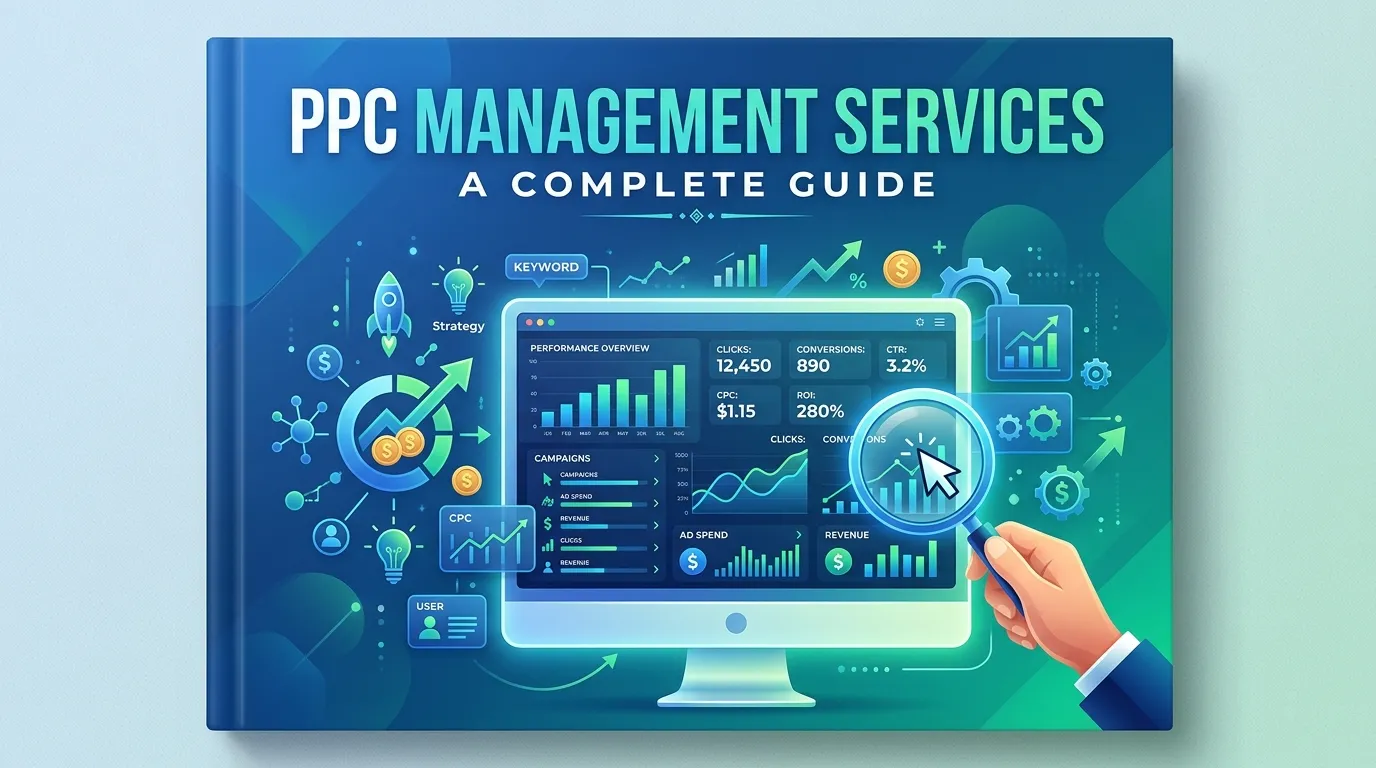
PPC management services help businesses run profitable paid advertising campaigns by optimizing keywords, ads, and budgets. They improve conversions, reduce wasted spend, and use continuous campaign optimization to deliver measurable, scalable growth through digital advertising.
Running paid ads sounds simple until the bills arrive and the leads don’t. Many businesses pour money into clicks that never convert, wasting budget on the wrong keywords, weak landing pages, and untracked campaigns. That is where professional PPC management services change the game.
Smart paid advertising is part science, part art. It blends data analysis, creative copywriting, audience research, and constant testing. When done right, it turns a marketing budget into a predictable engine for leads and sales. When done poorly, it drains cash fast.
This guide breaks down everything you need to know about PPC management services. You will learn what they include, how they work, what they cost, and how to measure success. By the end, you will understand how to choose the right partner and what results to expect.
What Are PPC Management Services?
PPC management services cover the planning, building, and optimization of paid advertising campaigns. The term PPC stands for Pay Per Click, an advertising model where you pay only when someone clicks your ad. These services help businesses run profitable campaigns across search engines, social platforms, and display networks.
A good provider handles every moving part of your paid strategy. This includes keyword research, ad creation, bid management, landing page guidance, and performance tracking. The goal is simple: get more qualified clicks at a lower cost while driving real business results.
Professional PPC management services exist because paid advertising has grown complex. Platforms update their algorithms often. New ad formats appear. Competition for popular keywords drives up costs. Without expert help, most businesses struggle to keep pace.
Why Pay Per Click Still Matters

Pay Per Click remains one of the fastest ways to reach buyers. Unlike organic methods that take months to build momentum, paid ads put your brand in front of customers almost instantly. You can launch a campaign today and start collecting leads tomorrow.
The model also offers precise control. You decide who sees your ads, when they appear, and how much you spend. This flexibility makes Pay Per Click ideal for both startups testing the market and large brands scaling proven offers.
Paid advertising also delivers measurable returns. Every click, impression, and conversion gets tracked. This data lets you refine your approach constantly, cutting what fails and doubling down on what works.
Core Components of PPC Management Services
Effective PPC management services rely on several connected pieces. Each one supports the others. Skip any single part, and your campaigns lose strength. Here is a closer look at what quality providers deliver.
Keyword Research and Strategy
Keywords form the foundation of any search campaign. The right ones bring in buyers ready to act. The wrong ones attract clicks that never convert. Skilled managers dig deep to find terms with strong intent and reasonable competition.
Research also covers negative keywords. These are terms you want to block. Adding them stops your ads from showing on irrelevant searches, which saves money and improves quality scores.
Ad Copywriting and Creative
Words sell. A sharp headline grabs attention, while a clear call to action drives clicks. PPC management services include writing and testing multiple ad versions to find the strongest performers.
Creative work also covers visuals for display and social campaigns. Strong images and video clips help your ads stand out in crowded feeds.
Bid and Budget Management
Bidding decides where and how often your ads appear. Managers adjust bids based on performance, time of day, device, and location. This careful tuning stretches your budget further and protects your return on ad spend.
Landing Page Optimization
Clicks mean little without conversions. Landing pages must match the ad’s promise and guide visitors toward action. Many providers offer guidance or direct work on page layout, speed, and messaging.
Tracking and Reporting
You cannot improve what you do not measure. Quality PPC management services set up proper conversion tracking and deliver clear reports. These reports show what works, what fails, and where to invest next.
How Google Ads Management Drives Growth
Google reaches billions of searches every day, which makes it the top platform for paid advertising. Google Ads management focuses on building and refining campaigns on this network. Done well, it connects your business with people actively searching for your products.
Google Ads management covers several campaign types. Search ads target keywords. Display ads build awareness across websites. Shopping ads showcase products. Video ads run on YouTube. Each type serves a different goal, and a skilled team knows which to use and when.
The platform rewards relevance. Google scores your ads and keywords based on quality. Higher scores mean lower costs and better placement. Expert Google Ads management improves these scores through tight targeting, strong copy, and well-matched landing pages.
Search Campaigns
Search campaigns capture demand. When someone types a query, your ad can appear right at the top. This intent-based reach makes search the workhorse of most paid strategies. Good Google Ads management keeps these campaigns lean and focused.
Display and Video Campaigns
Display and video campaigns build awareness and re-engage past visitors. They reach people earlier in the buying journey. While they convert at lower rates, they support the funnel and keep your brand visible.
Shopping Campaigns
For online stores, shopping campaigns drive direct sales. They show product images, prices, and reviews right in search results. Strong feed management is key here, and it sits at the heart of skilled Google Ads management.
The Role of Campaign Optimization
Launching a campaign is only the start. Real results come from constant refinement. Campaign optimization is the ongoing process of testing, tweaking, and improving every element of your ads. It separates average campaigns from great ones.
Optimization never stops. Markets shift, competitors adjust, and customer behavior changes. PPC management services treat optimization as a daily habit, not a one-time task. This steady effort compounds over time, lowering costs and lifting returns.
Here are the main areas where campaign optimization makes a difference:
- A/B testing ads: Running two versions to see which performs better
- Adjusting bids: Shifting budget toward high-performing keywords and audiences
- Refining targeting: Narrowing or expanding who sees your ads
- Improving quality scores: Boosting relevance to cut costs
- Pruning waste: Pausing keywords and placements that drain budget
- Testing landing pages: Finding versions that convert more visitors
Each small win adds up. A campaign that improves its conversion rate by even a few percent each month sees major gains over a year. This is why ongoing campaign optimization delivers such strong value.
Data-Driven Decisions

Good optimization rests on data, not guesses. Managers study metrics like click-through rate, cost per conversion, and return on ad spend. They use this evidence to make smart changes that move the needle.
The Testing Mindset
The best campaigns embrace testing. Every assumption gets challenged. Every element gets measured. This curiosity-driven approach keeps campaigns fresh and competitive in fast-moving markets.
Comparing PPC Management Service Levels
Not all PPC management services offer the same scope. Some handle a single platform, while others manage full multi-channel strategies. The table below compares common service tiers to help you understand what each level typically includes.
|
Feature |
Basic Plan |
Growth Plan |
Enterprise Plan |
|---|---|---|---|
|
Platforms covered |
One (e.g., Google) |
Two to three |
Unlimited |
|
Keyword research |
Basic |
In-depth |
Advanced + competitor analysis |
|
Ad copywriting |
Limited variations |
Regular testing |
Full creative team |
|
Campaign optimization |
Monthly |
Weekly |
Daily |
|
Landing page support |
Guidance only |
Recommendations |
Full build and testing |
|
Reporting frequency |
Monthly |
Bi-weekly |
Real-time dashboard |
|
Dedicated manager |
Shared |
Assigned |
Senior strategist |
|
Conversion tracking |
Standard |
Advanced |
Custom attribution |
|
Best suited for |
Small businesses |
Growing brands |
Large companies |
Choosing the right tier depends on your goals, budget, and internal resources. A small local business may thrive with a basic plan. A scaling brand often needs the growth tier. Large companies with complex needs benefit from enterprise-level PPC management services.
When comparing providers, look beyond price. Ask about their process, their reporting, and their track record. A cheaper plan that wastes ad spend costs more in the long run than a thorough service that delivers results.
Understanding PPC Pricing and Value
Cost matters, but value matters more. PPC management services charge in several ways. Some take a percentage of your ad spend. Others charge a flat monthly fee. A few use performance-based models tied to results. Each structure has pros and cons.
A percentage model aligns the provider’s success with yours, since they earn more as you spend more. However, it can create incentives to push higher budgets. Flat fees offer predictability and work well for stable campaigns. Performance models reward results but can be hard to define fairly.
Beyond the management fee, you also pay for the ad spend itself. This goes directly to the platforms like Google or social networks. Make sure you understand which costs cover service and which cover media.
To grasp how Pay Per Click pricing and valuation work at a deeper level, it helps to study trusted financial resources.
The link below offers a clear breakdown of the model Pay Per Click explained
Reviewing this resource gives you a stronger grasp of how clicks translate into costs and value. With that foundation, you can have smarter conversations with any PPC management services provider and judge their pricing fairly.
What Drives PPC Costs
Several factors shape your costs. Industry competition is a big one. Some niches, like legal or insurance, see very high click prices. Keyword popularity, ad quality, and targeting all play roles too. Skilled management helps control these costs through smart optimization.
Measuring Return on Investment
The real measure of value is return on investment. A campaign that costs more but earns far more in revenue beats a cheap campaign that breaks even. Focus on what your ads bring back, not just what they cost.
The Power of Digital Advertising for Modern Businesses
Digital advertising has reshaped how brands reach customers. It offers reach, precision, and measurability that traditional channels cannot match. PPC sits at the heart of this shift, giving businesses control over every dollar they spend.
The strength of digital advertising lies in its data. Every action gets tracked, from the first impression to the final sale. This visibility lets marketers make informed choices and prove the value of their work. No more guessing whether ads pay off.
Digital advertising also scales with your goals. Start small to test an idea. Expand fast when something works. Pull back instantly when it does not. This agility makes paid channels a favorite for businesses of all sizes.
Reaching the Right Audience
Targeting is where digital advertising shines. You can reach people by location, age, interests, search behavior, and more. This precision means your message lands in front of the people most likely to buy, reducing wasted spend.
Multi-Channel Strategies
Smart brands rarely rely on one channel. They blend search, social, display, and video into a connected strategy. Each channel supports the others, guiding customers through their journey. Coordinated digital advertising delivers stronger results than isolated efforts.
Staying Ahead of Trends
The paid advertising space moves fast. New formats, automation tools, and privacy rules appear constantly. PPC management services help you stay current, adapting your strategy as the landscape shifts so you never fall behind.
How to Choose the Right PPC Management Partner
Picking the right provider shapes your success. The market is full of agencies and freelancers, each making bold promises. Knowing what to look for helps you avoid costly mistakes and find a true growth partner.
Start by checking their experience. Have they worked in your industry? Can they show case studies and real results? A strong track record signals they can deliver for you too. Be wary of providers who guarantee specific rankings or instant success.
Next, examine their process. Quality PPC management services follow a clear method. They research, plan, launch, measure, and refine. Ask them to walk you through how they handle each stage. Vague answers are a red flag.
Communication also matters. You want a partner who reports clearly and responds quickly. Look for transparency in reporting, with honest data on both wins and setbacks. Good partners explain results in plain language, not confusing jargon.
Consider these questions when evaluating a provider:
- How do you research and select keywords?
- How often do you optimize campaigns?
- What reports will I receive, and how often?
- Who owns the ad accounts and data?
- How do you measure and prove success?
- What is your pricing structure?
Red Flags to Avoid
Watch out for warning signs. These include locked accounts you cannot access, vague reporting, guaranteed results, and pressure to spend more without clear reasons. A trustworthy partner gives you full access and honest advice.
Building a Long-Term Relationship
The best results come from lasting partnerships. As your provider learns your business, they refine their approach and deliver stronger outcomes. Treat your PPC partner as part of your team, not just a vendor.
Common PPC Mistakes and How to Avoid Them

Even with the best intentions, businesses make costly PPC errors. Knowing these pitfalls helps you steer clear of them. Here are the most common mistakes and how professional PPC management services prevent them.
Ignoring negative keywords. Without them, ads show on irrelevant searches and waste budget. Skilled managers build and update negative keyword lists constantly.
Sending traffic to weak pages. Great ads cannot fix a poor landing page. Optimization should always include the page, not just the ad.
Setting and forgetting. Campaigns need ongoing attention. Those left alone drift and lose efficiency over time. Regular campaign optimization keeps them sharp.
Tracking the wrong metrics. Clicks feel good, but conversions pay the bills. Focus on metrics tied to real business goals.
Spreading budget too thin. Trying to win every keyword wastes money. Smart strategy focuses spend where returns are strongest.
Learning From Data
Mistakes are part of the process, but smart marketers learn from them quickly. By studying campaign data, they spot problems early and adjust before too much budget gets wasted. This habit of learning drives continuous improvement.
Measuring Success in PPC Management
Success in paid advertising comes down to numbers. The right metrics tell you whether your investment pays off. PPC management services track many figures, but a few stand out as most important.
Here are the key metrics that matter most:
- Click-through rate (CTR): The percent of people who click after seeing your ad
- Conversion rate: The percent of clicks that turn into desired actions
- Cost per click (CPC): How much you pay for each click
- Cost per acquisition (CPA): How much you spend to gain one customer
- Return on ad spend (ROAS): Revenue earned for every dollar spent
- Quality score: Google’s rating of your ad relevance
Each metric tells part of the story. A high CTR with low conversions points to a landing page problem. A strong ROAS shows healthy returns. Reading these numbers together reveals where to focus your campaign optimization efforts.
Setting Realistic Goals
Good measurement starts with clear goals. Decide what success looks like before you launch. Whether you want leads, sales, or sign-ups, define your target and the cost you can accept. This clarity guides every decision that follows.
Reporting That Drives Action
Reports should do more than show numbers. They should explain what the numbers mean and what to do next. The best PPC management services turn data into clear, actionable insights that move your business forward.
The Future of PPC and Paid Advertising
The world of paid advertising keeps evolving. Automation and machine learning now handle tasks that once took hours. These tools adjust bids, test ads, and target audiences faster than any human could. Yet they still need skilled guidance to deliver real results.
Privacy changes are reshaping the field too. As tracking rules tighten, marketers must find new ways to reach customers. First-party data and strong creative grow more important. PPC management services that adapt to these shifts will keep delivering strong returns.
Automation does not replace strategy. Machines handle the routine, but humans set the direction. The future belongs to teams that blend smart tools with sharp thinking. This mix of technology and expertise defines modern Google Ads management and digital advertising.
Embracing Automation Wisely
Automation works best when guided by strategy. Let tools handle repetitive tasks, but keep humans in charge of goals and creative. This balance gives you speed without losing control of your campaigns.
Preparing for Change
The only constant in paid advertising is change. Brands that stay flexible and keep learning will thrive. Partnering with adaptable PPC management services ensures you stay ahead as the landscape shifts.
Frequently Asked Questions
What exactly do PPC management services include?
PPC management services cover the full lifecycle of paid campaigns. This includes keyword research, ad creation, bid management, and ongoing optimization. They also handle tracking, reporting, and landing page guidance. The aim is to maximize your return while reducing wasted spend across every campaign you run.
How much do PPC management services cost?
Costs vary based on scope, platforms, and provider model. Some charge a percentage of ad spend, while others use flat monthly fees. Beyond management fees, you also pay for the ad spend itself. Expect to invest more for advanced strategies, but focus on the return your campaigns generate rather than the price alone.
How long until I see results from Pay Per Click campaigns?
Pay Per Click delivers faster results than most marketing channels. You can see clicks and traffic within days of launching. However, meaningful conversion data often takes a few weeks to gather. Strong results usually appear within one to three months as campaign optimization refines targeting and reduces wasted spend.
What is the difference between PPC and SEO?
PPC drives instant, paid traffic, while SEO builds organic visibility over time. With PPC you pay for each click, gaining quick reach and control. SEO takes longer but offers lasting traffic without per-click costs. Many businesses use both together, combining fast results with long-term growth for the strongest overall strategy.
Why is campaign optimization so important?
Campaign optimization keeps your ads efficient and competitive. Markets shift, competitors adjust, and customer behavior changes constantly. Without ongoing tuning, campaigns lose performance and waste budget. Regular testing, bid adjustments, and refinements lower your costs and lift returns. This steady effort is what separates profitable campaigns from money-losing ones.
Can small businesses benefit from Google Ads management?
Yes, small businesses gain greatly from Google Ads management. Paid search lets you compete with larger brands by targeting specific local or niche audiences. You control your budget tightly and pay only for clicks. With smart management, even modest budgets generate steady leads and sales for growing small companies.
How do I measure the success of my digital advertising?
Success in digital advertising comes down to key metrics tied to your goals. Track conversion rate, cost per acquisition, and return on ad spend. These numbers show whether your investment pays off. Focus less on vanity metrics like clicks alone and more on figures that reflect real business results and revenue.
Should I manage PPC in-house or hire a service?
This depends on your time, skills, and budget. In-house management offers control but demands expertise and constant attention. PPC management services bring experience, tools, and focus that drive better results. Many businesses find that hiring experts saves money long-term by reducing wasted spend and improving conversions across campaigns.
What platforms do PPC management services cover?
Most providers cover Google Ads as the primary platform, given its massive reach. Many also manage social platforms, display networks, and video advertising. Some offer shopping campaigns for online stores. The best PPC management services build connected strategies across multiple channels to guide customers through their full buying journey.
How do I know if my PPC campaigns are wasting money?
Signs of waste include high costs with few conversions, clicks from irrelevant searches, and a low return on ad spend. Poor quality scores and missing negative keywords also point to problems. Regular audits and clear reporting reveal these issues. Quality campaign optimization fixes them quickly, redirecting budget toward what actually works.
What makes a good PPC management partner?
A good partner combines proven experience with clear communication and transparent reporting. They follow a structured process and give you full access to your accounts and data. They focus on results tied to your goals, not vague promises. Look for honesty, a strong track record, and a willingness to explain their work clearly.
How often should PPC campaigns be reviewed?
Active campaigns benefit from frequent review. Basic plans may check performance monthly, while growth-focused efforts review weekly. Enterprise campaigns often get daily attention. The more competitive your market, the more frequent the reviews should be. Consistent monitoring lets your team spot issues early and seize opportunities before competitors do.
Final Thoughts
PPC management services turn paid advertising from a gamble into a reliable growth engine. With expert keyword research, sharp ad copy, and constant campaign optimization, your budget works harder and delivers more. The right partner brings the skill and focus needed to compete in busy markets.
Whether you run a small shop or a large brand, paid advertising offers a fast path to qualified leads and sales. The key is choosing a partner who understands your goals, measures the right metrics, and adapts as the landscape shifts. Invest in quality management, track your returns, and watch your business grow.
The world of Pay Per Click rewards those who blend strategy with steady effort. Stay curious, keep testing, and lean on experts who know the terrain. With the right approach to PPC management services, your next click could be your next loyal customer.



Leave a Reply